The Daily Journal — Rebuilding the areas devastated by the June 24 earthquakes exceeds the Venezuelan government’s fiscal capacity and will require the country to secure extraordinary sources of financing to cover an investment that could reach $15 billion, economist José Guerra said.
The former congressman argued that the deterioration of public finances prevents the government from funding the recovery of homes, roads, public services, and buildings damaged by the twin earthquakes, which left nearly 18,000 people displaced.
“The first thing I would say is that rebuilding La Guaira state, parts of Caracas, and other cities affected by the earthquake exceeds Venezuela’s capabilities. Venezuela is now a country with a fiscal deficit and lacks the financial resources needed to undertake this enormous reconstruction effort,” he told local media.
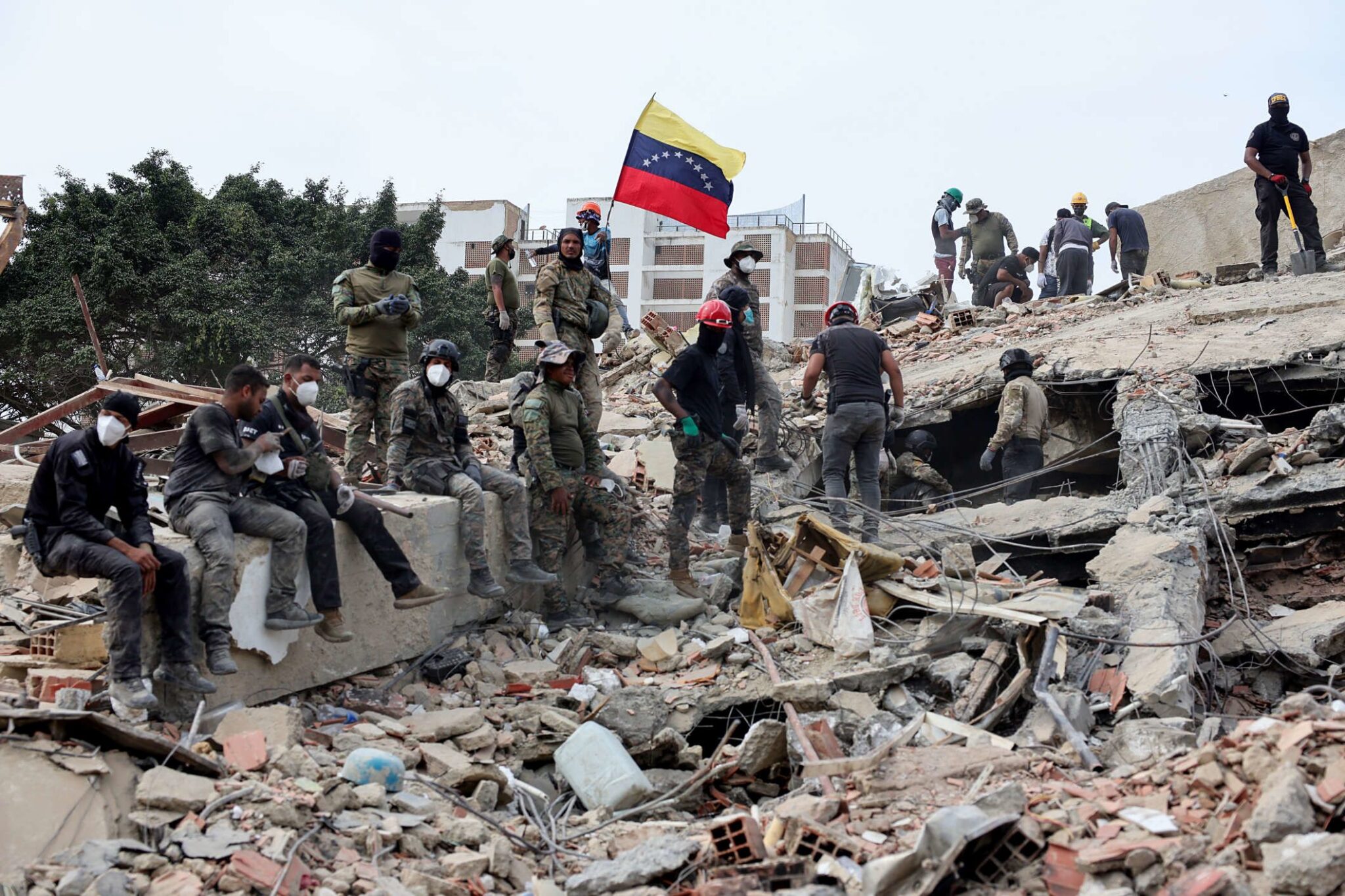
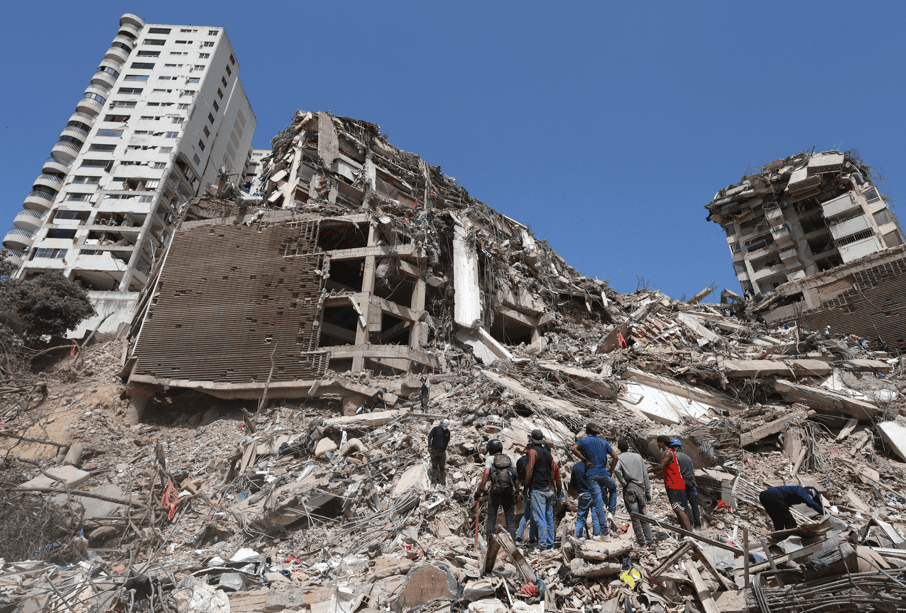
Guerra issued his estimate as the interim government launched the reconstruction phase after presenting a preliminary assessment that reported more than 150 collapsed buildings, varying degrees of damage to hundreds of structures, and extensive impacts on highways, bridges, power grids, telecommunications networks, and drinking water systems.
The scale of the destruction aligns with assessments conducted by multilateral organizations specializing in disaster management. The United Nations Development Program (UNDP) estimated that the two earthquakes in north-central Venezuela caused approximately $6.7 billion in direct material losses, equivalent to nearly 6% of the country’s Gross Domestic Product (GDP).
A $15 billion reconstruction bill
Using the cost of rebuilding after the 1999 Vargas tragedy as a benchmark and adjusting that figure to current values, Guerra estimated that restoring the affected regions will require approximately $15 billion.
“We are talking about debris removal, housing construction in suitable locations, soil studies, highways, roads, streets, electricity, telephone service, and much more. I believe $15 billion represents a reasonable figure, and I believe the country can secure those resources,” he said.
The economist recalled that after the Vargas disaster, Venezuela financed reconstruction with its own resources because the country’s fiscal position differed dramatically from today’s situation.
“In 1999, after the Vargas landslides, the government had money and spent more than $7 billion, which was an enormous amount at the time,” he noted.
Unlike that period, Guerra said the country’s greatest challenge no longer lies solely in its technical ability to carry out the projects but in securing the necessary funding.
“The reconstruction effort requires two things: the Venezuelan state’s ability to execute the projects and, more importantly, the money to pay for them, because today the Venezuelan government simply does not have it,” he added.
International financing and external assets
As an alternative, Guerra proposed combining several funding sources, including multilateral financing, Venezuelan assets held abroad, and domestic funds that currently remain frozen.
“I have proposed several funding sources. First, Venezuela should access its resources at the International Monetary Fund. Those resources belong to Venezuela, not to the IMF. Second, the country should obtain an IMF credit line. Third, we have $2 billion in the Bank of England. Fourth, CITGO’s accumulated earnings amount to another $4 billion,” he explained.
The economist also criticized the executive branch for failing to consider using part of the banking sector’s legal reserve requirement.
“I have another proposal that I honestly cannot understand why the government has ignored. The administration has acted slowly, without direction, and without capacity. It should use part of the banking reserve requirement, which represents about $2 billion already inside Venezuela,” he said.
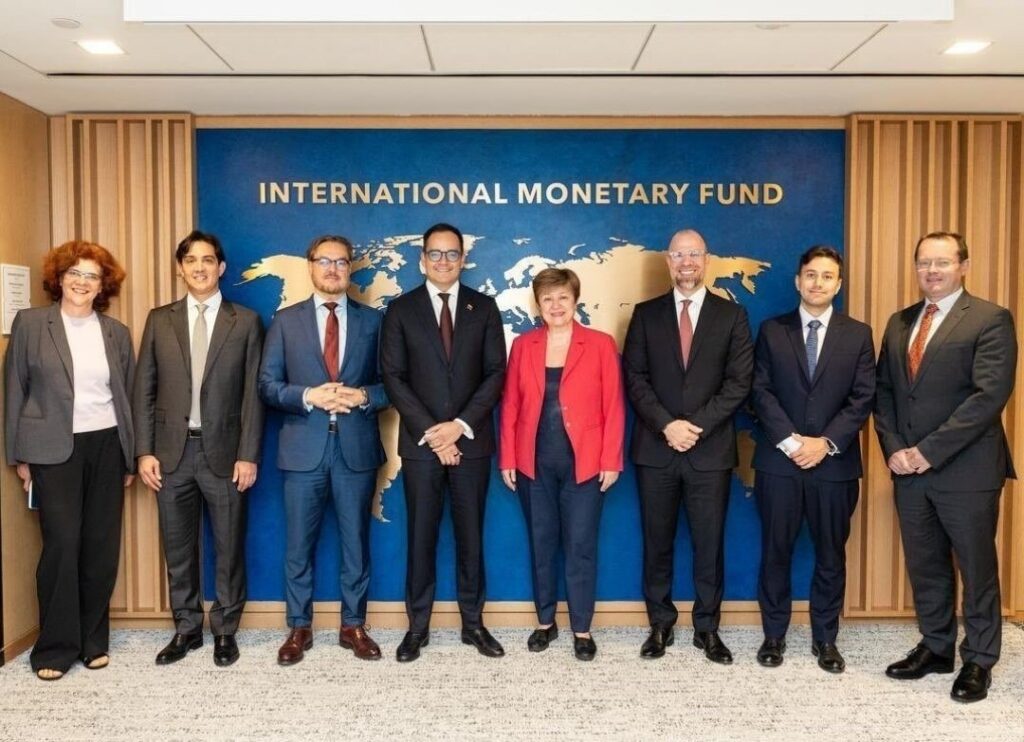
In May, Venezuela’s economic team met in Washington with the Managing Director of the International Monetary Fund and officials responsible for the Western Hemisphere.
The Special Drawing Rights (SDRs) allocated by the IMF form part of member countries’ international reserves. However, Venezuela has not been able to access those resources because of the dispute over international recognition of its authorities before the institution.
In recent weeks, however, representatives of Delcy Rodríguez’s administration and IMF officials have resumed contacts. On July 3, the interim president announced the creation of an initial $200 million reconstruction fund for the earthquake-affected areas and said the government expects to recover those resources through the IMF.
Regarding the Venezuelan gold reserves held in the United Kingdom, Rodríguez announced on Wednesday that she had decided to send a letter to King Charles III.
“That gold belongs to our people, and it must help address the terrible and tragic consequences of this twin earthquake,” she said.
Transparency in reconstruction
Beyond securing funding, Guerra stressed the need to establish an independent mechanism to manage reconstruction resources.
“Jacqueline Farías cannot manage this. The government should participate, of course, along with universities, the Venezuelan Engineers Association, multilateral organizations, and allied governments, so nobody steals the money,” he said.
The economist also argued that authorities should award every reconstruction contract through competitive bidding.
“Every project must go through a public bidding process,” he said.
In his view, involving technical institutions and the private sector would strengthen transparency and speed up project execution.
A long-term recovery
Guerra warned that even if the country secures the necessary financing, reconstruction will take years because of the scale of the work.
“Our calculations show that Venezuela can reach this amount by combining the country’s external assets with domestic funds sitting idle in the banking system. Even then, authorities will have to carry out the projects gradually because no country has the physical or human capacity to execute $15 billion worth of construction in a single year,” he concluded.