The earthquakes in Venezuela have triggered a geopolitical shift. The arrival of IsraAID rescue teams and Acting President Delcy Rodríguez’s official welcome to the Jewish community have buried nearly two decades of ideological dogmatism, opening a channel of pragmatism amid the rubble.
By Óscar Reyes Matute
Geology has achieved what diplomacy seemed unable to accomplish: it has broken the icy isolation between Caracas and Jerusalem. Following the devastating earthquakes that struck Venezuela, the arrival of Israeli humanitarian aid delegations and structural engineers has marked a turning point.
The Acting President’s pragmatic and public welcome to these teams and to local Jewish community leaders goes beyond an expression of gratitude in the face of tragedy. It represents the practical dismantling of an ideological narrative that shaped—and constrained—Venezuela’s foreign policy for nearly two decades.
In 2009, amid a strident anti-Israel discourse, Hugo Chávez expelled Israel’s ambassador and uttered his well-known curse against the Jewish state from Miraflores Palace. Fate added a tragic irony to that episode: Chávez died not long afterward, a coincidence that later fueled numerous conspiracy theories.
The bilateral relationship then entered a prolonged period of contradictions. Nicolás Maduro himself publicly acknowledged his Sephardic roots on Venezuelan state television, linking his family to the Maduro lineage of Curaçao. No one told me this—I watched it live on VTV. At the time, Maduro served as Chávez’s foreign minister. While receiving Iran’s president, he spoke in anger and rejected his Sephardic heritage, yet he stopped short of cursing Israel.
Throughout this long political winter, Venezuela’s Jewish community responded with resilience and the utmost discretion—a lesson they had learned from history under Nazi persecution. Of the approximately 20,000 Jews who lived in Venezuela when Chávez took office, only about 3,500 remain today. Most emigrated to the United States or Europe, or made Aliyah to Israel. Those who stayed have preserved their identity and faith despite an increasingly difficult environment.
I. Bridges built in an emergency
Jerusalem responded immediately by deploying IsraAID specialists in search and rescue operations, structural assessments, and water management, who began working side by side with local authorities. Yet this humanitarian mission depended not only on logistics but also on the institutional framework of citizen diplomacy.
The Confederation of Israelite Associations of Venezuela (CAIV), together with the volunteer networks of the Israelite Association of Venezuela (AIV) and the Union Israelita de Caracas (UIC), served as an indispensable bridge at Maiquetía International Airport, helping secure permits, provide translation services, and coordinate supplies.
In her remarks, Acting President Delcy Rodríguez acknowledged the discreet yet crucial mediation of Rabbi Isaac Cohen, Chief Rabbi of the AIV. Months earlier, during the overlap of Holy Week and Passover, she had already greeted Rabbi Cohen and Venezuela’s Jewish community, expressing her hope for stronger ties built on mutual respect between both peoples.
The intention already existed. Then the earthquakes came.
II. A photograph for the history books
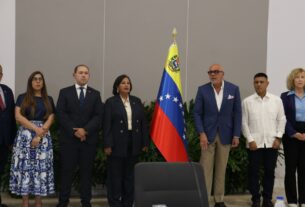
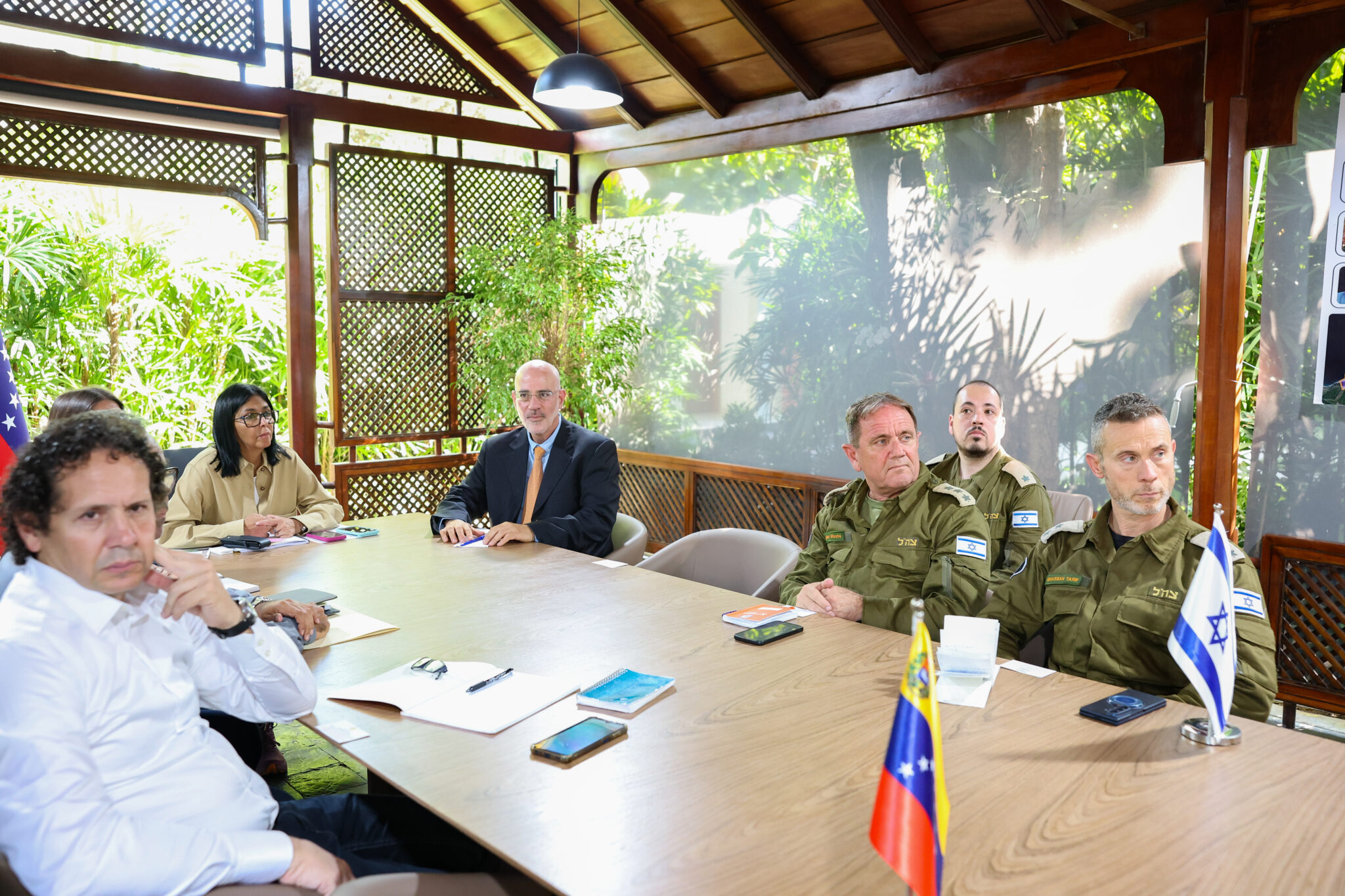
The defining moment of this political shift unfolded at Miraflores Palace, where the Acting President held a formal meeting with CAIV’s leadership and IsraAID’s technical representatives. The photograph from that meeting symbolizes the close of one era and the beginning of another.
The government’s more pragmatic wing has defended the rapprochement under the principle of “unconditional solidarity in times of crisis.” Many opposition figures and international observers, meanwhile, have welcomed the move as a rational step toward restoring normal relations with the West. On the opposite side, the ideological old guard has watched with quiet bewilderment as an efficient rescue mission swept away a decade of deeply rooted prejudices.
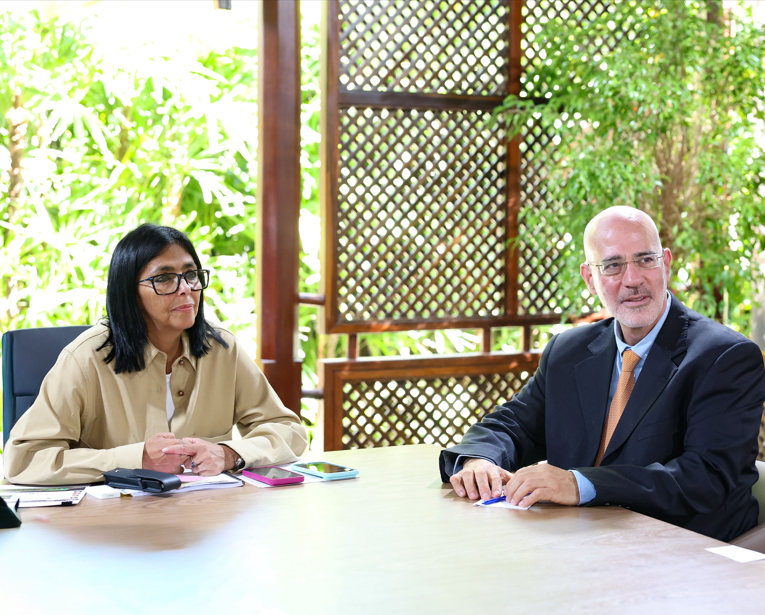
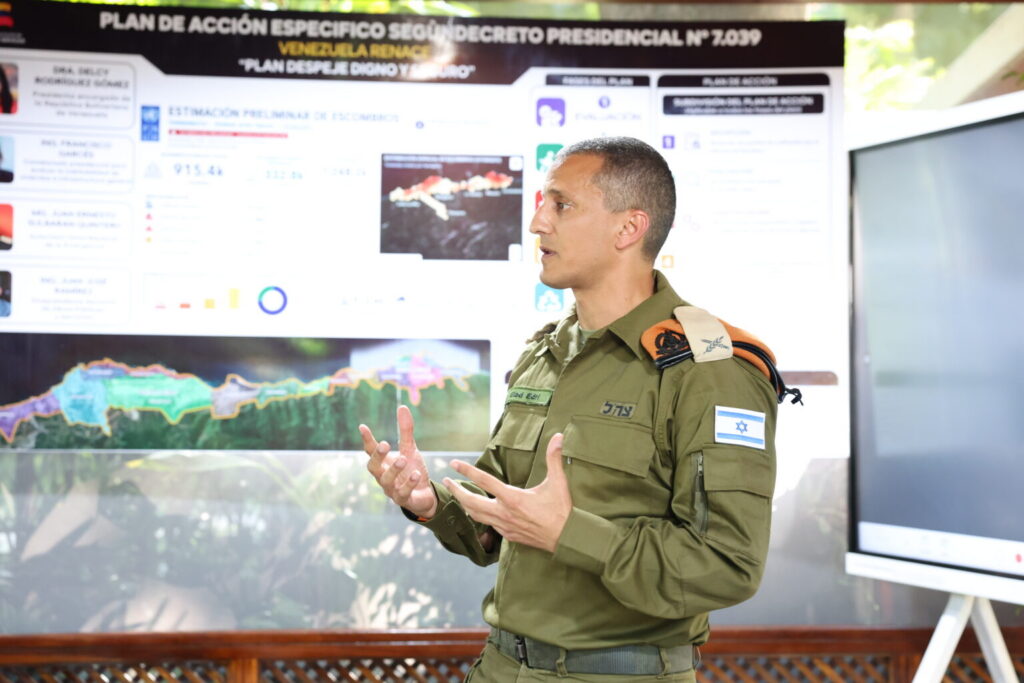
Soon afterward, Benjamin Netanyahu congratulated the Israeli team operating in Venezuela while extending a political gesture of reconciliation.
“The mission in Venezuela is also helping rebuild relations with Israel. We do not ask who or why; we simply ask what needs to be done to help.”
The global financial and diplomatic community has closely followed this thaw. Venezuela is not only receiving essential medical and technical assistance; it is also rediscovering the value of the historic ties that once linked it to the people of Israel before ideological divisions overtook the relationship in the twenty-first century.
The enormous resources required to rebuild the country’s infrastructure may well find an essential pillar in this renewed technical—and potentially financial—alliance.
In the theater of geopolitics, panic and dogma often create artificial markets of hatred. Yet the harsh reality on the ground tells a different story: when the earth shakes, genuine solidarity becomes the only currency that truly holds its value.