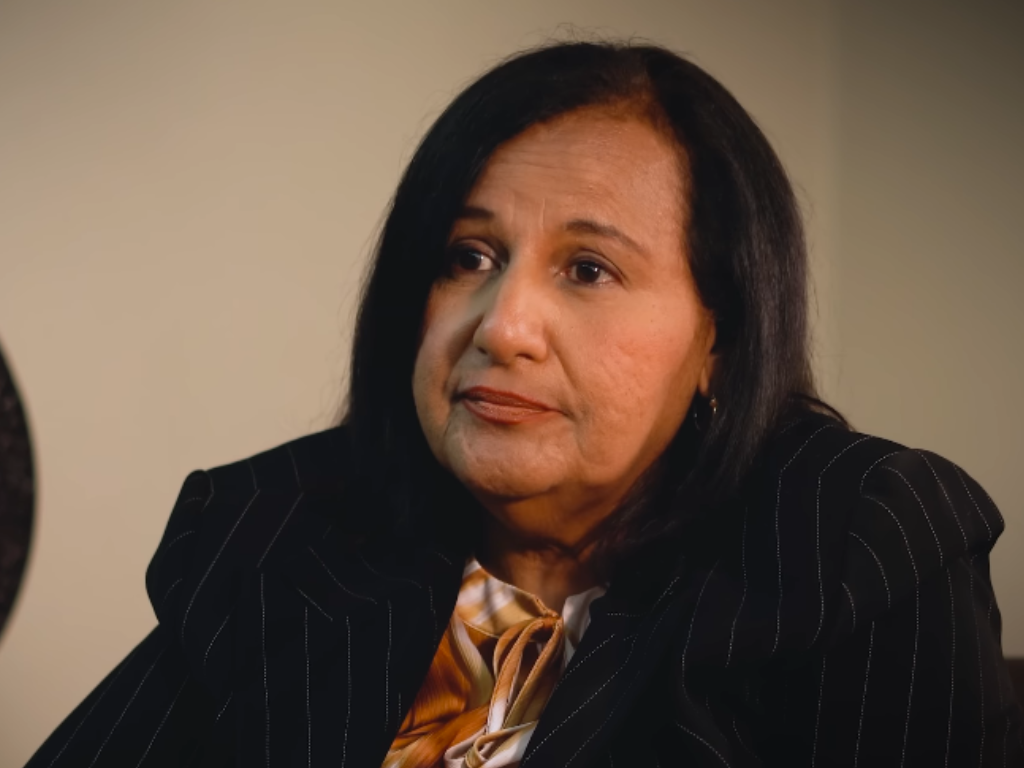
The Daily Journal. — Dinorah Figuera said Venezuela must first restore its institutional, electoral, and political framework before calling new elections. She outlined a roadmap that includes appointing a new National Electoral Council (CNE), lifting political disqualifications, and returning political parties to their legitimate leadership.
Responding to demands from political and social groups calling for an immediate presidential election, the opposition leader argued that Venezuela must first rebuild its democratic institutions.
“To the demand for elections now, we respond: CNE under construction,” she said while presenting what she described as a roadmap to create the conditions for a credible electoral process.
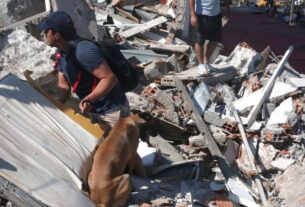
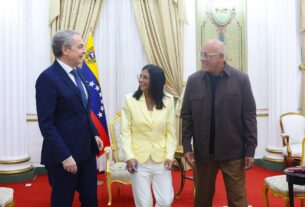
Figuera, who returned from exile last June to lead a new round of negotiations with the Chavista movement at the request of the United States, said Venezuela’s social, economic, and humanitarian crisis, compounded by the recent earthquakes, has increased the urgency of restoring the country’s institutional framework.
She identified strengthening the National Electoral Council (CNE), protecting political and civil rights, ensuring freedom of expression, and returning political parties to their legitimate leaders as top priorities.
“These are critical milestones and essential objectives. If we achieve them, we will restore institutional legitimacy and create a solid national foundation for major changes that will benefit the country,” she said.
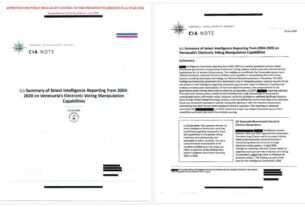
Figuera explained that the process includes several stages designed to lay the groundwork for a democratic transition, including a review of the electoral system, the establishment of new voting safeguards, and an assessment of regulations that, in her view, have restricted political participation.
“Venezuela does not have the conditions to hold elections today”
Figuera argued that Venezuela currently lacks the conditions necessary to hold elections and insisted that rebuilding the country’s institutional framework must take priority.
“Venezuela does not have the conditions to hold elections today,” she said.
She added that a new phase of work will begin on August 1 to address electoral legislation, the composition of the electoral authority, and the mechanisms needed to guarantee what she described as “a powerful vote that the people’s will respects and protects.”
She also emphasized that the roadmap includes reviewing political disqualifications and returning political organizations to their original leadership.
“Every Venezuelan who believes they can seek election at the national or regional level should have that right, provided they meet the legal requirements,” she said.
Reviewing laws and political guarantees
Figuera said her proposal seeks to eliminate restrictions that have limited political participation. She specifically mentioned the Anti-Hate Law and other legal provisions that, in her view, have curtailed democratic rights.
“If we remove unjust political disqualifications and reform these laws, Venezuela can move toward a different political process,” she said.
She also said recent meetings revealed a willingness to review legal measures that she considers obstacles to the full exercise of political rights.
Elections as a near-term goal
Asked whether Venezuela could hold elections in 2026, Figuera declined to commit to a specific date but said those involved intend to move quickly in creating the necessary conditions.
“I would not dare say that elections are guaranteed in 2026. That would be irresponsible. But I can say there is a genuine commitment to make them happen in the near future,” she said.
She explained that organizers hope to complete the fundamental institutional framework by December 2026, provided they secure the necessary agreements and guarantees.
“The Venezuelan people want elections and demand elections. But before that can happen, the country needs a process that is clean, transparent, credible, orderly, and well organized,” she said.
International support
Figuera also said representatives of the United States and other international actors have expressed a willingness to support Venezuela’s institutional and electoral reconstruction.
“I see political willingness among representatives of the United States to support this process, including efforts to accelerate mechanisms that can guarantee the right to vote,” she said.
According to Figuera, that support also extends to the humanitarian response following the recent earthquakes, particularly through medical, human, and financial assistance.
She argued that Venezuela currently faces two parallel challenges: one humanitarian, focused on assisting earthquake victims, and another political and institutional, aimed at creating the conditions for a future democratic opening.
“Never before has the renewal of the National Electoral Council generated so much expectation. Venezuela demands justice, hope, and confidence in this process,” she concluded.