This volunteer travels from Barquisimeto to offer the greatest gift he can to the victims of the earthquakes: helping recover their bodies, regardless of the conditions.
By Vanessa Davies
Sometimes determination outweighs experience.
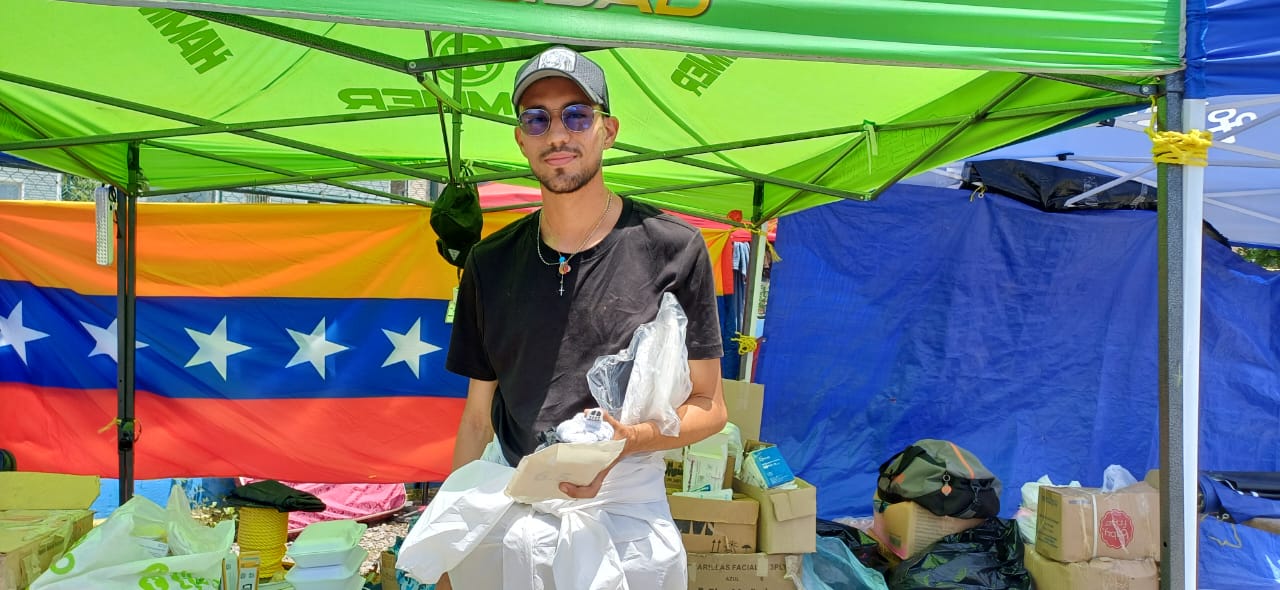
On Tuesday, July 14, Juan Márquez pulled on the legs of a white protective coverall designed to shield him from the fluids of decomposition. He tied the sleeves around his waist as though they were a sweater and answered the radio call that came through:
“Getting ready.”
Seconds later, the 23-year-old volunteer rescuer hurried toward the Luis Cáceres de Arismendi housing complex in Playa Grande, where several teams continued their work. Time no longer dictated the mission. Instead of racing to save lives, they now focused on recovering as many bodies as possible. The desperate struggle of the first days gradually gave way to a different kind of determination: the bodies had to come home.
“I come from the city of Barquisimeto. I’m with Voluntarios Venezuela. I’ve been here since July 4, but because of my job I have to travel constantly. I leave for work and try to come back on weekends. I work for a telecommunications company,” Juan explains as he finishes putting on his gear.
The peace of the dead
“The hardest part of what I do is recovering the bodies of family members. That’s been the toughest thing I’ve ever faced,” he admits.
“Recovering the victims’ bodies hurts deeply because it feels like they’re family. Still, I do it to help the people who need us.”
Although the days and nights seem to blur together, Juan estimates that he has helped recover about five bodies.
“That has brought peace to the families. In our group, we managed to recover three relatives for one family.”
The recovery process requires gloves and protective coveralls. Once volunteers recover a body, they ask the relatives to make an initial identification, place the remains in a black body bag, and wait for the authorities to arrive, explains the rescuer, who hopes to study graphic design.
—Do you think anyone could still be alive?
—From my point of view, not in the area where we’re working. But recovering the bodies gives the families a sense of peace.
Juan receives no payment for this work. In fact, he pays his own way by purchasing his bus tickets and covering all of his travel expenses.
“We don’t have anyone providing us with financial support.”
He also carries his mother’s concern, whose advice sounds more like orders: be careful, get your vaccinations.
He has watched donations of supplies decline, and he urges donors to continue supporting their fellow Venezuelans.
“At this point, we need hydration supplies, water, and ice. Families with children are asking for diapers, diaper rash cream, allergy medication, fever medicine, antibiotics, and blood pressure pills.”