The Daily Journal – Colombia’s Constitutional Court recently halted the implementation of the Memorandum of Understanding signed one year ago by the governments of Gustavo Petro and Nicolás Maduro to create a Binational Special Economic Zone. The court ruled that the agreement must follow the constitutional procedure required for international treaties and cannot take effect solely through an executive decision.
The court’s Full Chamber ordered the Colombian president to resubmit the document through the constitutional process, which requires approval by Congress, followed by a constitutional review by the Constitutional Court.
“The Memorandum of Understanding cannot produce legal effects within Colombia’s domestic legal system until it complies with the constitutional procedure established for formal international treaties,” the court stated.
Court challenges the procedure
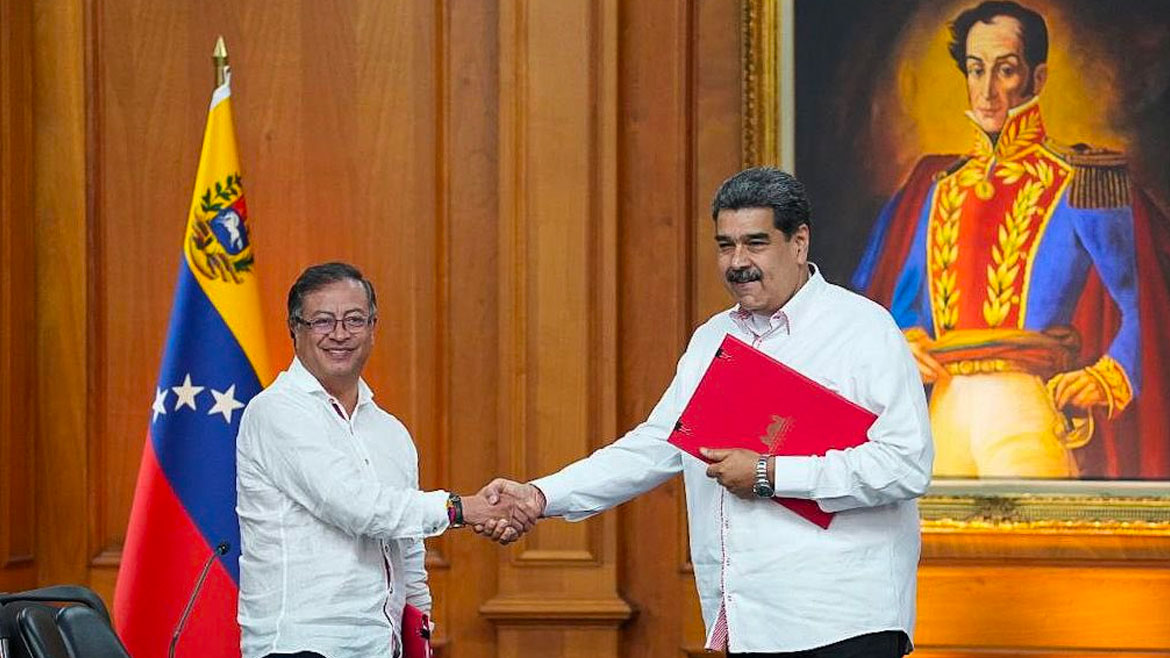
Officials signed the memorandum in Caracas on July 17, 2025, as part of the economic integration strategy promoted by Bogotá and Caracas.
However, after the lawsuit reached the court, the justices warned that the document could qualify as an international treaty and therefore had to comply with the constitutional requirements governing such agreements.
During the proceedings, the court instructed the Colombian government to provide an authenticated copy of the agreement, identify the officials who negotiated it, and demonstrate that they had full authority to sign it. The justices also asked whether the government had submitted the document to Congress and whether it had consulted the Advisory Commission on Foreign Relations beforehand.
A cross-border integration project
The agreement proposed the creation of a Binational Special Economic Zone to integrate Venezuela’s states of Táchira and Zulia with Colombia’s Norte de Santander department.
The plan included incentives such as duty-free and VAT-free imports of raw materials for processing and subsequent export, along with tax benefits designed to encourage investment in industrial, logistics, and commercial activities along the shared border.
Colombia’s then-Minister of Commerce, Diana Marcela Morales, defended the memorandum, arguing that it served as an instrument of economic cooperation and did not compromise the country’s sovereignty.
However, the Constitutional Court’s ruling has suspended the initiative in Colombia until Congress debates and approves the agreement and the Constitutional Court completes its mandatory constitutional review, a requirement the agreement must satisfy before it can produce legal effects in the country.