Audio: https://clyp.it/4ea30czb
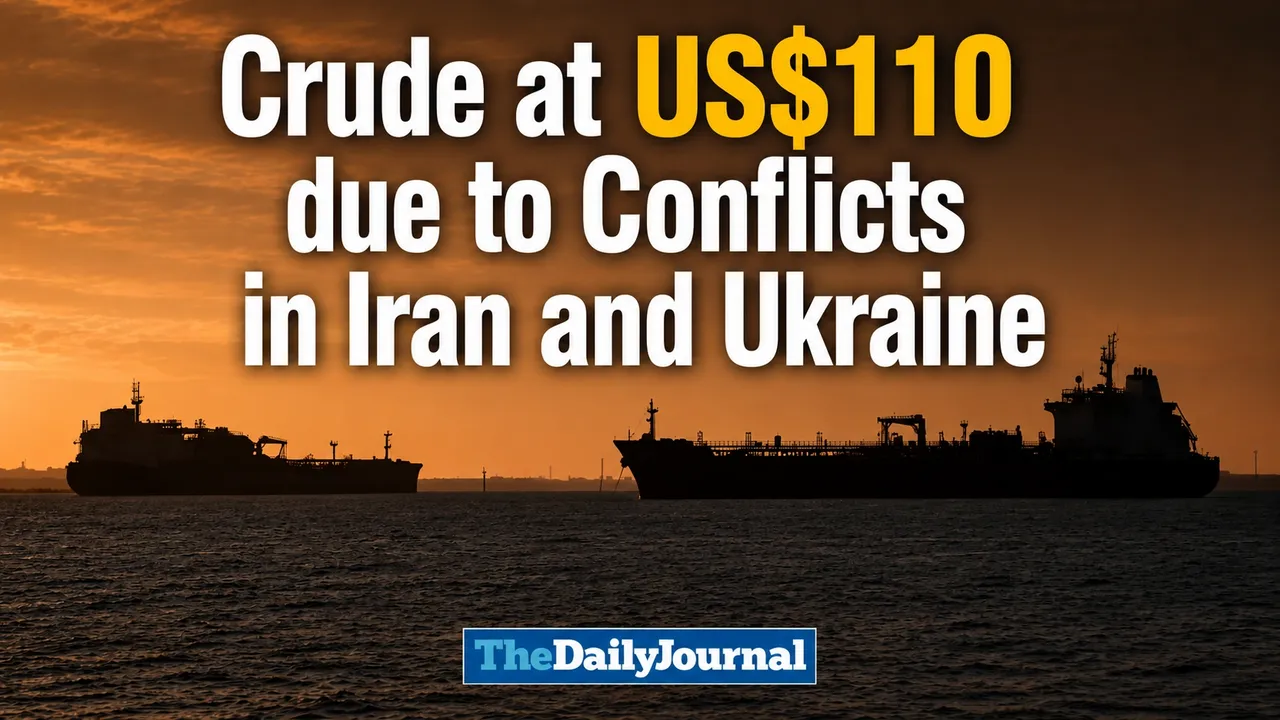
Julio A. López, Editor-in-Chief.— Physical crude oil prices in the Middle East, Europe, and Africa reached two-month highs this week, with some grades approaching $110 a barrel, as supply disruptions linked to the wars in Iran and Ukraine are forcing buyers to scramble for alternative sources of crude.
Brent Breaks Through the $100 Ceiling
Dated Brent, the benchmark that sets the price of more than 60% of the world’s physical crude oil, touched $105.70 a barrel on Thursday, according to LSEG data, its highest level since late May and the first time it had traded above $100 since early June. The rally lifted North Sea Forties crude, which is priced against Brent, to $108.77 a barrel on Friday.
According to Trading Economics, Brent traded near $100, on track for a weekly gain of about 14%, amid continued U.S. bombing of Iran and escalating threats between Washington and Tehran, with both sides ruling out immediate negotiations.
Red Sea Attacks and Collapse of the U.S.-Iran Agreement
The Iran-aligned Yemeni Houthis attacked several oil tankers in the Red Sea this week, forcing some Saudi cargoes to be diverted around Africa. The episode came after the collapse of a preliminary peace agreement between the United States and Iran and worsening disruptions to exports through the Strait of Hormuz, a key corridor through which a significant share of Persian Gulf crude passes.
“Supply considerations are back at the center of the debate,” said Tamas Varga, an oil broker at PVM, as quoted by Reuters.
Kazakhstan Halves Its Production
The Middle East crisis is compounded by the situation in Kazakhstan, which confirmed on Thursday that it had cut oil production following suspected Ukrainian drone attacks that forced the closure of its main crude export terminal, the CPC, on the Black Sea. According to a source cited by Reuters, Kazakh production has been cut in half to about 406,000 barrels per day.
Premiums Hit Highs as Saudi Crude Is Diverted Around Africa
Spot premiums for Dubai, a Middle East benchmark, doubled on Thursday to $12.74 a barrel, while Oman’s rose to $12.62, both at their highest levels since late May. The premium for Abu Dhabi’s Murban crude climbed to $19.04, its highest since April 7, pressured by a shortage of light, sweet crude following the attacks in the Black Sea.
Saudi Aramco has offered additional crude cargoes for loading from the Egyptian port of Sidi Kerir in the Mediterranean, according to five market sources consulted by Reuters. Several Asian refiners are now seeking vessels to load at the port, which would mean a diversion around Africa that would add nearly a month to the journey compared with the usual route through Bab el-Mandeb. South Korea’s SK Energy, the country’s largest refiner, has chartered a very large crude carrier (VLCC) to transport 2 million barrels from Sidi Kerir to Ulsan between August 18 and 20, for a freight cost of $18.5 million.
Asia Turns to Atlantic Basin Crude
“Buyers are rushing to secure supplies, with Japanese and South Korean refiners entering the market to purchase cargoes,” said a trader linked to a refinery, adding that North Asian buyers are now seeking crude from the Atlantic Basin amid shortages in the Middle East.
North Sea grades also rose sharply on Thursday: the premium for Ekofisk over Dated Brent reached a one-month high of $4.30, while Forties’ premium rose to $3.60, its strongest level since May. Short-term Brent swap contracts (CFDs) that help set the price of Dated Brent also surged, with the front-week contract doubling its premium to $11.10.
West African crude sellers have begun raising their offers, although the market remains largely in wait-and-see mode, according to sources cited by Reuters. Kpler analysts warn that the decline in Kazakh exports could drive up demand from refiners in the Mediterranean and West Africa for North Sea and West African grades, further tightening physical crude oil markets.
The International Energy Agency has described the conflict with Iran as one of the largest supply disruptions in the history of the oil market, prompting the release of emergency reserves to mitigate the impact on global prices.