Audio: https://clyp.it/rgzufpce
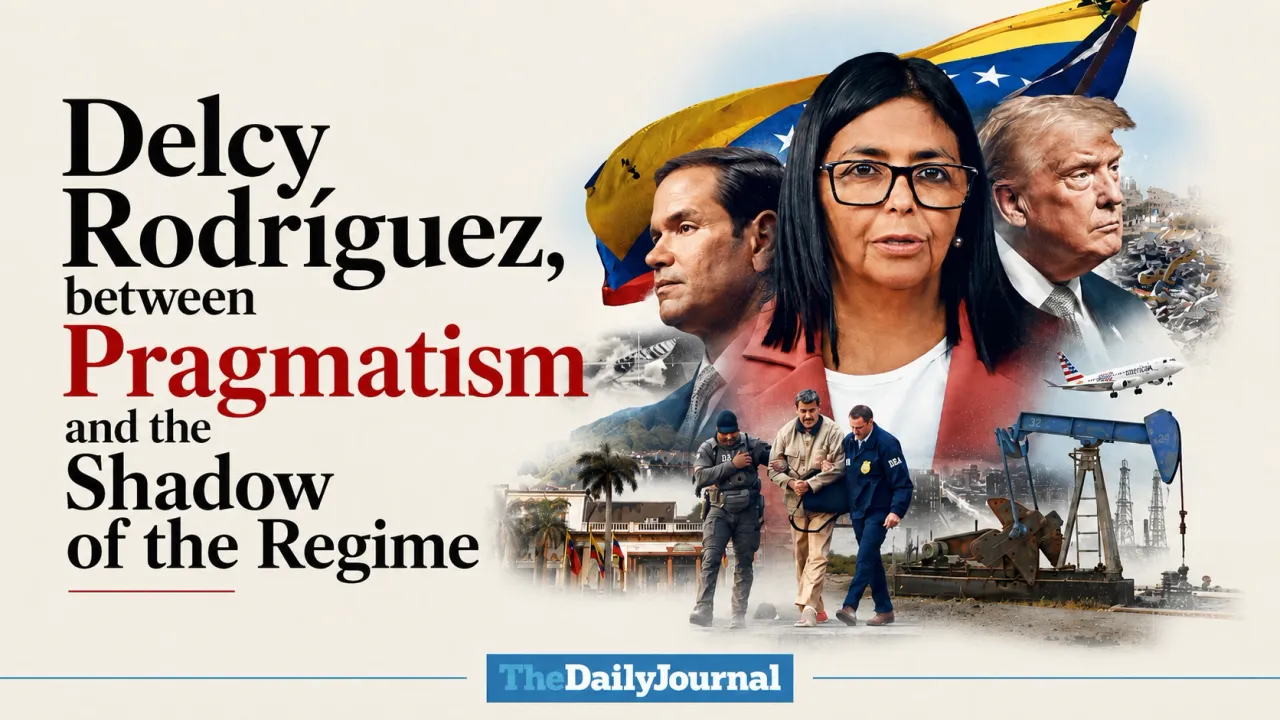
Julio A. López, Editor-in-Chief.— Venezuela’s acting president, Delcy Rodríguez, gave a rare interview to TIME at the Miraflores Palace, where she defended her shift toward Washington following the capture of Nicolás Maduro. However, the report reveals the tensions and doubts surrounding this realignment.
From Chavista Loyalty to Pragmatism With Trump
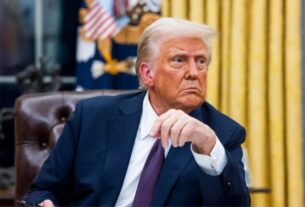
The daughter of a leftist student leader who was killed by the state in 1976, when she was seven years old, Rodríguez built a two-decade career within Chavismo before becoming the person managing a surprising reconciliation with Washington. In exchange for U.S. backing, she allowed Trump and Secretary of State Marco Rubio to exert unprecedented influence over her country.
In the early hours of January 3, U.S. forces stormed the Fuerte Tiuna military complex, arrested Maduro while he was in his pajamas, and removed him from the country along with his wife. Rodríguez described the initial panic over fears that both had been killed and how the situation changed completely once it was confirmed that they had been taken to the United States.
One of her first contacts was Qatar’s emir, who warned her that the responsibility for preserving Venezuela fell on her shoulders. Qatar later helped arrange a call with Rubio, who confirmed that Maduro was alive and presented her with an ultimatum.
The New Arrangement: Oil in Exchange for Stability
Under the agreement, Washington would receive revenue from most Venezuelan oil exports and redistribute those funds through the country’s banking system, effectively acting as an escrow account that would give the United States control over how the money is spent.
In exchange, Rodríguez remains in power with U.S. investment backing. In addition to Chevron — the only oil company that maintained a significant presence during Maduro’s years — ExxonMobil, ConocoPhillips, and Halliburton are now negotiating their return, while Washington officials are managing more than 30 agreements aimed at giving U.S. companies a role in Venezuela’s energy sector.
Analysts consulted by TIME describe Rodríguez as a pragmatic figure, selected by Washington precisely because of her knowledge of the oil industry. However, one analyst qualified that she was “chosen with a gun to her head.”
Human Rights: Between Amnesty and Doubts
At Rubio’s request, Rodríguez’s government approved an amnesty law in February covering political violence from Chávez’s rise to power in 1999 to the present day. The measure includes individuals involved in the 2002 coup attempt and the unrest of 2014 and 2017.
Venezuelan authorities say that approximately 9,000 detainees have been released since the law was approved. Rodríguez says she requested that the United Nations Human Rights Office audit the process.
Nevertheless, experts such as Diego Area of the Atlantic Council argue that she herself was part of a government internationally accused of arbitrary detentions, torture, and extrajudicial executions, and that she “comes from a government that normalized practices considered crimes against humanity.”
Elections: A Promise Without a Date
Despite the economic reopening, there are few signs of a genuine democratic transition. Rodríguez avoided committing to an electoral timetable, saying elections will take place “when the country is ready” and that Venezuela faces threats from groups calling for military intervention.
When asked directly whether she would allow opposition leader María Corina Machado — winner of the 2025 Nobel Peace Prize and currently living in exile — to return and run in elections, Rodríguez avoided answering the question directly and spoke instead of a “new political era” without explicitly saying no.
Machado responded harshly, accusing the government of fearing an election because it fears popular sovereignty. She described Rodríguez’s response to a recent earthquake — which killed more than 5,000 people and caused $6.7 billion in damages — as revealing “the lack of humanity” of the regime, arguing that Rodríguez took eight days to hold a press conference despite Washington having already deployed a $300 million reconstruction package.
An Uncertain Future
The report concludes that Rodríguez views her role primarily in terms of survival: not only political survival, but also the ability to remain in Venezuela without fear of retaliation from a future government.
Analysts warn that much of the U.S. capital that has entered the country has not yet translated into improvements for ordinary Venezuelans, and that the future of this experiment depends both on Rodríguez’s ability to maintain a balance with Washington and on whether Trump’s successor maintains the same strategy.