Audio: https://clyp.it/5andr4kz
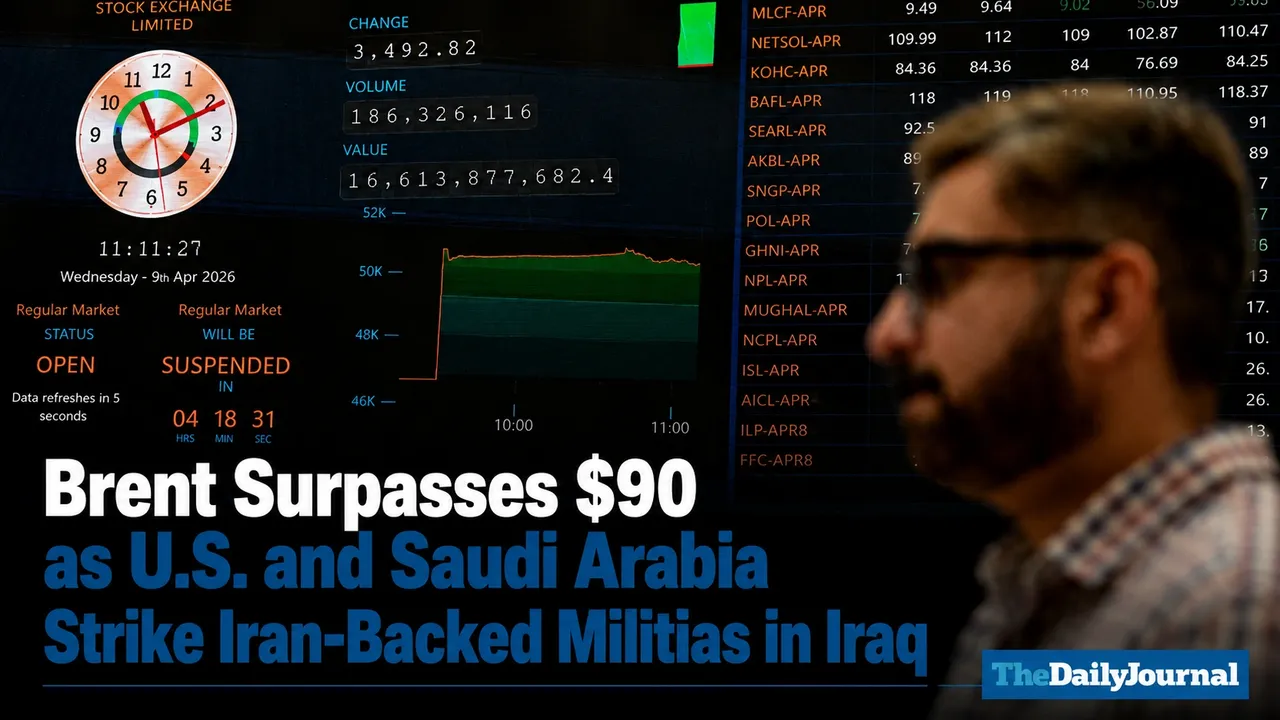
Julio A. López, Editor-in-Chief.— Oil prices surged on Wednesday after the United States and Saudi Arabia launched joint airstrikes against Iran-backed militias in Iraq, while Tehran responded with a new barrage of missiles targeting U.S. forces in the region, marking the most serious escalation since the conflict began five months ago.
From Relative Calm to Escalation
Brent crude, the international benchmark, rose more than 7% to $90.66 a barrel, while U.S. West Texas Intermediate (WTI) surpassed $84, according to CNN. The shock ended several days of relative calm in the markets and revived concerns over crude flows from the Middle East.
The escalation began after Iran-linked Iraqi militias launched drones against Saudi oil facilities in Riyadh and the Eastern Province, according to the Saudi state news agency. In response, U.S. and Saudi fighter jets jointly struck multiple logistics and weapons sites in eastern Iraq, killing at least 20 fighters, according to Iraq’s Popular Mobilization Forces (PMF).
Iraqi militia sources told the Associated Press that six Iranian advisers were also killed in the strike. It marks the first time Saudi Arabia has publicly acknowledged a direct combat role in the conflict.
Iran Responds With Missiles Toward Jordan
Hours later, Iran’s Islamic Revolutionary Guard Corps (IRGC) launched ballistic missiles at Jordan’s Muwaffaq Salti Air Base — a key U.S. military facility — and at the headquarters of the U.S. Central Command in the country. The Jordanian military said it intercepted and destroyed five missiles, with no immediate reports of casualties or damage. Trump warned that Iran “is going to take a beating” and promised a forceful response, triggering a new rise in crude prices later in the day.
Baghdad Caught in the Crossfire
The Iraqi government strongly condemned the U.S.-Saudi strikes, calling them “an unacceptable attack and a blatant violation of Iraq’s sovereignty” directed against its official security institutions, and warned that the country must not become a “launching pad” for regional score-settling.
Iraqi Prime Minister Ali al-Zaidi ordered the Foreign Ministry to pursue legal action against Washington and Riyadh and indefinitely postponed a visit to Saudi Arabia scheduled for Thursday. A coalition of Iraqi militias close to the PMF accused Washington of deliberately targeting fighters and a convoy of pilgrims in Karbala and gave Iraqi authorities until August 7 to respond, warning that it would otherwise take direct action — potentially against targets in Saudi Arabia, while avoiding disruption of the Arbaeen pilgrimage.
A Conflict With Multiple Fronts
The escalation comes as two other active flashpoints continue: the blockade declared by Yemen’s Houthi movement against Saudi maritime traffic in the Red Sea — which, according to Riyadh, included attacks on the oil pipeline infrastructure leading to the Yanbu terminal — and the continued disruption of traffic through the Strait of Hormuz.
In fact, the latest round of violence came shortly after Iran rejected an Omani proposal to jointly manage shipping traffic through Hormuz using two separate corridors. An Iranian deputy minister said on state television that his country expects the strait “never to return to its prewar state.”
Tighter U.S. Inventories
Adding to geopolitical pressure was a supply-side development: U.S. commercial crude inventories fell by 7.2 million barrels in the week ending July 24, according to the Energy Information Administration (EIA), bringing stocks down to 404.5 million barrels, 7% below the five-year average for this time of year.
That tightening in the U.S. market added to the upward pressure from the military escalation, reinforcing the so-called “geopolitical risk premium” that has dominated the oil market in recent months.