The pro-government delegation brings together the Chavista movement’s chief political strategist, a former foreign minister, two lawmakers, a key party organizer, and a representative of the coexistence program promoted by Delcy Rodríguez.
The Daily Journal – Delcy Rodríguez’s administration has assembled its team for the dialogue table with the National Assembly elected in 2015. Jorge Rodríguez, president of the current Chavista-controlled National Assembly and the Executive’s coordinator for the process, announced a six-member delegation that will meet with the opposition team led by Dinorah Figuera.
According to a statement signed by the brother of the acting president, the first in-person meeting will take place this week in Caracas. The announcement followed a phone conversation between Rodríguez and Figuera on Saturday, which both sides described as the formal beginning of the process.
“During that conversation, we shared the composition of our working delegations and agreed to hold our first in-person meeting in Caracas next week,” Rodríguez said.
According to the senior PSUV leader, both sides also established “a working agenda with clear and verifiable goals.”
Rodríguez explained that the first topics will include assistance for victims of the June 24 double earthquake, the “strengthening of democracy,” and “political rights and guarantees.”
Jorge Rodríguez heads the delegation, accompanied by Ana María Sanjuan, Jorge Arreaza, América Pérez, Génesis Garvett, and Pedro Infante.
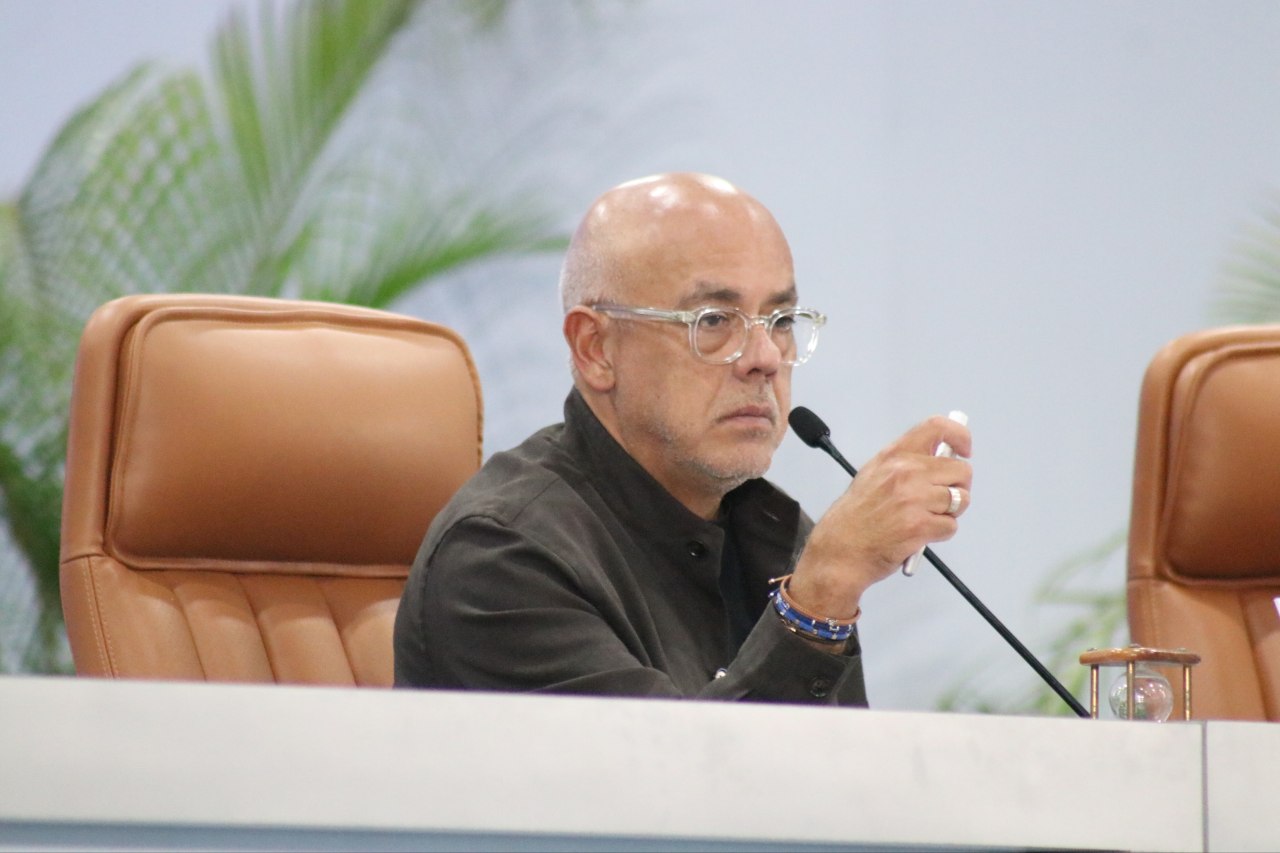
Jorge Rodríguez, the chief negotiator
Jorge Rodríguez’s appointment as coordinator comes as no surprise. He has long served as one of the Chavista movement’s principal political strategists and has participated in negotiations with opposition groups for years.
A psychiatrist by training, Rodríguez served as executive vice president under Hugo Chávez, president of the National Electoral Council, and mayor of Caracas’ Libertador municipality. He later became minister of communication and has presided over the National Assembly since 2021.
His negotiating experience dates back at least to the dialogue processes of 2017 and 2019. During the Norway and Barbados talks in 2019, he led Nicolás Maduro’s delegation alongside Héctor Rodríguez.
He also led the government’s delegation during the Mexico negotiations that began in 2021.
In the current dialogue, Rodríguez’s role extends beyond coordinating the delegation. He combines three influential positions: leadership of the National Assembly, political leadership within the PSUV, and direct engagement with the United States.
In an interview with El País in April, Rodríguez defended the continuity of Chavista rule. During that interview, he also said Washington was not exercising control over Venezuela, although he acknowledged that U.S. officials had made suggestions.
Ana María Sanjuan, the coexistence advocate
Ana María Sanjuan adds a different profile to the delegation than the party leadership.
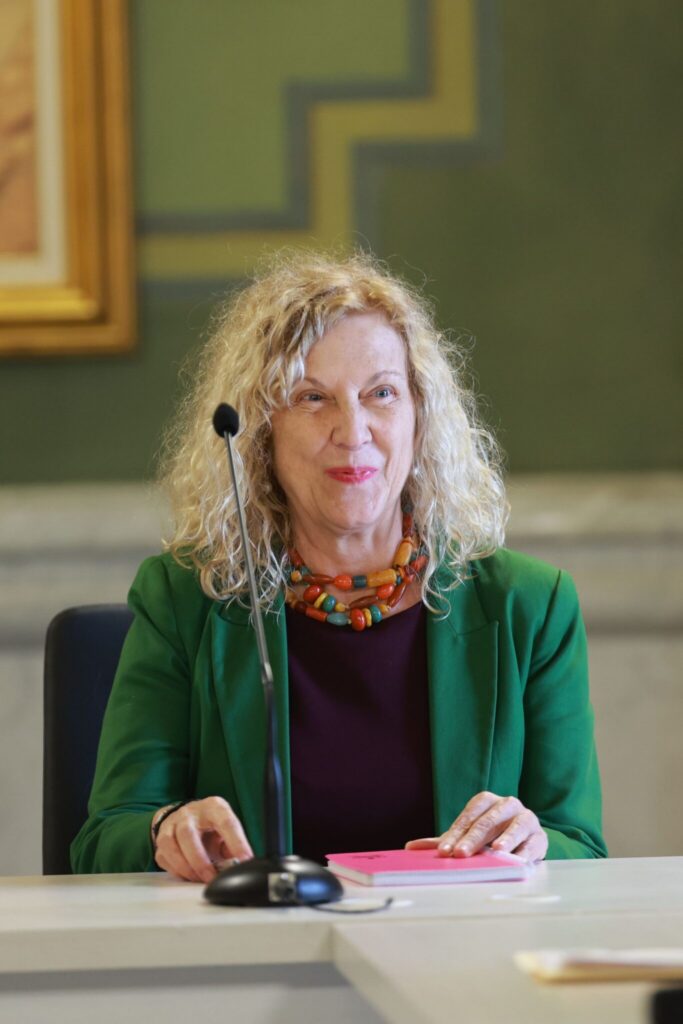
A psychologist and professor at the Central University of Venezuela (UCV), Delcy Rodríguez appointed Sanjuan minister of higher education in March. She also serves as executive secretary of the Program for Democratic Coexistence and Peace.
That position explains why she joined the delegation.
Delcy Rodríguez created the Program for Democratic Coexistence and Peace in January to promote political dialogue and national stability. Sanjuan became executive secretary of the initiative, which then-Culture Minister Ernesto Villegas coordinated and which brought together representatives from academic, political, business, and social sectors.
Rather than focusing on electoral confrontation or international negotiations, Sanjuan has built her work around social dialogue.
Jorge Arreaza, the international face
Jorge Arreaza contributes one of the Chavista movement’s most extensive diplomatic careers.
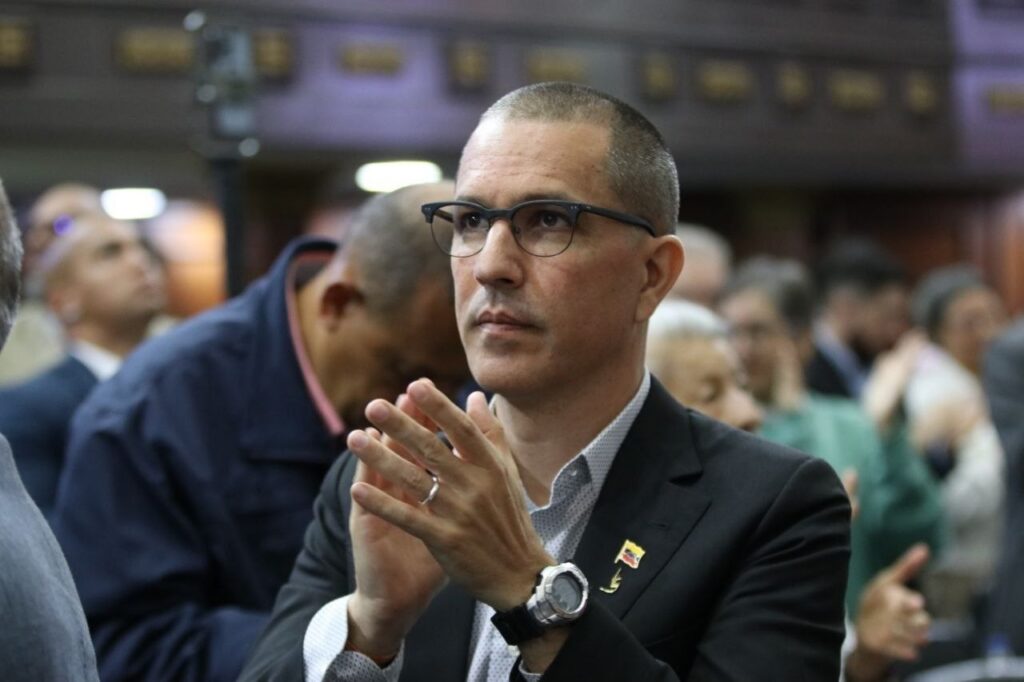
A graduate in International Studies from UCV with a master’s degree in European Studies from the University of Cambridge, Arreaza served as Venezuela’s executive vice president from 2013 to 2016 before holding several ministerial posts. From 2017 to 2021, he led the Foreign Ministry.
His participation carries particular weight in negotiations where the United States plays a central role. Beyond diplomacy, Arreaza also serves as a member of the National Assembly and chairs the Special Commission for Monitoring the Amnesty and Democratic Coexistence Law.
That commission has become one of the government’s principal mechanisms for addressing cases involving people prosecuted or imprisoned in connection with political unrest.
In February, Arreaza acknowledged that the amnesty law could not solve every case.
“A law cannot possibly cover or resolve an entire national situation. But it does contribute, and I believe it is a very important first step,” he said.
His participation links two issues that will inevitably shape the negotiations: political guarantees and the status of opposition figures who remain inside or outside Venezuela.
América Pérez, the parliamentary leader
América Pérez represents a younger generation of PSUV leaders and has built her career through both grassroots political work and parliamentary service.
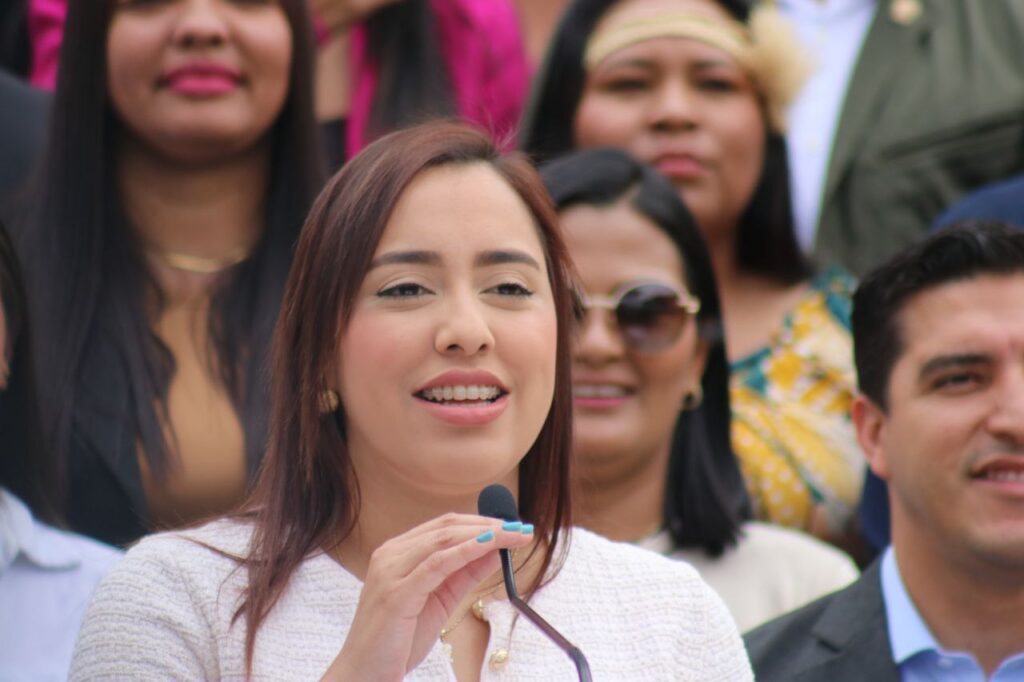
A lawmaker from Nueva Esparta state, she served as second vice president of the National Assembly during the 2025–2026 legislative session and has held several positions within the ruling party. Her work also focuses on youth policies and territorial organization.
In 2026, she chairs the Assembly’s Standing Committee on Comprehensive Social Development. She has also maintained close ties with the Chavista youth movement throughout her political career.
Génesis Garvett, the young face of Chavismo
Génesis Garvett most clearly represents the generational renewal within the ruling movement.
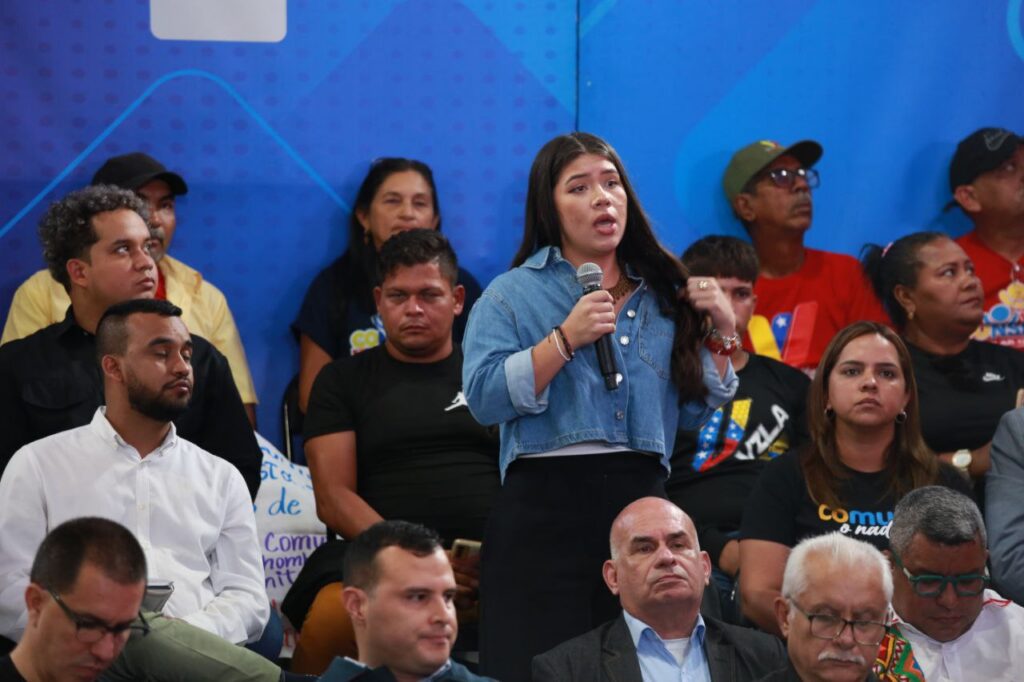
A lawmaker from Falcón state and a leader of the PSUV Youth organization, Garvett has developed much of her political career through the party’s youth structures. In 2023, the PSUV identified her as one of the leading figures of its youth organization.
Her participation in the delegation continues previous work within dialogue initiatives promoted by Delcy Rodríguez. Garvett also joined the original team of the Program for Democratic Coexistence and Peace alongside political leaders, academics, and representatives from other sectors.
Pedro Infante, organization and parliamentary strength
Pedro Infante, the sixth member of the delegation, ranks among the PSUV’s strongest organizational leaders.
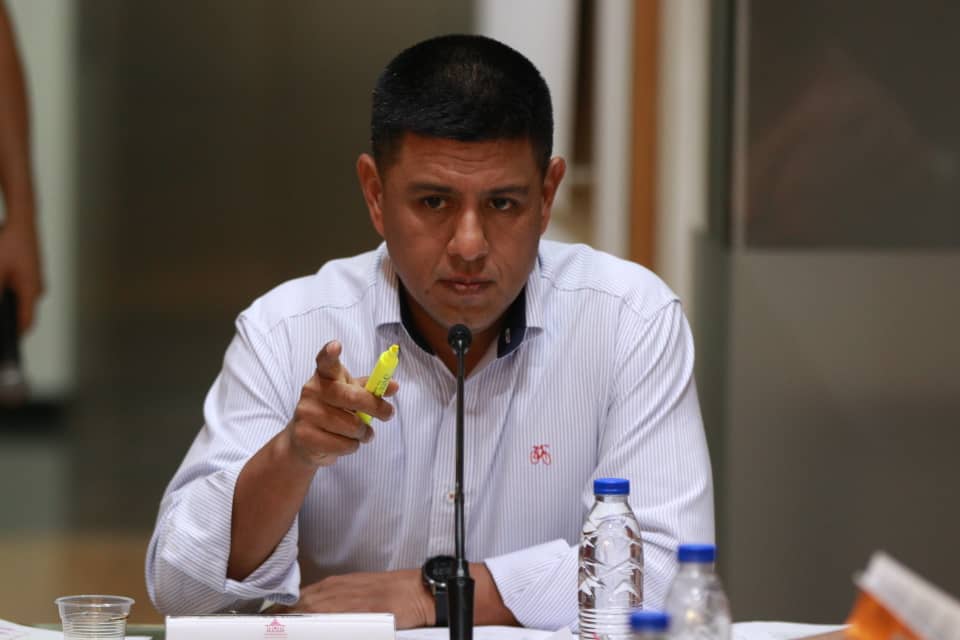
He has held several positions in public administration. After serving as minister of youth and sports, he entered the National Assembly. He now serves as a lawmaker and, since January 2026, as the Assembly’s first vice president.
His influence extends beyond Parliament. Within the PSUV’s new national leadership structure, Infante took charge of the party’s Organization Vice Presidency, while Jorge Rodríguez assumed responsibility for Communication and Electoral Affairs.
While Rodríguez provides the political and parliamentary leadership of the process, Infante contributes his close ties to the party’s organizational machinery. His responsibilities within the PSUV give him direct contact with territorial structures and party organizers across the country.
Previous negotiation experience
The selection of Jorge Rodríguez and Jorge Arreaza also links the current dialogue to earlier negotiation efforts. Both men participated in the Norway and Barbados talks in 2019.
This time, however, the context differs significantly. During those negotiations, Norway acted as facilitator, and the participants formally represented the government and the opposition. Now the United States plays a much more direct role in shaping the process, and Washington recognizes the 2015 National Assembly as the opposition institution with which it intends to move forward.
The talks also begin seven months after the United States bombed Caracas and captured Nicolás Maduro. Maduro remains in New York awaiting trial on charges of narco-terrorism, conspiracy to import cocaine, use and possession of machine guns and destructive devices, and conspiracy to possess those weapons for criminal purposes.