By Dr. Juan Barreto, Director of The Daily Journal for Venezuela and Latin America
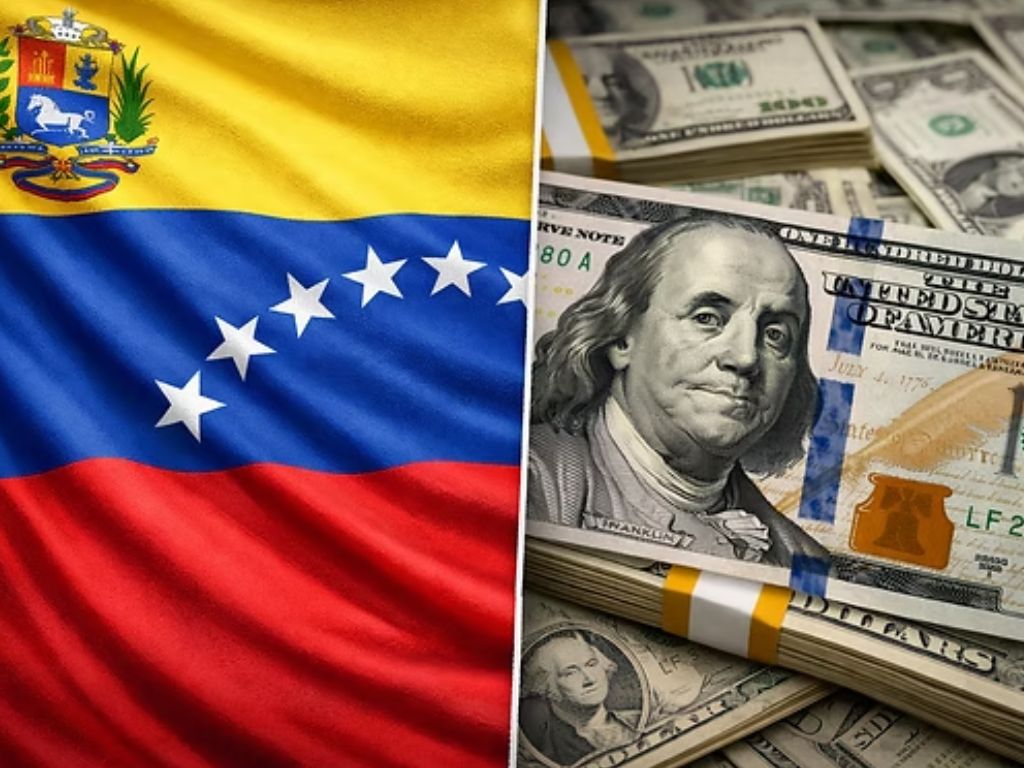
Many are talking—or choosing not to talk—about Venezuela’s external debt. International agencies such as Reuters, Bloomberg, and several British financial publications place the country’s debt at an astronomical $240 billion, while other voices in the economic community, such as Miguel Rodríguez, who served as Planning Minister under Carlos Andrés Pérez, estimate it at $9 billion to $10 billion. Meanwhile, experts such as Manuel Sutherland put the figure closer to $160 billion, which skilled negotiators could reduce to $40 billion or $60 billion, depending on their ability to secure significant debt haircuts through negotiations.
That would leave Venezuela with a manageable debt, allowing the Venezuelan state—working alongside the International Monetary Fund and the World Bank—to reach strategic agreements that prevent the debt from becoming an unbearable burden or an endless obligation passed on to present and future generations of Venezuelans.
Quoting a figure of $240 billion is simply absurd if no one first conducts a forensic audit of the debt. How much of that debt qualifies as “dirty debt”—debt incurred illegally, used to finance repression, negotiated in secrecy, or structured with vulture funds solely to benefit banks or powerful economic interests? We do not know, because the country remains trapped in opacity. No official figures exist. No transparency exists. Yet people are already talking about hiring agencies and advisory groups to negotiate the debt while the country still knows nothing about the composition of that astronomical figure.
We must renegotiate the debt. Venezuela must emerge from the default that Nicolás Maduro declared in 2017. Otherwise, every Venezuelan will end up carrying a burden of roughly $10,000 per person, and the country will never have a genuine opportunity to prosper. We need to move toward financial normalization, but that requires more than transparency. It also requires functioning political and economic institutions. We must accelerate change. We remain trapped in a Groundhog Day, reliving the same cycle as though it were inevitable. Without institutions, there can be no normalization and no growth. The transition process must also remain transparent and offer a clear path forward.