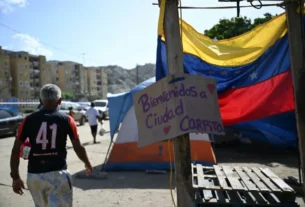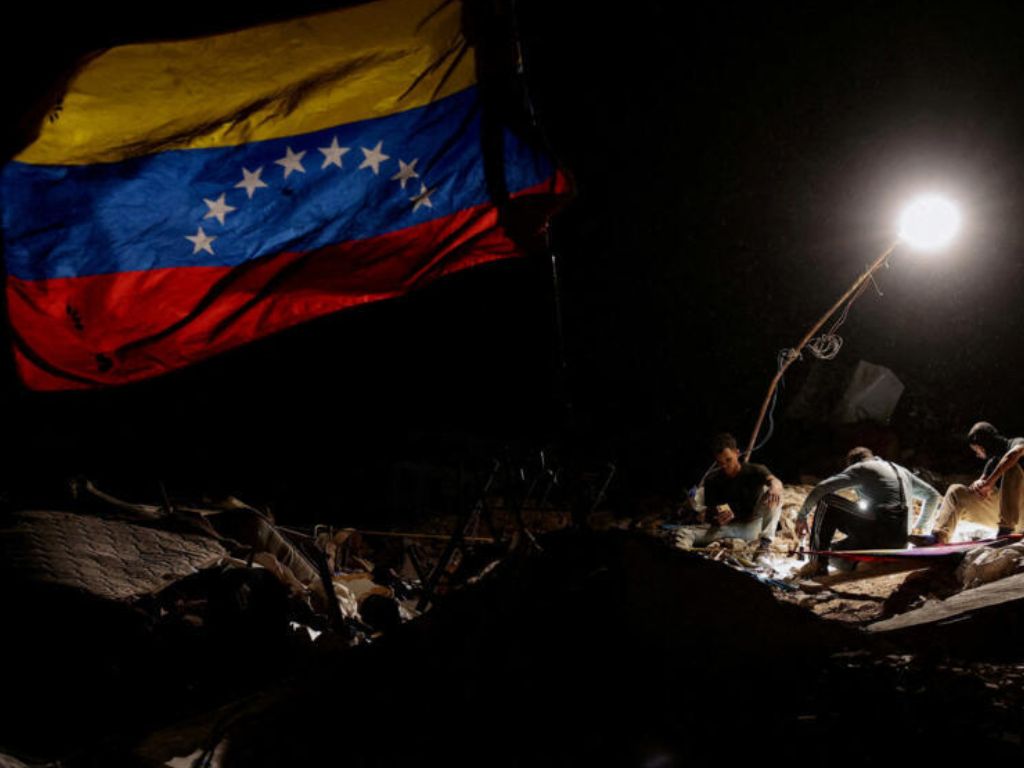
The Daily Journal – Removing the debris left by the two powerful earthquakes that struck Venezuela two months ago could take approximately one year, according to estimates from specialists and the government headed by Delcy Rodríguez. Meanwhile, authorities have yet to begin housing reconstruction formally, and thousands of people who lost their homes remain in temporary shelters.
The government set up 14 Temporary Distribution Centers (CDT) in La Guaira state, the area that suffered the most damage from the magnitude 7.2 and 7.5 earthquakes on June 24. These facilities process and recycle debris from buildings that collapsed in the region near Caracas.
Gustavo García Carrasquero, president of the Venezuelan Chamber of Construction (CVC), told EFE that the Ministries of Public Works and Ecosocialism (Environment) oversee the process, with advice from the United Nations Development Program (UNDP) and participation from private companies, several of which belong to his trade association.
The industry leader explained that the entire operation, including the necessary demolitions, could take about 260 days, leading him to estimate a one-year timeframe. He added that crews transport the debris to the CDTs, where specialists evaluate it and use special grinding machinery to crush it before sending the processed material to its final destination.
García Carrasquero said these recyclable materials can be used to produce paving stones, pottery, clay bricks, and cement, although he clarified that builders cannot use them for structural components.
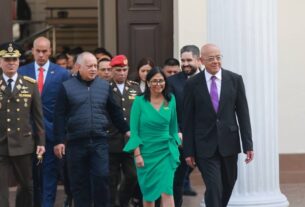
For his part, Ecosocialism Minister Nelson Rodríguez told Venezolana de Televisión (VTV) that authorities aim to prevent the waste from becoming a source of environmental pollution. He confirmed that the Venezuelan government has already removed 2.1 million tons of debris, mainly in La Guaira.
Forensic engineering
The CVC representative stressed the importance of applying forensic engineering techniques to the debris to determine why the buildings collapsed. He said he understands that specialists have already begun this work and that universities are receiving structural samples for laboratory analysis. So far, the Venezuelan government has not released a public report on these studies.
He explained that these investigations first determine whether a building matched its original design and complied with the seismic regulations in effect when builders constructed it. As an example, he noted that a column should contain reinforcing steel and concrete. After a collapse, specialists visually inspect whether builders installed the steel according to the plans. If they find no problems, they analyze other factors, such as soil conditions. He noted that parts of La Guaira and Caracas sit on alluvial soils formed by sediments deposited by flowing water.
The construction industry leader added that comparisons show a correlation in La Guaira between the areas affected by the earthquakes and those hit by the 1999 landslide disaster, which heavy rains triggered and which left between 10,000 and 30,000 people dead. He also noted that the two earthquakes struck only seconds apart and produced different directions of ground movement.
Reconstruction
The Venezuelan government has placed reconstruction on its agenda, delivering nearly 400 homes in recent weeks and promising that thousands of people will regain permanent housing by the end of the year. However, authorities have yet to formally begin building new homes, except for completing several previously stalled projects.
García Carrasquero said reconstruction in La Guaira remains possible, but he stressed the need to wait for the forensic studies before making decisions. One option for these soil conditions involves driving piles and foundations deeper into the ground, which would increase construction costs per square meter. He also warned that Venezuela will need to import cement and metals to accelerate the work.
Meanwhile, the Venezuelan Parliament has promoted reforms to several laws governing the real estate sector. The latest reform seeks to encourage construction and protect builders and buyers. In July, National Assembly President Jorge Rodríguez estimated that the country needs 25,000 homes and announced a biometric census at temporary camps to determine how many new homes authorities will need to build.
With information from EFE.