Natalia Jaua
The cyclical warming of Pacific Ocean waters has once again placed Latin America before a familiar yet never identical challenge. Sea temperatures off the coasts of Ecuador and Peru remain above normal, with a mass of warm water advancing toward the central Pacific and anomalies of up to 3°C.
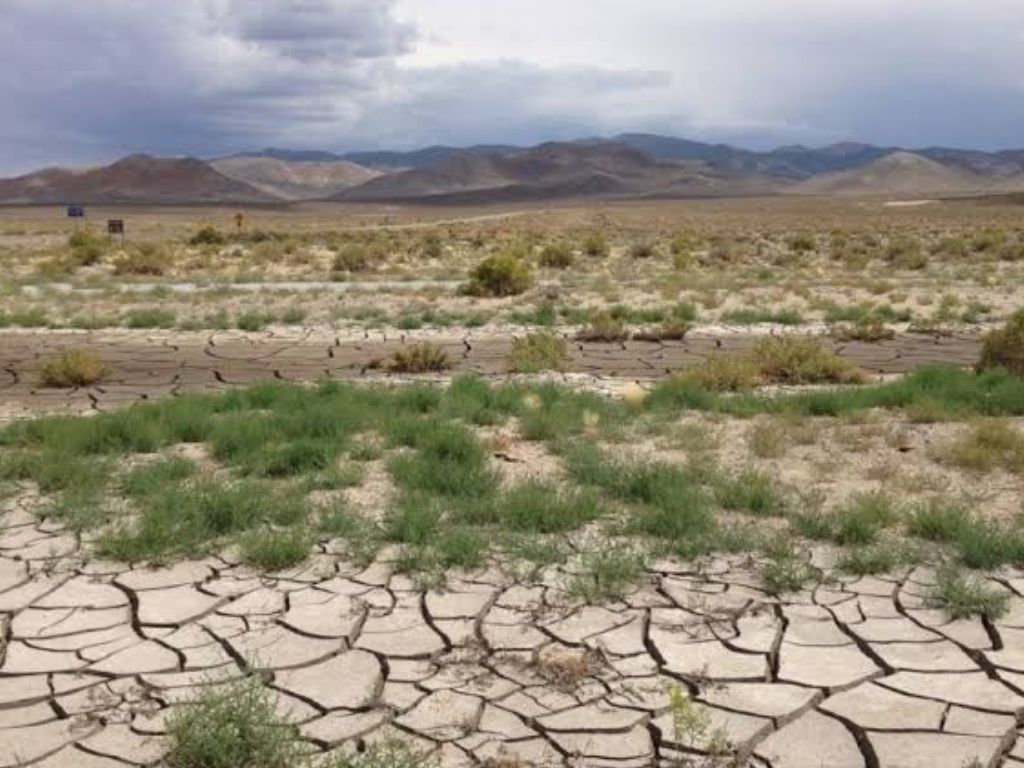
For Venezuela, forecasts indicate an increase in air temperatures of 2 to 3 degrees Celsius above normal, with the phenomenon expected to peak between October and December 2026 and be accompanied by severe drought. Historically, the country has recorded a significant decline in rainfall during the most intense El Niño episodes.
This phenomenon poses unprecedented challenges for the entire region. Comparative experience suggests that early preparation, investment in resilience, and protecting essential services are key to reducing losses. We will only be able to assess the effectiveness of the different strategies once the phenomenon has passed. Still, the contrast among the approaches adopted offers a useful perspective for understanding each country’s priorities and capabilities in the face of a common climate threat.
Colombia bets on emergency measures and investment
Colombia has taken some of the most decisive action in the region. Former President Gustavo Petro’s government declared a national disaster situation to address the risks posed by the climate event. This declaration allows the government to allocate resources and transfer budget funds to finance response measures.
Specific measures include reallocating 4 trillion pesos, originally earmarked for other purposes, to address the emergency, bringing the National Unit for Disaster Risk Management’s total budget to 8 trillion pesos (approximately US$2.5 billion).
In addition, authorities have accelerated the installation of solar panels in communities, based on the principle that “the answer is not more gas, but more solar panels, because what we are going to have is plenty of sunshine.”
Colombia activated a national early warning system to strengthen climate monitoring and institutional preparedness.
The country faces a particular challenge: it relies on hydropower for 75% of its energy, which increases uncertainty as forecasts point to reduced rainfall. IDEAM warns that more than 4.3 million people could face severe impacts.
Brazil seeks to get ahead of the climate impact
Brazil, meanwhile, has opted for a preventive strategy supported by significant financial investment and coordination among different state institutions. The government allocated a package of 1.335 billion reais (about US$260 million) to mitigate potential climate impacts and ensure its capacity to respond to possible disruptions.
Of that amount, 850 million reais (approximately US$166 million) will go toward strengthening public food reserves by purchasing 310,000 tons of rice and 180,000 tons of corn. The measure seeks to anticipate a potential decline in agricultural production due to adverse climate conditions and reduce the impact that a poor harvest could have on supplies and prices.
The strategy also calls for creating a “Situation Room,” which will bring together 24 ministries and federal agencies to monitor climate conditions continuously. The body will prepare monthly reports based on scientific information to anticipate risk scenarios and coordinate government action.
This structure also includes eight health and climate centers across the country’s five regions. These centers will operate as an integrated intelligence network to monitor the effects of climate conditions on public health and help authorities adopt preventive measures.
Coordinated action
In Peru, President Keiko Fujimori declared the climate phenomenon one of her government’s two “immediate emergencies,” alongside insecurity. She announced the implementation of a “national contingency plan” that, in her words, “will break with the logic of late reaction and usher in an era of timely prevention.”
The plan includes the mass removal of sediment from rivers, riverbank defenses and watershed protection, as well as financial and technical assistance for affected areas.
ENFEN (National Study of the El Niño Phenomenon) maintains a “Coastal El Niño Alert,” with projections indicating that the phenomenon could extend through April 2027.
Central America — Belize, Costa Rica, El Salvador, Guatemala, Honduras and Panama — has coordinated actions through the 81st Climate Outlook Forum and the 32nd Hydrological Forum in response to forecasts of rainfall deficits and rising temperatures. Guatemala, through CONRED, has activated its response protocols.
Argentina, Chile and Mexico maintain monitoring
Argentina continues to closely monitor conditions through the National Meteorological Service (SMN), which forecasts possible increases in rainfall and temperatures in both the northern and southern parts of the country. NOAA estimates a 96% probability that El Niño will persist between December 2026 and February 2027.
Ecuador has established national and regional committees, along with a National Action Plan that sets out prevention, preparedness and response measures. The Risk Management Secretariat estimates a 97% probability that the country will experience the phenomenon.
Chile and Mexico have also activated monitoring and warning systems, although they have released fewer public details about specific measures.
Saving electricity and water: Shifting the burden to citizens
For her part, Venezuela’s acting President Delcy Rodríguez has announced an ambitious plan to add 4,800 megawatts (MW) to the country’s thermoelectric generation system before the end of the year.
The plan relies on contracts with companies such as Russia’s INSA and U.S.-based General Electric (GE). Authorities have also mentioned measures such as monitoring reservoirs, protecting watersheds and preventing forest fires.
At the same time, the government has launched a “plan to reduce electricity and water consumption.” Specific measures for citizens include setting air conditioners to 21°C or higher, unplugging unnecessary equipment, limiting lighting, and doing laundry or ironing before 10 a.m. or after 6 p.m.
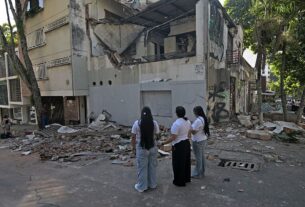
However, significant discrepancies emerge when these announcements are compared with the reality of Venezuela’s power system. The government itself has acknowledged that the two earthquakes on June 24, 2026, severely damaged infrastructure, including towers, transmission lines, and the Termocarabobo thermoelectric plant, which generated 600 MW. To date, authorities have restored only 300 of those 600 MW, bringing the plant back to just 50% of its previous capacity. The promise to add another 4,800 MW within months contrasts with the slow pace of restoring existing capacity.
Moreover, unlike Colombia, Venezuela has not formally declared an emergency that would allow authorities to mobilize resources quickly. The government has also reported no specific budget allocation to address the phenomenon, in contrast with the US$2.5 billion mobilized by Colombia or Brazil’s US$260 million.
Venezuela’s strategy largely shifts a substantial share of the burden of preparation and mitigation onto citizens through awareness campaigns. At the same time, state investment in infrastructure and institutional coordination for the emergency has so far remained more limited than in other countries across the region.
The government has historically blamed power outages on foreign sanctions, while experts point to corruption and lack of maintenance as structural causes.