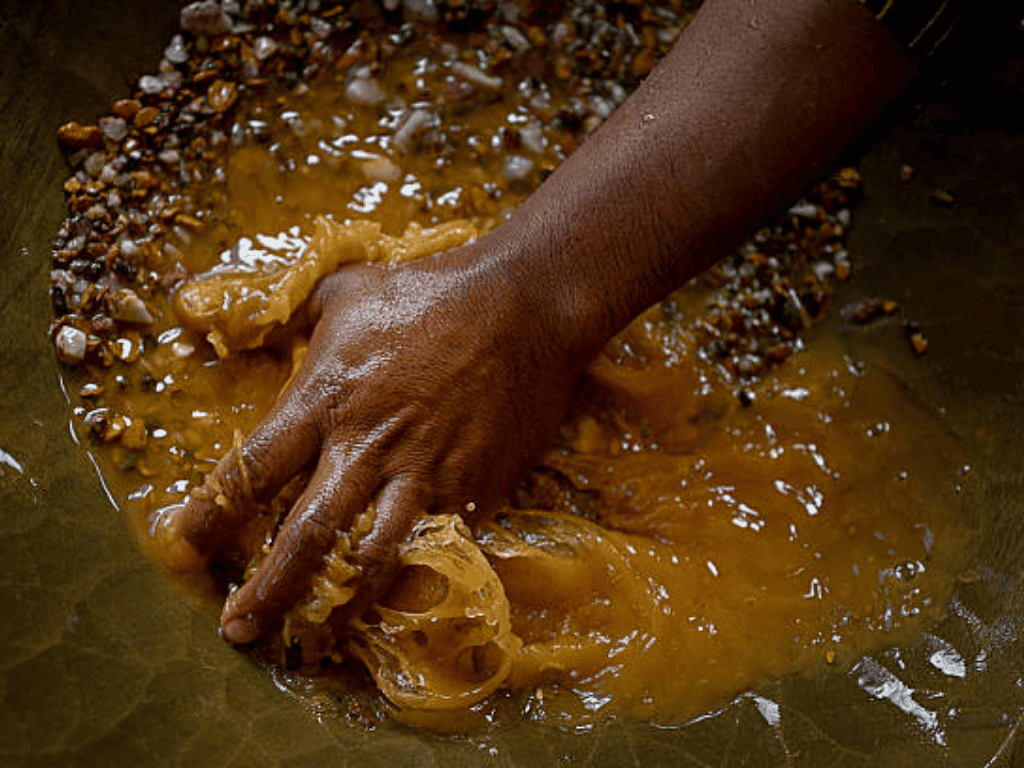
The Daily Journal. — The Inter-American Commission on Human Rights (IACHR) and its Special Rapporteurship on Economic, Social, Cultural and Environmental Rights (REDESCA) expressed deep concern over the expansion of illegal gold mining in southern Venezuela. They denounced its severe impact on local communities.
The organizations warned that “persistent human trafficking, sexual exploitation, deteriorating health conditions and harm to Indigenous territories are occurring amid the growing influence and territorial control of armed groups.”
During a public hearing, participants reported that unauthorized mining had expanded beyond the boundaries of the Orinoco Mining Arc and reached environmentally protected areas, including the La Paragua Forest Reserve and Canaima National Park. In Canaima, a UNESCO World Natural Heritage Site, “illegal mining expansion reportedly caused the loss of an additional 300 hectares during the 2024–2025 period.”
Armed territorial control and violations of indigenous lands
According to data documented by civil society organizations and presented to the Commission, “at least 26 organized armed groups reportedly operate in 20 of the 21 municipalities south of Venezuela’s Orinoco River, controlling mining areas and extending their operations into border regions,” creating a regional challenge in the fight against organized crime.
This extractive activity directly affects Indigenous peoples such as the Yanomami, Pemón and Warao through the unauthorized occupation of their territories and increasing militarization.
Against this backdrop and following the enactment of the Organic Mining Law in April 2026, the IACHR and REDESCA urged the Venezuelan state to implement “effective, culturally appropriate and coordinated measures to protect Indigenous territories, prevent the illegal occupation of their lands, advance pending demarcation and titling processes” and guarantee mechanisms for prior, free and informed consultation.
Exploitation, gender-based violence and mercury poisoning
The report places particular emphasis on the vulnerability of Indigenous women and women traveling through mining corridors, noting that “human trafficking, sexual exploitation and other forms of gender-based violence reportedly persist in areas linked to mining activity, amid armed territorial control, a lack of protection guarantees, economic dependence and barriers to accessing justice.”
Regarding public health and the environment, the organizations warned about the contamination of water sources in Canaima, where the effects of mercury “extend up to 100 kilometers downstream.” For every kilogram of gold produced, miners use 2.6 kilograms of mercury, with 13% reaching rivers and 3% turning into methylmercury, which then accumulates in aquatic wildlife.
The organizations warned that “maternal and infant mortality rates, as well as cases of malformations and disabilities associated with mercury contamination, are particularly alarming among Amazonian Indigenous peoples.” These conditions come on top of the spread of malaria and dengue amid severe shortcomings in the public hospital system.
Calls for protection and safeguards for defenders
Given the high risks that activists and community leaders face when reporting these abuses involving armed groups, the Commission stressed that “the state must prevent, investigate and punish acts of violence, threats, harassment or criminalization against defenders of human rights, the environment and territorial rights.” It also urged authorities to consider joining the Escazú Agreement.
Finally, the IACHR and REDESCA called on the Venezuelan state to follow the guidelines established in Resolution No. 1/26 on Organized Crime and Human Rights and dismantle these illicit economies through “controls on supplies, machinery and trade routes, gold traceability, victim protection and cross-border cooperation.”