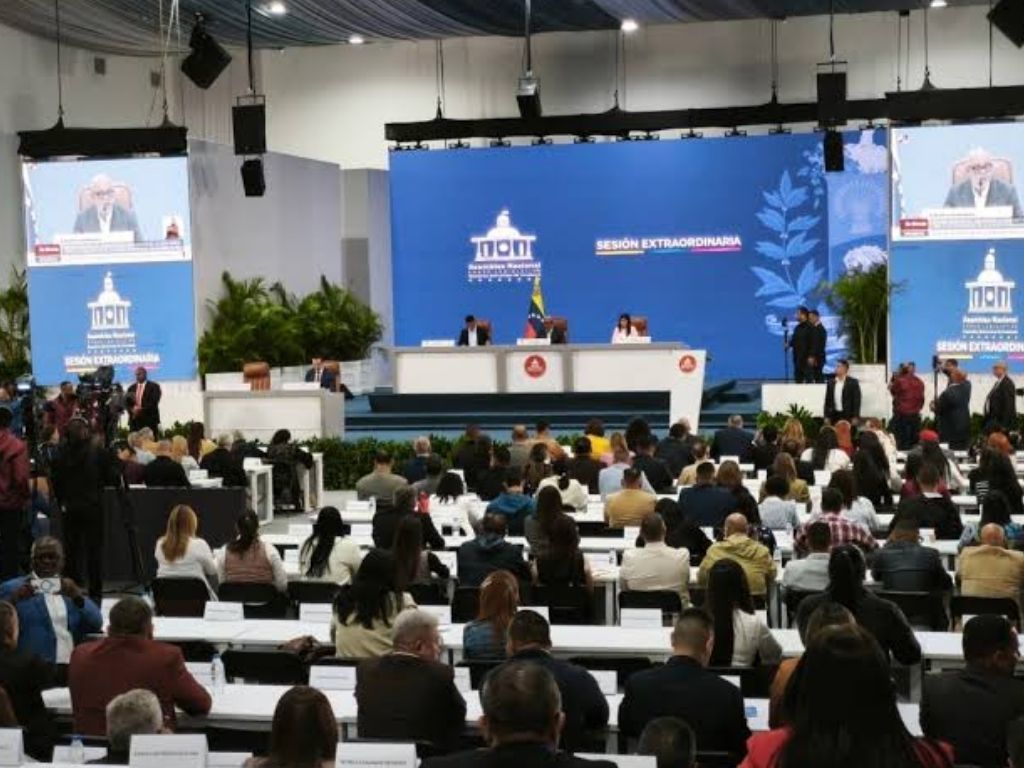
The Daily Journal – Venezuela’s National Assembly (AN) unanimously approved on Tuesday, in a second reading, a partial reform of the Organic Law of the Supreme Court of Justice (TSJ), a legislative measure that implements the first agreement reached at the dialogue table between the government and the opposition.
The legal amendment, which will take effect following its publication in the Official Gazette, focuses on Article 65 of the law and restructures the Judicial Nominations Committee, the body responsible for overseeing the initial phase of the selection process for new justices.
Under the approved reform, the Judicial Nominations Committee will expand from 21 to 23 members. Its new composition will include 11 lawmakers and 12 representatives from different sectors of civil society, giving civil society representatives a numerical majority.
The amended Article 65 establishes that the National Assembly will appoint the committee with the approval of two-thirds of its members. The reform also adds a single transitional provision establishing that, once authorities publish the law, the National Assembly will appoint the new Judicial Nominations Committee and launch the constitutional and legal process to select all Supreme Court justices.
During the parliamentary debate, several lawmakers addressed the scope of the reform.
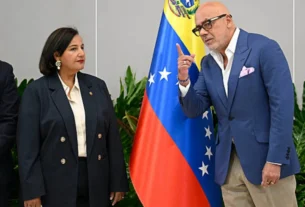
National Assembly President Jorge Rodríguez highlighted the importance of the agreements reached through dialogue. “It is positive that, this early in the first round of sessions, we already have some concrete agreements,” he said.
Rodríguez stressed that lawmakers, exercising the authority granted to them by the Constitution, will elect the 32 justices who will make up the new court, and he called for progress toward a “true transformation of the justice system.”
First Vice President of the National Assembly Pedro Infante explained that the reform keeps the number of lawmakers on the committee at 11 while adding two civil society representatives, bringing their total to 12. Infante defended the need to guarantee a “transparent, rigorous and broad” process for selecting the new justices.
For his part, opposition lawmaker Luis Florido said Venezuela “will not be able to overcome its crisis without restoring its institutions.”
“Restoring democratic institutions is extremely important,” he said. Florido argued that expanding the committee could represent a “positive sign,” but warned that politicization remains one of the problems affecting Venezuela’s justice system.
“We hope this opportunity translates into concrete action — not to politicize justice again through the Supreme Court by appointing justices who now represent one political group instead of another, but to ensure that they truly serve all Venezuelans,” he concluded.
Lawmaker Juan Miguel Matheus said they are “fighting for a Supreme Court that advances the transformation of the justice system, where the quota-based logic that has caused so much damage to this country can never take hold again.”
The reform stems from the first agreement reached at the U.S.-backed dialogue table between Chavismo and the opposition. On August 12, at the Meliá Caracas Hotel, both sides signed a commitment to completely renew the Supreme Court, which currently has 32 justices.
The agreement calls for “launching a new nomination process for the renewal and appointment of all Supreme Court justices.” Reforming the law represented the legislative step necessary to begin that process.
This marks the second reform of the Supreme Court law this year. In May, the National Assembly approved an amendment that increased the number of justices on the country’s highest court from 20 to 32. With this new reform, lawmakers have now cleared the way for the complete renewal of its membership.