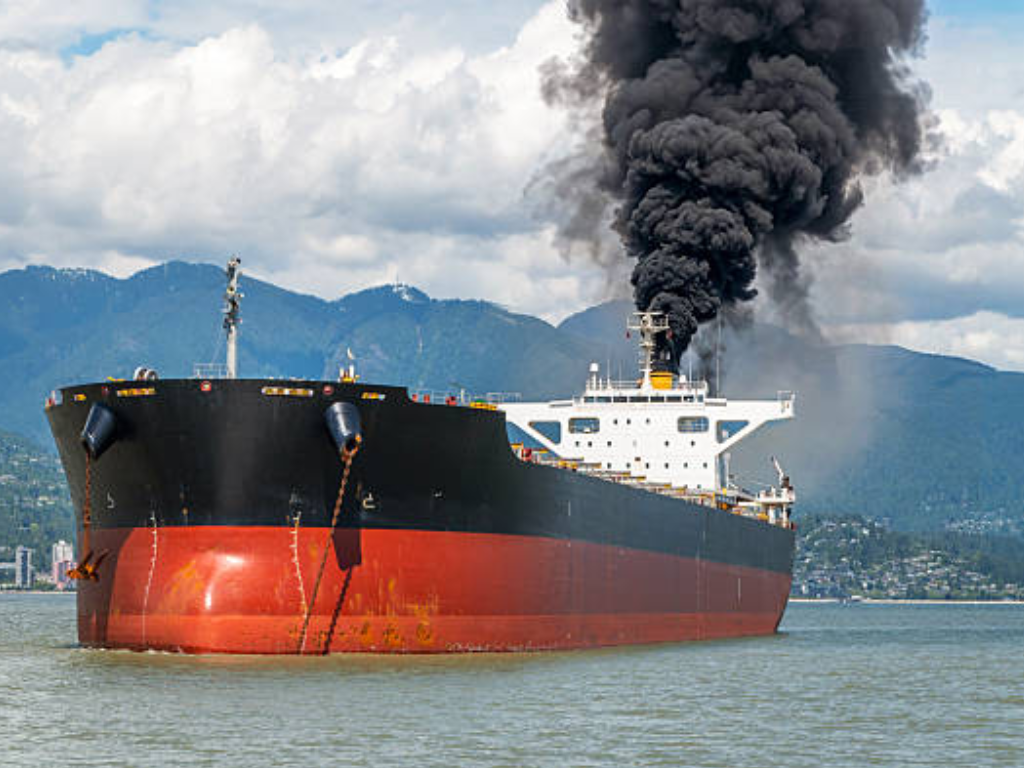
The Daily Journal.– Venezuela’s National Assembly began the first debate on Tuesday on a bill to approve the 1997 Protocol, which incorporates Annex VI of the International Convention for the Prevention of Pollution from Ships (MARPOL). This instrument establishes controls on polluting emissions from maritime transport.
The bill formed part of the legislative agenda for the September 29 session and seeks to update Venezuela’s legal framework on air pollution from ships.
MARPOL Annex VI sets rules to prevent air pollution from ships and controls pollutants such as sulfur oxides (SOx) and nitrogen oxides (NOx), along with measures on energy efficiency and greenhouse gas emissions.
Incorporating the protocol would allow Venezuela to strengthen its regulatory tools to monitor emissions from vessels operating in its waters and ports, in line with international standards governing maritime transport.
Stricter Requirements for Maritime Transport
MARPOL Annex VI was adopted in 1997 as an additional protocol to the 1973 International Convention, as modified by the 1978 Protocol. Its initial purpose was to establish limits on certain pollutants from ship exhaust emissions. Authorities later expanded its provisions to include energy efficiency measures and greenhouse gas reductions.
The regulations set limits on sulfur oxide and nitrogen oxide emissions, as well as technical requirements for ship engines and the fuels vessels use.
The International Maritime Organization (IMO) has continued to update Annex VI. Recent amendments include provisions on emission control areas, access to fuel consumption data, and mechanisms linked to reducing greenhouse gas emissions.
For Venezuela, the parliamentary debate opens the process of formally incorporating these obligations into national law.
The enforcement challenge
The debate also highlights the capacity of Venezuelan institutions responsible for overseeing maritime and port activities. Incorporating new emissions standards requires measurement systems, inspection procedures, and sufficient technical capacity to verify compliance.
“In Venezuela, civil society organizations and communities linked to coastal areas have for years called for a greater capacity to respond to pollution problems associated with oil and maritime activities,” activist Leonardo Salazar said when asked about the issue.
According to the environmental activist, “the discussion of Annex VI not only involves updating regulations, but also poses the institutional challenge of ensuring that authorities can effectively monitor and enforce the new obligations.”
The bill must now continue through the corresponding legislative process before its potential final approval and entry into force.