Luis Vilchez
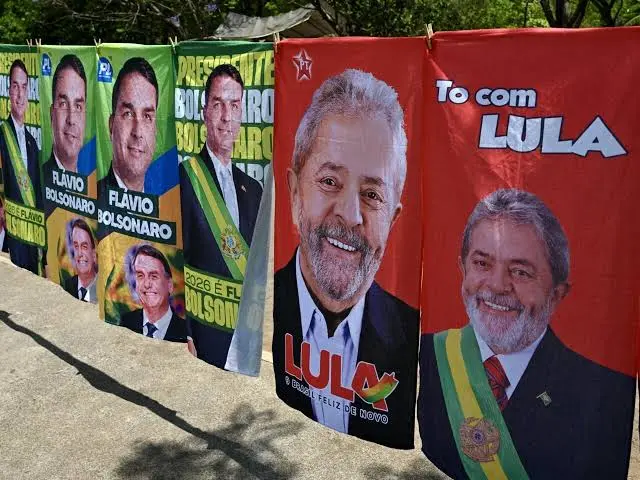
President Luiz Inácio Lula da Silva is fighting for reelection in Brazil against Senator Flávio Bolsonaro, son of former President Jair Bolsonaro. Both will head to a runoff election in the South American giant. One of the measures taken by the 80-year-old politician before the first round was to show online gambling a red card, a practice legalized a decade ago after many years under a ban. “This is like cancer: either we remove the tumor, or this tumor will kill us,” he exclaimed in São Paulo nine days before the election. The Workers’ Party candidate added: “It reminds me of the early days of crack cocaine in this country, when those affected lost control.”
How significant is betting in Brazil? Debt is a dagger in the heart of Brazilian society, as 80% of families owe money to a bank, relative, utility company, or another party. These vices have hit a raw nerve and aggravated mental health problems. Another striking figure: last year, 25 million Brazilians placed bets, while at least 100 million had an active betting account. This ban on “bets,” as gambling is known in Brazil, seeks to rein in the free-for-all created in 2018, during Michel Temer’s administration, which remained completely unregulated until 2023.
The measure is temporary and will remain in effect for 120 days unless Congress ratifies it. Social and political considerations lie behind the decision. Notably, Lula turned gambling into a significant source of tax revenue after regulating it. He also promised to purchase packages of household debt from banks to negotiate reductions of up to 90%. In addition, the measure could attract evangelical women voters, particularly poorer women, who tend to lean toward Bolsonaro’s political camp because religious leaders share that faction’s ideals and oppose the left. But beyond the ballot box, human lives are at stake. The president cited the case of a 21-year-old woman who works at a small shop in Minas Gerais and accumulated $115,000 in gambling debt.
However, the decree has caused friction: for Brazil’s biggest soccer clubs, it means losing a revenue source overnight. Thirteen of the 20 clubs playing in Brazil’s top division will have to adjust their budgets. Corinthians, the team Lula supports, receives 17.3% of its revenue from betting. Of the $52.6 million earned by another giant, Flamengo, $12.6 million comes from online betting. Palmeiras is not far behind, bringing in $19.6 million annually from online gambling. According to the Central Bank, the economic expansion and success of Brazilian clubs at the South American level rest on the $5.7 billion spent on betting.
The clubs cried foul and issued statements arguing that “if the regulated betting market comes to an end, betting will not stop; what will end is soccer,” in a tone of absolute drama. Corinthians, Palmeiras, São Paulo, Santos, Flamengo, Fluminense, Botafogo, Vasco da Gama and Cruzeiro signed the statement. As a result, the soccer world now sees Lula as a threat to the financial sustainability of Brazilian soccer. Flamengo officials claimed the decree would leave them unable to honor Lucas Paquetá’s contract, a starter for the national team. They even lamented that all that revenue would migrate to Argentine soccer.
What did Lula say? “São Paulo won the Club World Cup three times without betting. Santos, twice. Grêmio, Flamengo, and Internacional did too. And my Corinthians, twice. Our national team also won five World Cups when these platforms did not exist: the idea that eliminating sports betting will bring Brazilian soccer to an end is nonsense,” the president declared, putting the matter to rest.
Bolsonaro goes on the attack
“This is yet another scam by the Lula government. Just nine days before the election, he announced he would end betting, but his government legalized it. Under Jair Bolsonaro’s government, online casinos were considered a criminal offense. Still, the current government legalized them through regulation,” Senator Flávio Bolsonaro charged. In true Donald Trump fashion, he gave Lula a nickname: “pai do Tigrinho,” or “father of Tigrinho,” referring to one of the most popular games, while also branding him a hypocrite.
But what penalties does this bill impose? It establishes prison sentences of four to six years, plus fines. Those subject to punishment include anyone who offers, receives, registers, or brokers bets, as well as those who operate physical venues or digital channels where gambling takes place, even if they hold authorization from abroad. Beyond the clubs, betting companies also poured money into the Brazilian Football Confederation, state federations, media outlets, and journalists. Although the benefits are most visible at club level — where Brazilian teams have won the last seven Copa Libertadores titles and currently have three semifinalists, Flamengo, Palmeiras and Fluminense, while the Copa Sudamericana semifinals also feature two Brazilian sides, Vasco da Gama and Atlético Mineiro — the national team has not won a World Cup since 2002, despite Bolsonaro supporters adopting the yellow-and-green jersey as their own and enjoying the support of figures such as Neymar.
The problems plaguing Brazilian soccer have many roots: corruption, violence in stadiums, an overcrowded calendar, young players leaving before completing their development, racism in the stands, refereeing scandals, bankrupt clubs, Sports Corporations, among others. As journalists Bruno Bonsanti and Felipe Lobo wrote in their latest “Meiocampo” article: “If Brazilian soccer collapses without betting money, betting was never the problem.”
It is also worth citing the reflection of economic consultant Amir Somoggi of Sports Value Marketing Esportivo: “Although it seems like the end of the world, banning betting sponsorships in Brazilian soccer could be positive in the medium term. Formula 1 went through a similar situation with the tobacco ban and today earns much more from the technology sector.”
The big question is: How long will it last? Lula’s measure comes alongside a 15% increase in the monthly Bolsa Família payment and tax exemptions for lower-middle-class families. However, the progressive candidate heads into the runoff after securing 45.16% against far-right candidate Flávio Bolsonaro’s 47.03%. Lula may have scored a goal against betting, but this match could still be turned around, to the detriment of the Brazilian population and to the delight of soccer’s power brokers.