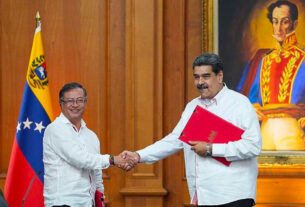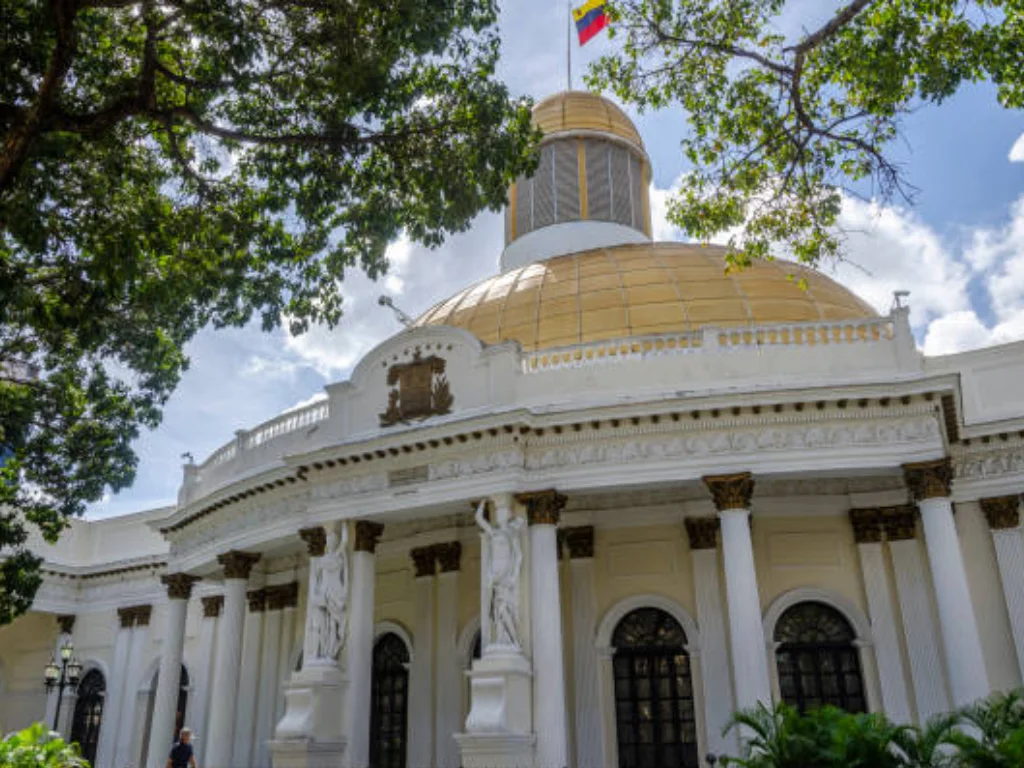
The law, denounced as an instrument of political persecution, faces its greatest challenge yet. While the acting government is pushing for a partial reform, human rights organizations, press associations and the opposition are demanding its complete removal from the legal system.
Natalia Jaua
The Constitutional Law Against Hate, for Peaceful Coexistence and Tolerance was approved on November 10, 2017, by the National Constituent Assembly, then headed by Delcy Rodríguez, which operated as a “supra-power” that sidelined the opposition-controlled National Assembly elected in 2015.
The law emerged after months of anti-government protests that left people dead, under the argument that it was necessary to counteract hatred promoted by the opposition and private media outlets.
The law established prison sentences of 10 to 20 years for anyone who “fosters, promotes or incites hatred, discrimination or violence,” and empowered authorities to revoke radio and television licenses, block websites and impose heavy fines. Article 2 lists 19 values and principles, including tolerance, shared responsibility and respect for human rights.
On September 29, Delcy Rodríguez — who promoted and publicly defended the law in 2017 — asked the National Assembly to partially reform it to “move forward with the decriminalization of the conduct established” under the legislation.
The acting president justified the measure as part of the criminal justice system’s transformation and as a contribution to “democratic coexistence.”
“While I believe in the principles of that law, unfortunately it was poorly applied and abused,” the interim president said.
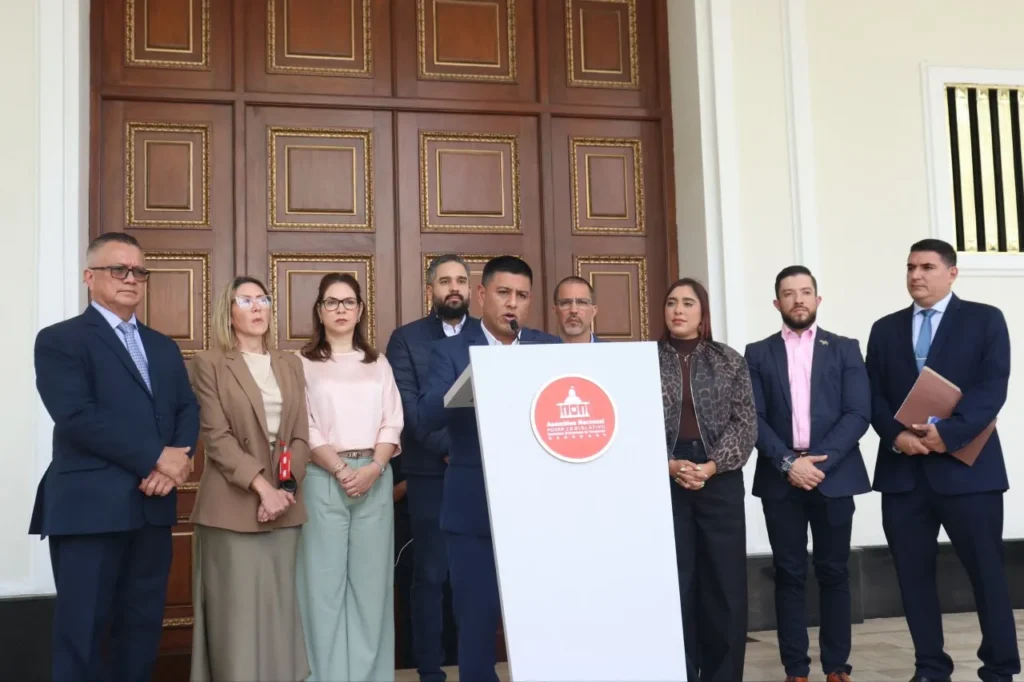
The National Assembly, controlled by the ruling party, immediately appointed a special commission to draft the amendments. The commission will receive proposals from different sectors and observations from national and international organizations.
The repressive nature of those in power
Human rights organizations, press associations and opposition sectors argue that reform would not go far enough and that the law must be eliminated.
Foro Penal, the leading NGO dedicated to defending political prisoners, documented that authorities have charged at least 927 people with “incitement to hatred” since the law took effect in 2017. Six of them remain in detention, while 638 face restrictions on their freedom.
“It is a law that has clearly demonstrated the repressive nature of those in power” and constituted “a mechanism used essentially against anyone who caused discomfort to those in power,” said Gonzalo Himiob, the organization’s director.
The Venezuelan Program for Education-Action in Human Rights (Provea) warned that “a partial reform is insufficient to address its original flaws, disproportionate restrictions and incompatibilities with international human rights standards.”
The organization has documented more than 200 people penalized under the law and is demanding “the urgent repeal of the legal framework that has enabled the criminalization of citizens’ rights.”
An instrument for censorship
Espacio Público, an NGO specializing in freedom of expression, says authorities have used the law “selectively against dissent and journalism.”
In a more detailed analysis, the organization states that the law “uses the justice system to criminalize critical thought, punish oversight of public administration, legally target those who question the State and restrict the information ecosystem.”
Between 2017 and 2024, the organization documented more than 120 cases of freedom-of-expression violations linked to the law.
Press associations have been particularly active in opposing a partial reform. The National Union of Press Workers (SNTP) and the National Association of Journalists (CNP) issued statements making the same point: decriminalization is not enough.
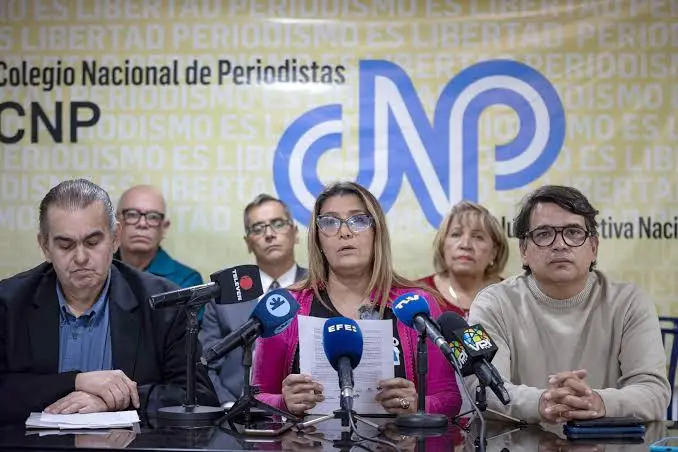
In a statement titled “Decriminalizing the Anti-Hate Law Is Not Enough,” the union described the possible elimination of prison sentences as an “important step forward.” Still, it warned that Article 22 maintains equally serious censorship mechanisms: revoking radio and television licenses, blocking websites, and mandating content removal within six hours.
“Revoking a license takes a radio or television station off the air. Blocking a website prevents a media outlet from reaching its audience. Forcing content to be removed directly affects editorial decisions,” the union’s statement said, reiterating that the law is unconstitutional and must be repealed.
The SNTP revealed that 7 out of 10 journalists and press workers imprisoned or facing judicial proceedings as of January 2026 faced charges of inciting or promoting hatred. The organization demands that the review of the law “must include all open cases, precautionary measures and restrictions resulting from its application. Those proceedings must be closed.”
The CNP stated: “This instrument must be repealed because of its punitive and discretionary nature, which violates constitutional rights, including the right to freedom of expression.”
Reform does not resolve the original flaw
In response to the proposal to reform the law, whose terms remain unknown, the Center for Justice and International Law; the Committee of Relatives of Victims of the Events of February and March 1989 (Cofavic); Espacio Público; Provea; Acceso a la Justicia; the World Organization Against Torture; and the Robert F. Kennedy Human Rights Center issued a joint statement reiterating their demand for repeal.
Among its main shortcomings, they pointed to “the disproportionate nature of the criminal penalties and the vagueness, ambiguity and breadth of the criminal offenses it contains, in violation of the principle of legality.”
According to the organizations, that combination allowed “the criminalization of hundreds of people under accusations of ‘inciting hatred.’”
But they warn that the problems go beyond the criminal provisions: “they cannot be resolved with a reform proposal that, according to what has been announced, seeks only to decriminalize the conduct defined by the law.”
The organizations identify an “original flaw”: the law “was not enacted by the National Assembly, the competent body under the Constitution.” Its approval, they added, “was not preceded by public debate or a consultation process with civil society.”
Furthermore, lawmakers approved it “in a context of severely repressed protests and under an official narrative that invoked the need to ‘restore peace’ and combat ‘hatred,’ but which, in practice, created conditions to restrict or punish expressions of criticism, dissent or opposition to the government.”
Dismantling the framework of persecution
The Democratic Unitary Platform (PUD), the main opposition coalition, rejected the proposed reform and demanded the “immediate” repeal of the law. In a statement, it described the attempt to “reform an unconstitutional law that has been used to persecute, criminalize and imprison innocent citizens” as “nonsensical.”
“Venezuela does not need a corrected version of a tool of persecution,” the PUD said, calling for authorities to “dismantle the legal framework that has allowed the State to be used against those who think, express opinions or dissent.”
International organizations have backed demands for repeal. The European Union identified the Anti-Hate Law as one of the laws used to restrict civic space and persecute the opposition, and called for its repeal as part of “credible steps toward democratization.”
Judicially intervened parties back reform
Inside the Capitol, opposition factions maintain a position that differs from that of public opinion and civil society organizations. Lawmakers from political parties intervened in the Supreme Court of Justice, such as Democratic Action (AD) and Copei, support the reform.
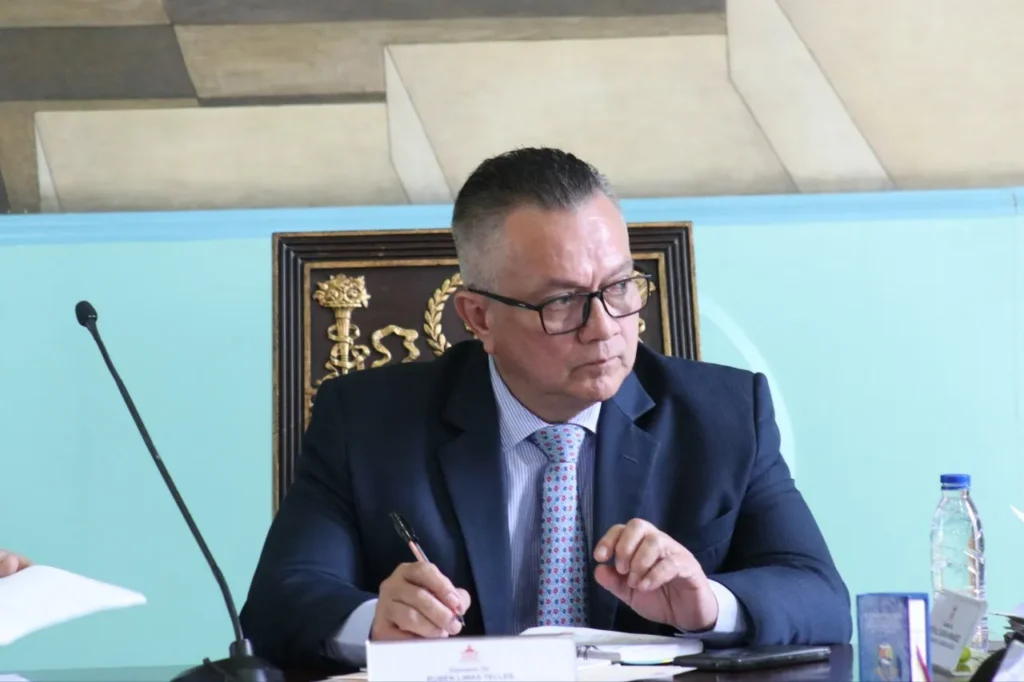
AD lawmaker Rubén Limas serves on the special commission for the reform of the Anti-Hate Law.
In AD’s case, the party presents the reform as a gesture of openness and reconciliation. Lawmaker Rubén Limas said the review of the law “helps create conditions for understanding and reconciliation among Venezuelans” and called for Venezuelans to “resolve our differences peacefully, under a democratic coexistence that distances and removes violence, hatred, resentment and revenge from the equation.”
Copei lawmaker Juan Carlos Alvarado, meanwhile, defended keeping the law under a new framework: “This type of law must continue to exist under a framework that allows for the pursuit of reconciliation and respect,” arguing that the legislation responds to commitments Venezuela assumed under the United Nations International Covenant on Civil and Political Rights.
The Program for Peace and Democratic Coexistence — created by the Delcy Rodríguez administration — also backed the presidential request, saying it viewed “positively the scope of this legislative initiative, aimed at decriminalizing the conduct established in this law.”
The special commission appointed by the National Assembly must define the reform’s scope in the coming days. It remains unclear when lawmakers will debate it or which parts of the law could remain intact.