José Leonardo Salazar
For decades, Caracas residents’ relationship with the Guaire River has been marked by distance and rejection. Historically treated as an open sewer the city chose to ignore, this waterway has become synonymous with pollution, foul odors, and a profound urban divide. Yet a paradigm shift is gaining momentum in the capital’s streets. Driven by citizen collectives, the myth of the untouchable river is beginning to crumble, giving way to an ambitious vision of coexistence and sustainable urbanism.
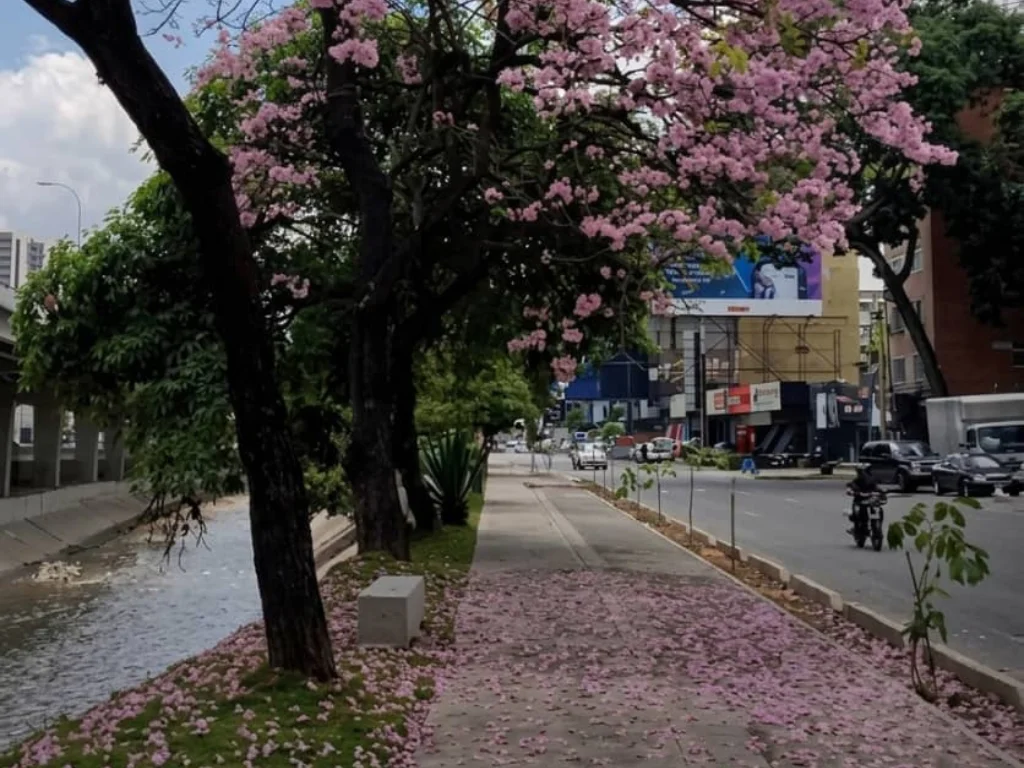
This conceptual transformation already has a tangible milestone: the inauguration of the Guaire River Linear Park in Colinas de Bello Monte. This project reclaims nearly two kilometers of urban riverbank, showing that the river can stop being an inhospitable channel and become the “connecting thread” of Caracas’ emotional geography.
The current debate surrounding the Guaire moves between historical skepticism and technical optimism. Those who advocate reclaiming public space argue that the river possesses invaluable ecological, educational, and identity-defining significance.
For urban activists such as Cheo Carvajal of Caracas a Pie, the main challenge is as much a matter of mindset as design. The underlying premise is that citizens must “heal themselves through their relationship with the river” and reclaim its banks immediately, rather than postpone their encounter with the waterway while awaiting its complete cleanup.
From an architectural perspective, Elisa Silva, founder of Enlace Arquitectura, has been instrumental in bringing these ideas to life. Silva argues that the Guaire is the only natural feature — alongside Waraira Repano — that crosses the city from west to east, giving it unique potential as a corridor for pedestrian and bicycle mobility while diminishing the automobile’s historically dominant role.
Nevertheless, the initiative faces resistance and criticism. Some residents and hydraulic engineering experts regard the project with suspicion because of the ever-present danger of river flooding during the rainy season.
Likewise, some critics argue that investing in plazas, vegetation, and walkways is a “superficial” measure unless the root problem is addressed first by fully connecting wastewater to sewer systems and properly treating industrial waste discharges. They maintain that underground sanitation infrastructure should take absolute priority before any surface changes.
To make coexistence with the river viable despite these opposing positions, the project — developed through a partnership between the Baruta municipal government, the Development Bank of Latin America and the Caribbean (CAF), and the private sector — proposes a model of progressive, comprehensive urbanism.
This strategy involves reducing fast-moving traffic lanes to widen sidewalks and create safe bicycle paths, while introducing green infrastructure and biofilters to mitigate urban heat islands.
At the same time, the project calls for continued hydraulic sanitation through interceptor sewers along tributary streams to gradually clean the river’s waters, while equipping its banks with efficient lighting and cultural activities that ensure safety through active public use. The vision also includes extending this walkable corridor to a continuous six kilometers, connecting it with Las Mercedes and the Lincoln Bridge.
The case of the Guaire River demonstrates that Caracas’ reconciliation with its natural surroundings is no longer a utopia confined to the drawing board, but a living urban debate in which the city experiments with a new way of inhabiting itself.