Neirlay Andrade — The National Art Gallery (GAN) commemorates its 50th anniversary with Half a Century of Art in Motion, an exhibition that not only celebrates the trajectory of Venezuela’s leading institution dedicated to the visual arts, but also offers a broad and dynamic reading of the country’s visual history. Through a journey that connects periods, aesthetics, and artistic discourses, the exhibition invites visitors to understand Venezuelan art as an ongoing process of dialogue between past and present.
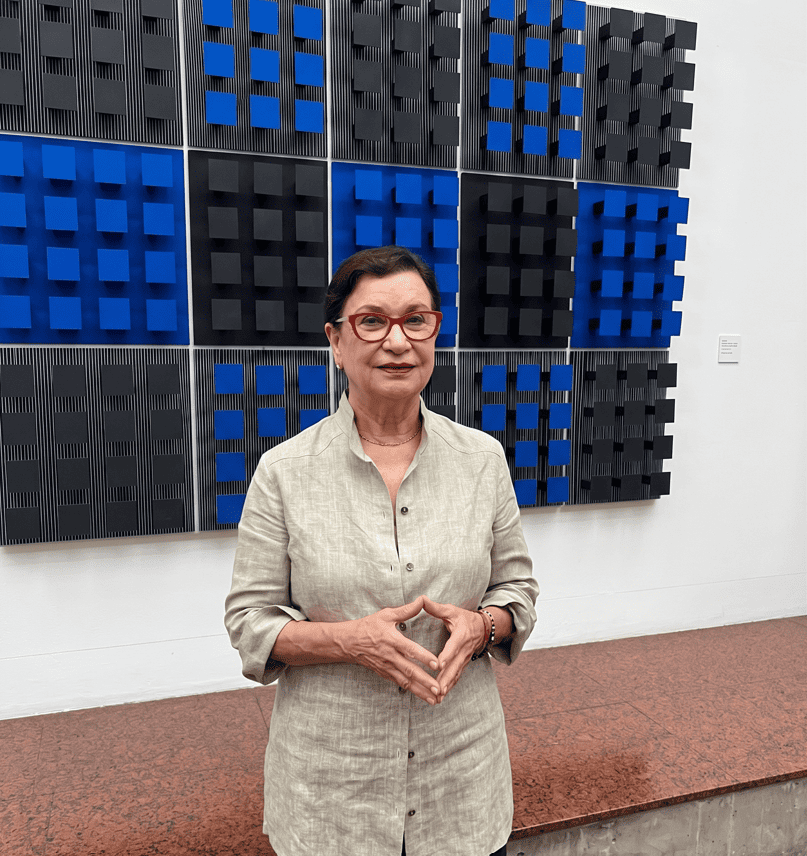
During the opening ceremony, Élida Salazar, president of the National Museums Foundation, addressed attendees. Salazar, who joined the GAN’s founding team in 1976, highlighted the celebration’s significance as a collective tribute.
“I was part of this dream envisioned by Manuel Espinoza, Miguel Otero Silva, and Alejandro Otero,” she said, while calling on visitors to “honor all the generations that have passed through these halls” over the last fifty years.
For its first three decades, the GAN operated within the Museum of Fine Arts. In 2009, the institution inaugurated its current headquarters, designed by architect Carlos Gómez de Llarena. Élida Salazar also participated in that stage of the project.
“It is a magnificent space, but from a museographic standpoint it requires extensive study. It is a place to enjoy, but also one that demands considerable work to master it and achieve that sense of exhibition continuity and circulation,” the researcher explained.
A dialogue across overlapping times
The exhibition revolves around a central idea: historical continuity. Rather than presenting a chronological succession of works, the curatorial narrative establishes relationships among different moments in Venezuelan artistic creation, revealing how certain themes, materials, and concerns remain relevant across centuries.
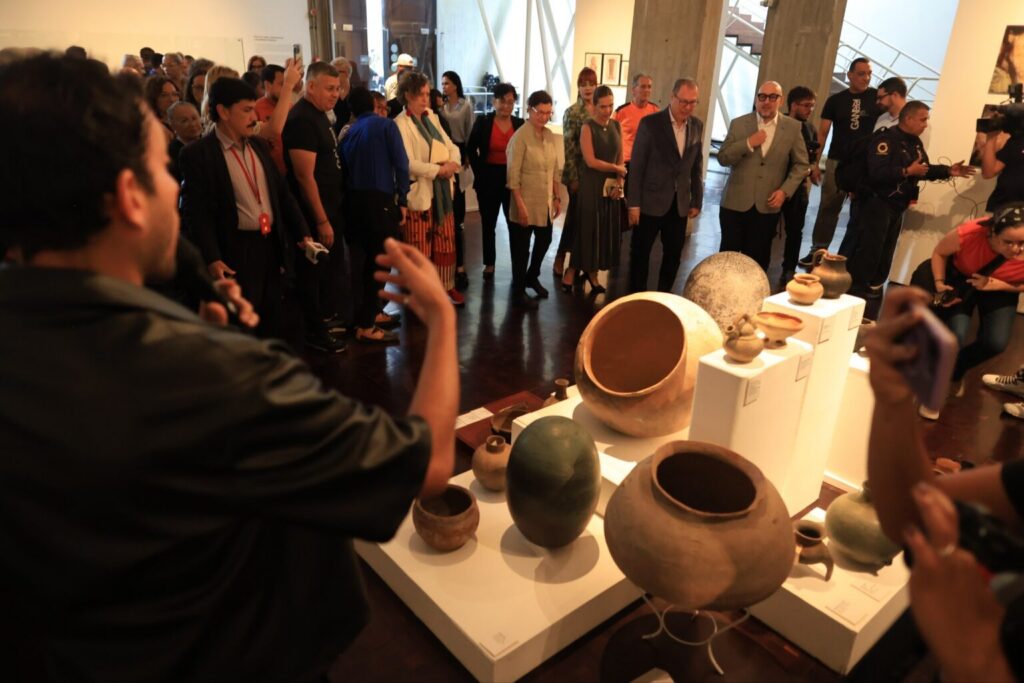
One of the most revealing sections appears in the opening gallery, where archaeological pieces dating back as much as 1,500 years converse with contemporary creations. The curatorial approach emphasizes that Indigenous art belongs not only to the past but also to contemporary artistic practices.
Ceramics from Indigenous cultures share the space with works by contemporary artists such as Reina Herrera, Josefina Álvarez, and Fabiola Gámez, creating connections through the use of earth, clay, and visual forms inherited from Indigenous peoples. The result is a reflection on the enduring presence of these traditions as essential to Venezuelan cultural identity.
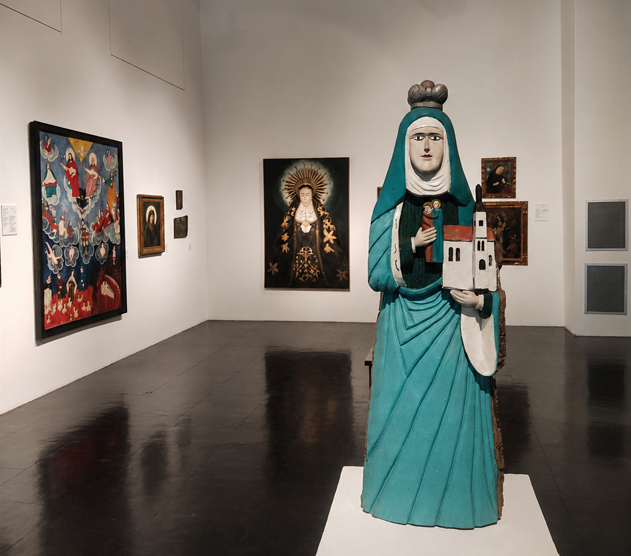
The exhibition also examines the colonial period through a critical lens. Religious works and portraits from the seventeenth and eighteenth centuries appear alongside contemporary pieces that revisit and question the processes of colonization and evangelization. The exhibition seeks to show how Venezuelan artists transformed imposed symbols into their own visual languages, creating an ongoing tension between coloniality and cultural resistance.
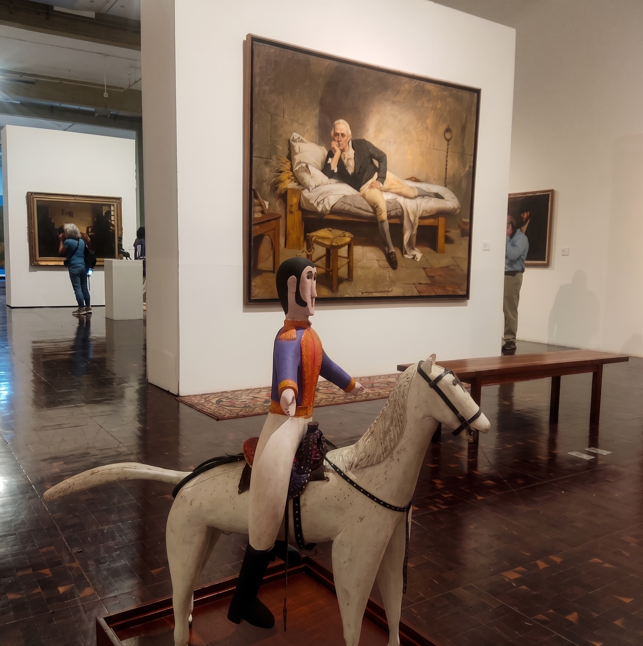
The journey continues with a gallery devoted to independence and the construction of the idea of freedom. Various representations of Simón Bolívar and Francisco de Miranda coexist there, ranging from historical paintings to popular art expressions. The curatorial proposal also broadens the traditional view of the independence movement by incorporating Indigenous and Afro-descendant peoples as protagonists in processes of resistance and emancipation.
Contemporary works, photographs, and conceptual pieces remind viewers that the exhibition does not present independence as a closed historical episode, but rather as an aspiration that continues to challenge and inspire Venezuelan society.
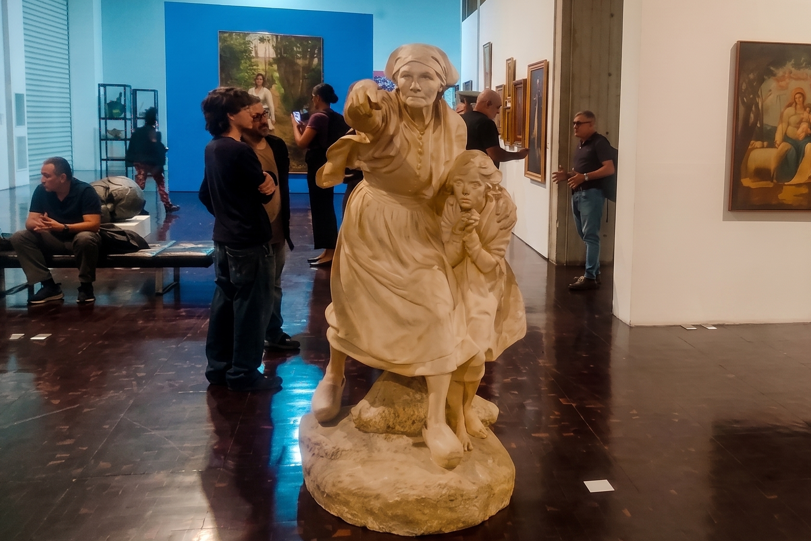
The republican era finds expression in works by masters such as Arturo Michelena, Cristóbal Rojas, and Martín Tovar y Tovar, whose paintings move beyond religious iconography. Portraits, costumbrista scenes, and depictions of everyday life reveal the visual construction of a nation in the making.
Another major focus centers on the Venezuelan landscape. The curators establish a dialogue between nineteenth-century European explorers and travelers, artists associated with the Circle of Fine Arts, and creators from later generations. The selection dismantles the notion that landscape painting disappeared with the rise of the avant-garde, demonstrating its persistence as a defining expression of Venezuelan art.
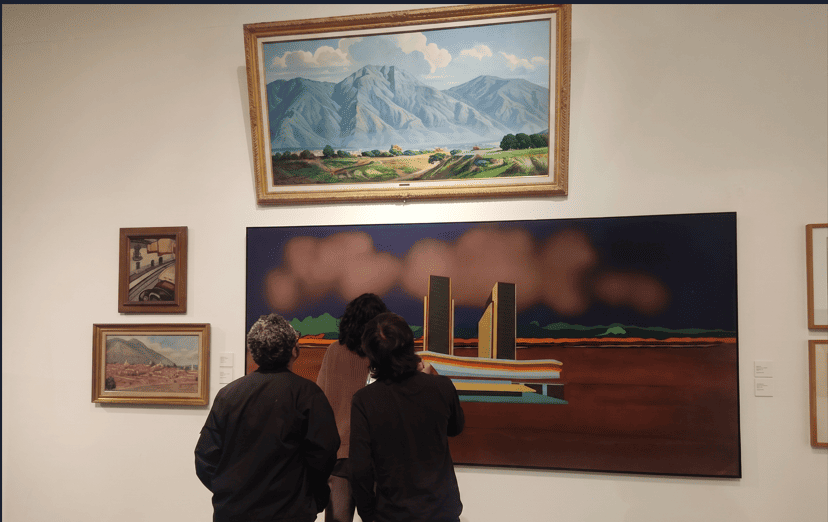
The exhibition reaches one of its most emblematic moments in the gallery dedicated to kinetic art. This movement transformed Venezuela into an international reference point during the second half of the twentieth century. Works by Jesús Soto, Carlos Cruz-Diez, Gego, and Juvenal Ravelo allow visitors to appreciate the exploration of movement, light, and visual perception that defined this artistic current.
The exhibition also explores the relationship between kinetic art and geometric abstraction, highlighting how these tendencies broke away from figurative traditions and developed new visual languages based on lines, forms, and dynamic structures.
From there, the exhibition moves toward Informalism and material-based artistic practices. Works by Mario Abreu, Alirio Oramas, María Abreu, and other artists reveal a departure from the formal purity of geometric abstraction by incorporating found materials, recycled objects, and elements drawn from everyday experience.
Reflection on the human body occupies another significant space within the exhibition. Through works by Mario Abreu, Bárbaro Rivas, Armando Reverón, and others, visitors can observe how Venezuelan artists challenged traditional academic canons and proposed freer, more symbolic, and more experimental representations of the human figure.
Beyond the diversity of periods and artistic movements represented, Half a Century of Art in Motion finds its greatest strength in the bridges it builds between different eras. The exhibition rejects a linear reading of Venezuelan art history and instead presents a network of continuities, ruptures, and resonances spanning decades of cultural production across the country.