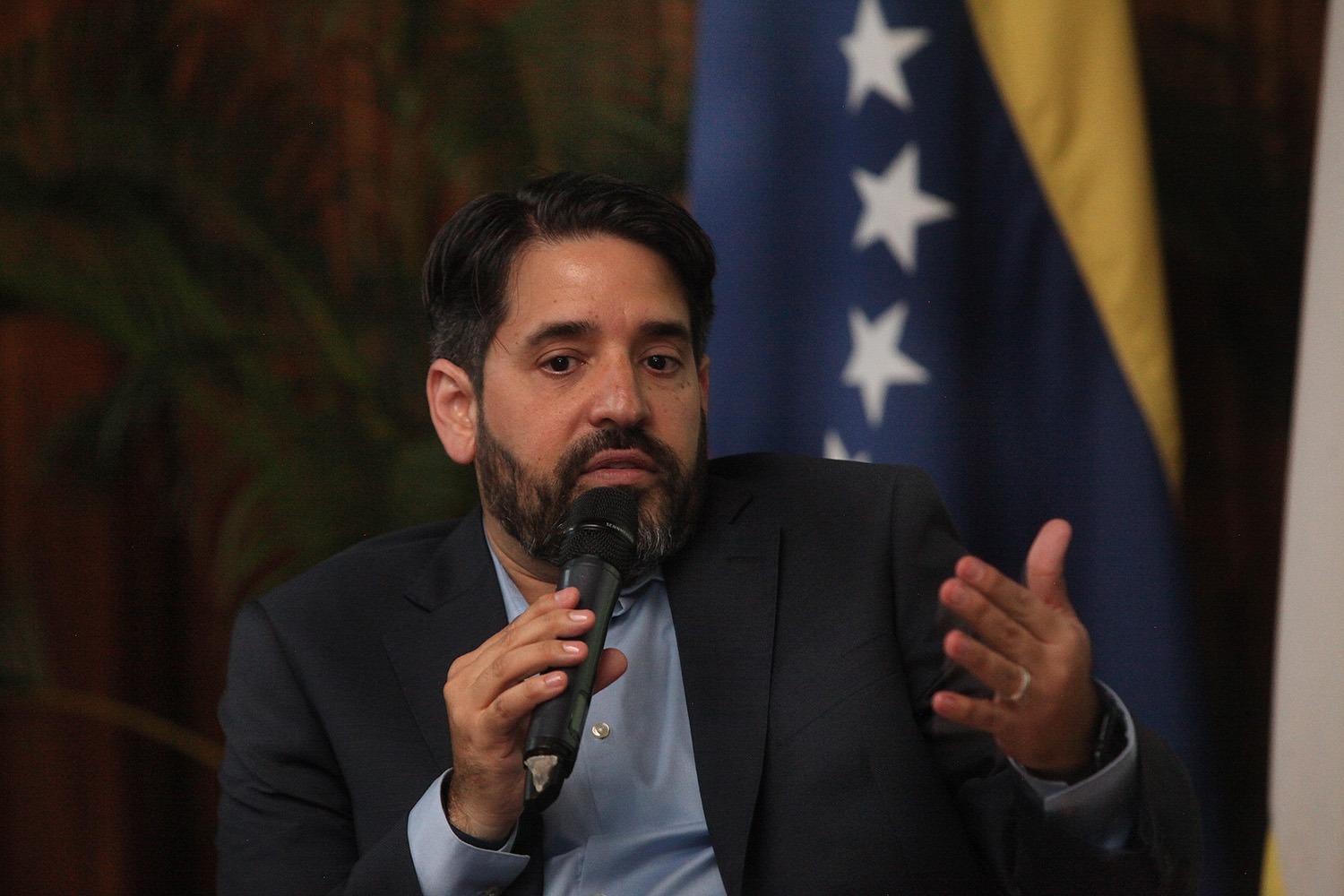
The Daily Journal — Economist Asdrúbal Oliveros has brought a sobering reality to the forefront, one that forces the country to look beyond the physical destruction and the undeniable human tragedy. The recent earthquake has carved a deep crack into Venezuela’s already fragile financial structure.
According to the analyst’s preliminary estimates, the material losses are far from minor. They range between $7.5 billion and $9 billion. To put that figure into perspective without getting lost in the scale of the numbers, the disaster has wiped out roughly 8.5% of the country’s Gross Domestic Product (GDP) in a single blow.
The most severe damage has struck the core of the productive sector and the everyday lives of Venezuelans. Housing, infrastructure, commerce, transportation, and logistics have all suffered significant setbacks, bringing economic activity to a halt and placing even greater strain on daily life.
Yet the real Gordian knot—one that calls for institutional certainty rather than political voluntarism—lies in what comes next. Oliveros warns that clearing the debris and rebuilding the affected areas will require between $12 billion and $15 billion.
At this point, the analysis collides with Venezuela’s fiscal reality. The required investment far exceeds the financial capacity of the Venezuelan government. Any attempt to centralize the reconstruction effort through a state monopoly or political control mechanisms is simply unworkable under the country’s current economic constraints.
Stability will not emerge through decrees or temporary fixes, warns the Summa Cum Laude economist from the Central University of Venezuela.
His central argument holds that restoring critical infrastructure and rebuilding the country require a national response that brings every sector to the table and broadens participation.
That means setting confrontation aside, mobilizing international cooperation, providing full guarantees for private investment, and allowing civil society to play an active, coordinated role throughout the reconstruction process. The challenge is enormous, and time is running short. Venezuela’s ability to recover depends on recognizing that this emergency leaves no room for exclusion.