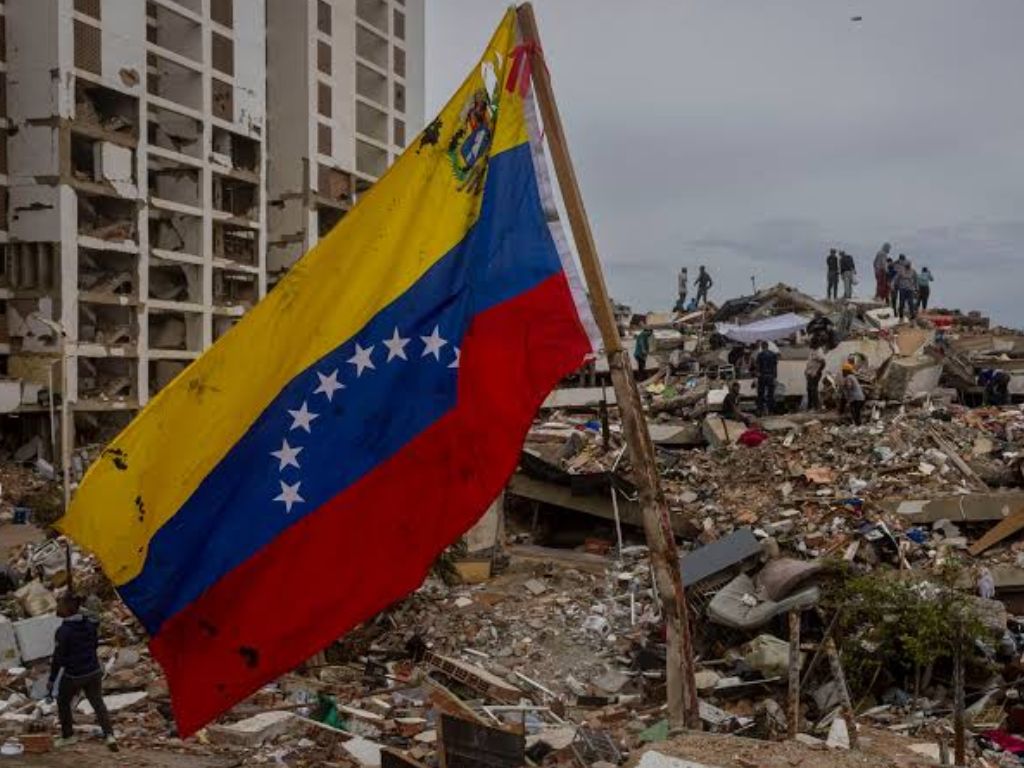
By Héctor Sánchez, Sociologist. — By now, the news has become a painful echo in everyone’s memory: two earthquakes of historic magnitude struck Venezuela within moments of each other. It was an unprecedented double seismic event, a geophysical anomaly that continues to challenge scientific explanation, leaving behind a scar across the “portable country” we call home—hundreds of lives lost, thousands displaced, and a landscape marked by devastation.
Yet these lines are not about geological faults or the Richter scale. They are about what happened after the earth finally stopped shaking and the people began to move.
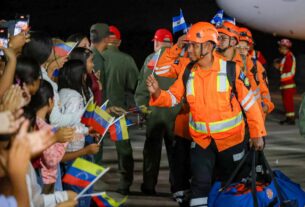
What we have witnessed over the past few days deserves to be remembered. In the midst of tragedy, the country rediscovered itself through solidarity. While images of collapsed buildings and children whose eyes still reflected fear broke our hearts, another story emerged: ordinary citizens pulling survivors from the rubble with their bare hands, endless lines of people delivering supplies, and volunteer medical teams building field hospitals without waiting for permission or for the government to arrive.
At a moment like this, Venezuela needs what could only be described as a sociological miracle: dismantling the logic of division and defeating the mentality of opposing camps. Powerful interests have spent years trying to fracture this country beyond repair, making this reunion among ordinary Venezuelans not only meaningful but essential if we hope to save our nation. For decades, Venezuela became a political battlefield where rival factions fought relentlessly to gain or preserve power, cultivating distrust and fueling the hatred that encourages people to see anyone different as an enemy.
But when the ground split open, that “other” person stopped being an ideological opponent and became the very hand capable of pulling someone out of the ruins. Admittedly, the disaster also exposed humanity at its worst: looting, influencers performing grief for clicks, self-appointed commentators lecturing from ignorance, and religious extremists declaring the earthquakes to be “divine punishment.” The usual political opportunists also appeared, eager to exploit other people’s suffering for their own benefit. Yet all of that amounted to little more than background noise—surface debris floating above something far deeper, more genuine, and ultimately far more powerful.
What truly matters is the immense wave of people who shared whatever little they had under a simple conviction: “Together, everyone matters.” Their response reminds us that something vital still lives within the soul of the Venezuelan people—something that political, intellectual, business, and ruling elites alike have failed to destroy.
These days have also revealed that the “civil war” so often invoked from positions of power has never materialized because ordinary Venezuelans have come to understand, perhaps through painful experience, that hatred serves someone else’s interests. It enriches politicians, pundits, and opportunists, while leaving everyone else with nothing but misery and death.
We are not the obedient flock many politicians imagine. We are not sheep fighting over the color of a jersey while others steal our future. Faced with chaos, we have chosen reason, cooperation, and solidarity. This tragedy reminds us that the country belongs to those who live in it and dream about it—not to those who poison public discourse day after day.
Earthquakes do not destroy nations. Corrupt governments do. Indifferent oppositions do. Self-serving elites do. Predatory empires do. But when a people choose to survive and recognize themselves in one another, they become stronger than any earthquake.
The challenge now is not to forget. We must build the future on this renewed certainty: as long as one Venezuelan is willing to help another beyond the rubble of ideological divisions, there will always be a tomorrow.