It’s Time for Oil Contracts.
Listen to the Editorial audio here: https://clyp.it/1mybbqxi
Julio A. López, Editor-in-Chief.— For years, Venezuela discussed sanctions, licenses, restrictions, international litigation, and political disputes. However, for major international oil companies, a much simpler and more practical question exists: What will the rules of the game be?
The recent hiring of the international law firm Greenberg Traurig to advise PDVSA and the Venezuelan State on drafting and negotiating new oil contracts represents much more than the addition of a prestigious law firm. In fact, it constitutes one of the most important signs that Venezuela has begun to move from the discussion phase to the investment phase.
Oil companies do not invest billions of dollars based on political speeches or promises. They invest when they know exactly how much they must pay, what obligations they must fulfill, how long they can operate a project, and under what conditions they can recover their capital.
For that reason, contracts have become the most anticipated document in the international energy industry.
Companies from Europe, the United States, Asia, and the Middle East closely monitor developments in Caracas. They do not wait for speeches. They wait for contracts.
They need to know the new royalty rates, tax structures, investment recovery mechanisms, international arbitration procedures, and, above all, the duration of the concessions and partnerships that will govern projects over the coming decades.
The Venezuelan government did not choose Greenberg Traurig by accident. The firm ranks among the most important law firms in the United States and brings experience in energy, international finance, regulation, and arbitration. The firm has already taken part in matters related to Venezuela, including litigation involving Citgo and highly complex international disputes.
But the law firm is not the true protagonist of this story.
The country is.
Because behind every contractual clause stands a decision that will directly affect the lives of millions of Venezuelans.
Every new oil project generates economic activity.
Every platform that returns to operation creates jobs.
Every well that resumes production generates demand for services, transportation, construction, maintenance, food services, security, engineering, and technology.
Oil investments do not remain confined to oil fields. People feel their impact on the streets, in stores, hotels, restaurants, and thousands of small and medium-sized businesses that form part of the energy value chain.
That is why negotiating these contracts carries significance far beyond the oil sector.
We are talking about the rules that will determine a large part of Venezuela’s economic recovery in the years ahead.
The new Organic Hydrocarbons Law, which Venezuela enacted at the beginning of this year, opened the door to a profound redefinition of the relationship between the Venezuelan State and international investors. However, the law alone does not suffice.
Investors need to know how that law will translate into actual contracts.
They need numbers.
They need guarantees.
They need legal certainty.
And they need to know that the rules will not change with every shift in the political climate.
For that reason, people in Caracas, Houston, Madrid, London, Abu Dhabi, and Beijing will closely watch Greenberg Traurig’s work.
The outcome of this process could determine the pace of energy investments in Venezuela during the next decade.
Meanwhile, several companies are already preparing to accelerate their activities.
Repsol, for example, continues to advance through preliminary agreements, letters of intent, and memoranda of understanding, but the sector awaits definitive contracts that will enable larger investments and the full deployment of the company’s operational capabilities.
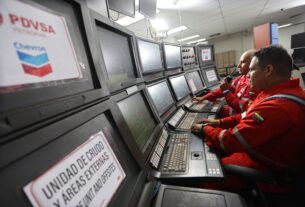
Chevron, meanwhile, already operates continuously in Venezuela and has demonstrated a genuine interest in expanding its presence there. However, the company continues to pursue more competitive economic terms and contractual mechanisms that align with the new legal framework approved earlier this year.
The difference between a slow recovery and a rapid recovery may lie precisely there: in the quality of the contracts currently under negotiation.
International investors already know the size of Venezuela’s hydrocarbon reserves.
What they still seek to determine is whether Venezuela stands ready to offer the conditions necessary to transform those reserves into investment, production, and prosperity.
And that answer will not appear in speeches.
People will write it into the contracts.