The Daily Journal.- Political leader Enrique Márquez returned to the public spotlight on Thursday to defend the “stabilization, recovery and transition” roadmap that the United States has promoted for Venezuela. The former political prisoner acknowledged that Washington is overseeing the process and rejected criticism from those who consider the timetable “too slow.”
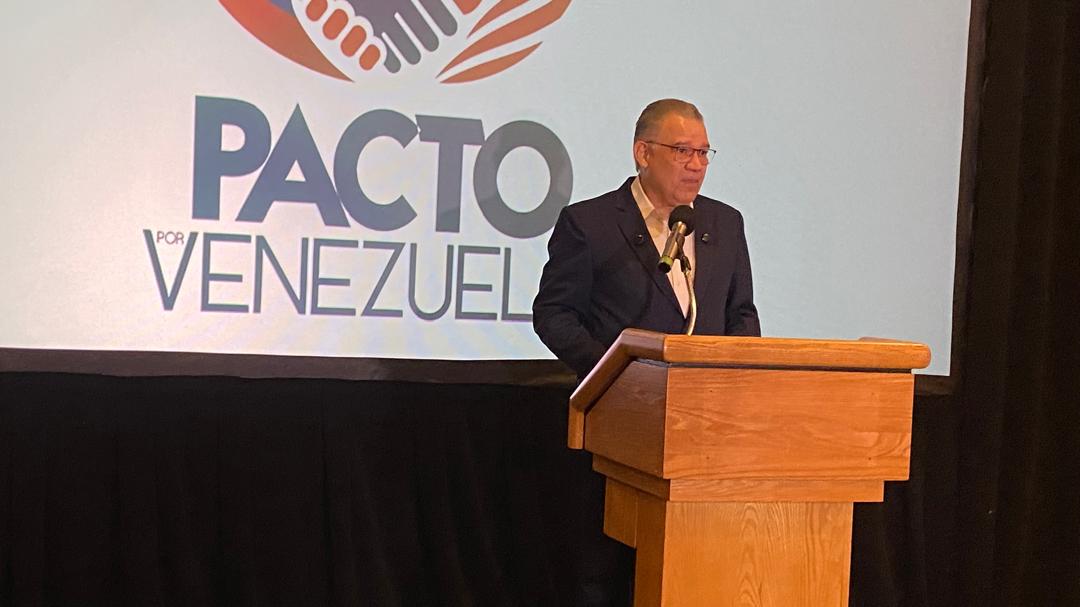
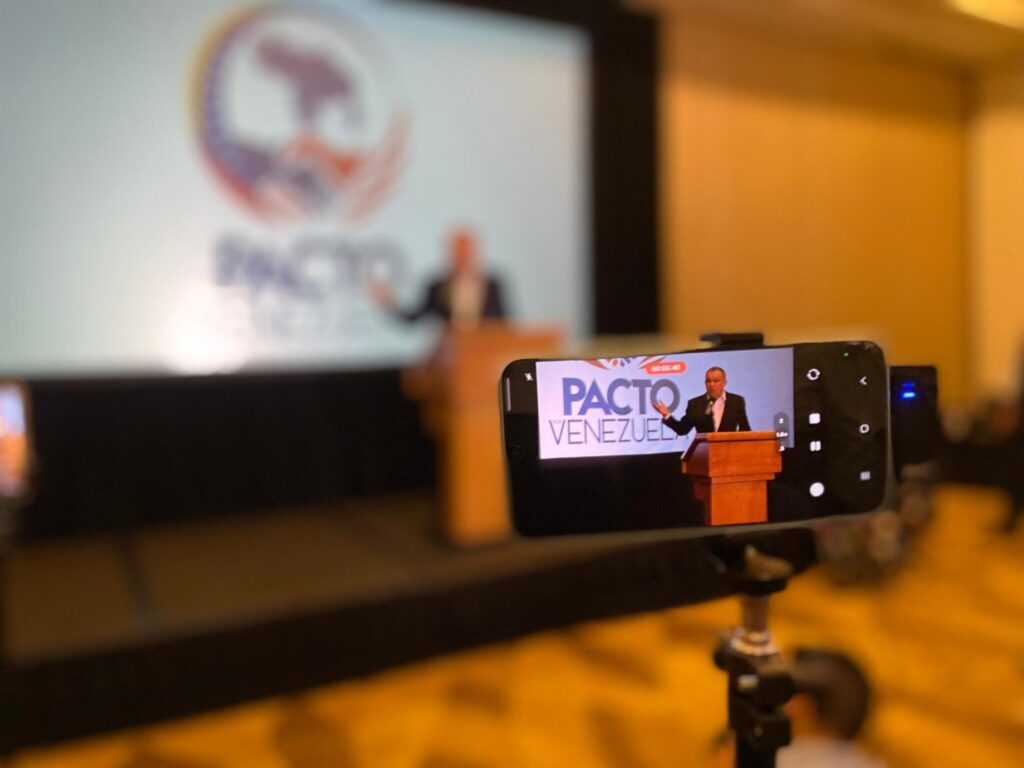
During the presentation of his “Pact for Venezuela” program, Márquez argued that the country needs to rebuild its institutions and economy before holding elections.
Márquez placed the beginning of the current political stage on January 3, a date that, he said, marked the start of “an unprecedented process” of transformation for Venezuela.
“Rebuilding Venezuela, transforming its institutions and economy, and recovering what we once had and lost will take time,” he said.
United States leads the transition
The United States’ role took up a significant part of the former National Electoral Council (CNE) rector’s remarks. Márquez openly acknowledged that the United States is leading the transition.
“We are going through a transition process that the United States has promoted, but also oversees. There is no doubt about it; let’s call things by their name,” he said.
Márquez also responded to criticism over the pace of the U.S. roadmap: “Some say this roadmap is too slow, that things cannot move this slowly. I tell them that we have endured 27 years of destruction.”
In response to those demanding immediate results, he proposed what he called “active patience.”
“Not the patience of a citizen who lies in a hammock waiting for the country to improve, but the patience of a citizen who, knowing the path ahead, must participate so that we can shorten that path and accelerate change,” he explained.
The political leader defended the three stages of the U.S. State Department’s plan — stabilization, recovery and transition — and rejected proposals to reverse the order and hold elections first.
“First, stability, putting things in order. Then we begin rebuilding our institutions and our economy. We build the foundations for democracy, and then we hold elections,” he insisted.
“The recovery of our sovereignty began on January 3”
One of his most controversial arguments concerned the role of the United States in Venezuela’s loss of sovereignty following the January 3 military operation.
Márquez said Venezuela did not fully exercise its sovereignty before January 3 and argued that the date launched a process to restore it: “The process of recovering our sovereignty began on January 3,” he said.
He also rejected the argument that the United States has “hijacked” Venezuelan democracy and maintained that the current transition must lead precisely to its restoration.
“Venezuela has already changed, and authoritarianism has no place in its future. Venezuela’s future is democracy,” he emphasized.
Oil and transparency
On economic matters, Márquez said that the new trade framework that the United States has imposed has brought greater transparency to government business, particularly in the oil sector.
“Now at least we know who receives the contracts, and it is good that we know,” he said, referring to companies that receive oil contracts.
When reporters asked him about the lack of public information regarding revenue from oil sales and the oil reform that removed the National Assembly’s authority over contracts, Márquez qualified his comments and advocated for “the gradual restoration of all the functions” that Parliament previously exercised to oversee operations and contracts.
“All of that must happen sooner rather than later because, as I have said, unfortunately our Constitution is in recess,” he said.
Support for the dialogue process
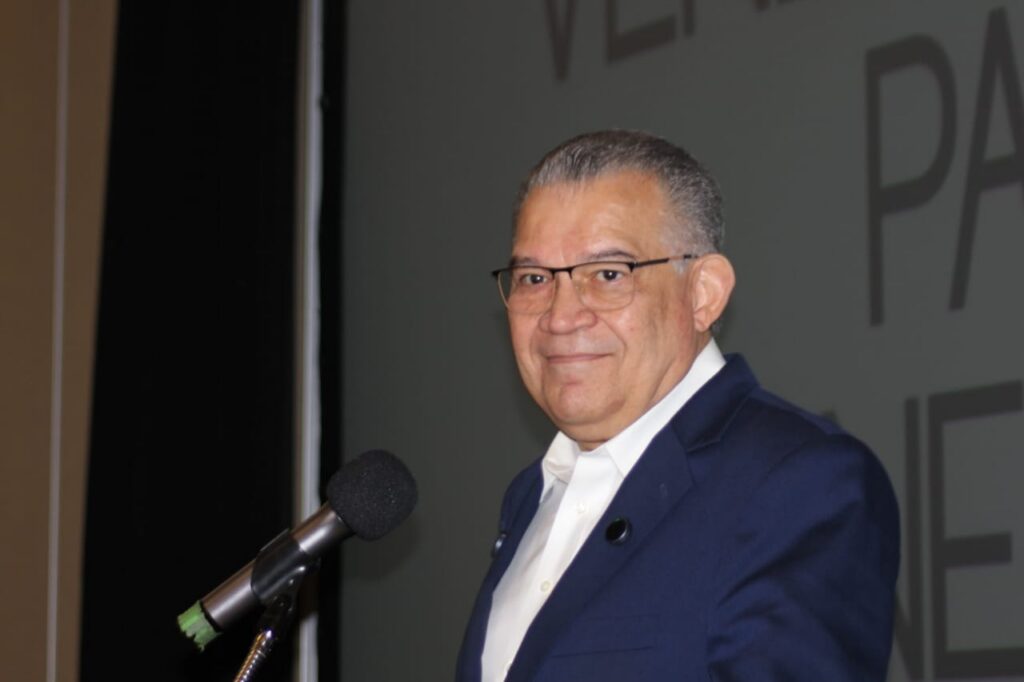
Regarding the dialogue between representatives of Delcy Rodríguez’s administration and the 2015 National Assembly, Márquez expressed support, saying he remains attentive to the government’s intentions.
He clarified that his new proposal “does not compete at all” with the initiative that Washington is pursuing but rather “seeks to collaborate.”
The politician said he has already presented the proposal to each of the parties involved in negotiations between Chavismo and a sector of the opposition, as well as to the U.S. State Department.
A “Pact for Venezuela” open to everyone
The former presidential candidate presented the “Pact for Venezuela,” a document that he described as an open proposal.
“The Pact for Venezuela is not a party, it is not a movement, it is none of those things. It is a document, an idea,” he explained.
Márquez said the proposal does not seek to align itself with either the government or the opposition, but instead aims to provide a framework for understanding within Venezuelan society.
The document outlines five main areas: democracy and institutions; economy and development; humanitarian emergency; political and territorial sovereignty; and reconciliation, justice and peace.
On constitutional matters, Márquez proposed eliminating indefinite reelection for all elected offices, introducing a presidential runoff and restoring a parliamentary structure that includes minority representation and a Senate.
He explained that the project will undergo a nationwide consultation through digital mechanisms. He said the goal is to allow citizens’ views to shape the proposal before its authors produce a final document.