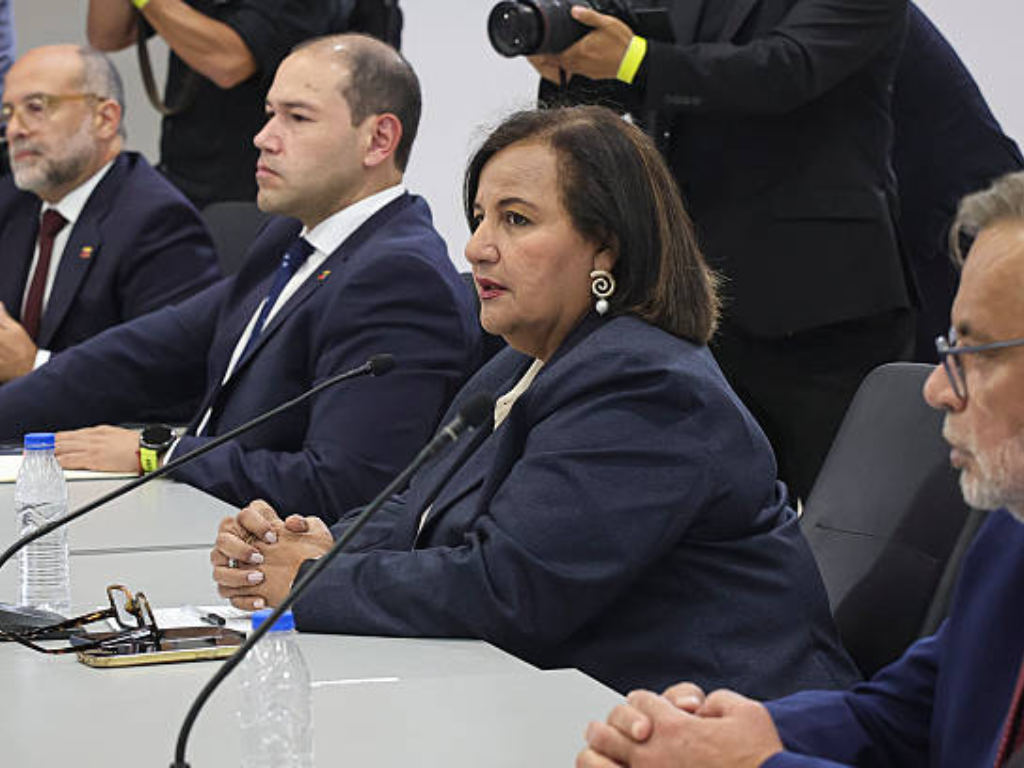
The Daily Journal.- The opposition delegation from Venezuela’s 2015 National Assembly, led by Dinorah Figuera, returned to Caracas from Madrid to begin a second round of negotiations with the Delcy Rodríguez administration as part of a U.S.-backed dialogue process aimed at establishing a roadmap toward a democratic transition in Venezuela.
Upon her arrival, Figuera said this new phase will focus on restoring the institutional framework of the Supreme Court of Justice (TSJ), civil and political guarantees, and freedom of expression — issues that, she said, should help create the conditions for a future electoral process.
“The second cycle, promoted by the United States and carried out jointly with the interim government, effectively begins with issues related to restoring the institutional framework of the Supreme Court of Justice,” Figuera said.
The opposition leader said the talks will address mechanisms to move forward with renewing the country’s highest court, including procedures for nominating new justices.
“We will work on the details surrounding the call for nominations of justices and other elements contained in the Organic Law of the Supreme Court of Justice,” she added.
Figuera also placed civil and political guarantees and freedom of expression on the agenda for this second stage, describing them as fundamental to establishing the conditions for an electoral roadmap.
“These are very important issues when it comes to laying the foundations that will guarantee an electoral process and an electoral roadmap, which is what the Venezuelan people truly want,” she said.
The opposition delegation had previously indicated that the second round would begin around Sept. 15. Figuera first announced the timeline from Madrid, and other members of the delegation later confirmed it.
The new round continues the talks that representatives of the Rodríguez government and a sector of the opposition began in August. The first round concluded with an agreement to move forward with the renewal of the TSJ and the recovery of Venezuelan assets held at the Bank of England.
At the start of the process, the 2015 National Assembly said the negotiations aimed to stabilize the country, promote economic recovery and political reconciliation, and achieve a peaceful transition. The United States expressed support for the process and said it sought to support Venezuelan-led efforts to strengthen democratic institutions and expand political freedoms.
For this second phase, other members of the opposition delegation have said negotiators could also review regulations they consider restrictive of civil liberties, including the Law Against Hate and legislation governing nongovernmental organizations.
Figuera said the delegation entered this new stage to maintain the dialogue process and move toward an institutional solution.
“We are here with a great sense of responsibility to offer the Venezuelan people a consolidated path toward democracy,” she said.
The opposition leader added that the second round forms part of a preparatory process that has included activities in both Madrid and Venezuela.
“We are telling the Venezuelan people that, in the face of this great need, we are here with a great sense of responsibility,” Figuera said.