Natalia Jaua
Welcome to your guide to restoring your mental health. Follow these steps if you want to achieve a fulfilling life: Step 1: Collapse from exhaustion; Step 2: Open an app on your phone that charges you $15 a month to listen to the sound of rain for 10 minutes; Step 3: Download an ebook by a life coach who will explain how to “hack” your brain to produce more in less time; Step 4: Go back to work.
This is the alchemy of the 21st century: the art of turning exploitation into “resilience” and structural suffering into a multibillion-dollar industry.
In 2025 alone, the mental wellness industry reached approximately $186 billion, encompassing everything from meditation apps (Calm, Headspace) and nootropic supplements to wellness retreats. The global coaching industry exceeded $5.3 billion in 2025 (nearly doubling the $2.8 billion that the International Coaching Federation reported in 2023), with more than 120,000 professionals practicing worldwide.
These two concepts have served as ideological arms of the performance society. Instead of questioning excessive demands or toxic environments, employers train workers to become more “resilient” so they can withstand heavier workloads without collapsing, turning a problem that requires a collective solution into an individual responsibility.
“They want to indoctrinate us… the system wants us weak and numb,” proclaimed the distinguished influencer Gianpiero Fusco as he explained that depression and anxiety are neither medical conditions nor responses to complex socioeconomic circumstances, but rather the consequences of giving in to “the system,” which makes people comfortable and inefficient.
And he says it with such confidence while the Venezuelan Violence Observatory (OVV) places Venezuela’s suicide rate between 6.9 and 8.2 deaths per 100,000 inhabitants (approximately 1,900 to 2,350 deaths annually). Young people between the ages of 15 and 19 have one of the highest rates, due to a lack of prospects, employment, and social integration.
“Such a young boy, for heaven’s sake, why would he make that decision?” an older woman wonders, swearing that nothing like that happened back in her day. Nobody asks why nearly 50% of young adults in Latin America still live with their parents, or why six out of 10 employed young people work without contracts, social security, or stable incomes.
Latin America ranks among the regions with the highest adoption of platform work and international freelancing to offset local inflation. According to Deel’s Remote Work Index and reports from the International Labor Organization (ILO), millions of young Latin Americans work for foreign companies across different time zones, without colleagues physically present or opportunities for workplace socialization.
According to the ILO and the Economic Commission for Latin America and the Caribbean (ECLAC), the skills mismatch rate (people with higher education working in low-skilled or informal jobs) ranges from 40% to 48% across the region. Five out of 10 university graduates in Latin America work as app-based drivers, in customer service, logistics, or delivery, or must enter the informal economy to survive.
Dr. Norma Conquista, coordinator of the Suicidology Section of the Venezuelan Society of Psychiatry, explains that “the constant uncertainty of not knowing whether you will be able to cover your expenses until the end of the month generates anguish. If the economic situation becomes chronic, it causes learned helplessness, where individuals feel that no matter how much effort they make, their circumstances will not improve.”

Dr. Norma Conquista, Coordinator of the Suicidology Section of the Venezuelan Society of Psychiatry (SVP)
Informal employment leaves people without social security, labor rights, or vacation time. Eventually, individuals isolate themselves. And isolation, as research has demonstrated, leads to depression.
The rise of fully online universities, distance education, and isolated work has destroyed community gathering places. In regional surveys on youth mental health (UNICEF, Youth Survey in Latin America), more than 40% of young people report frequent loneliness or persistent sadness, identifying the lack of in-person support networks and screen-based isolation as major triggers.
Conquista points out that “structural loneliness is a strong risk factor for suicidal behavior among both adolescents and older adults.” The lack of meaningful social interaction leads to loneliness, isolation, and depression, and can ultimately result in suicidal thoughts.
Among adolescents, hyperconnectivity also plays a particularly destructive role: they seek validation on social media, comparison becomes devastating, and face-to-face relationships deteriorate. Progressive isolation goes hand in hand with abandoning personal projects.
And that is without even mentioning the considerable decline of third places (social environments outside the home — the first place — and work or university — the second place). Gentrification has replaced them with aesthetic matcha-latte, gluten-free coworking cafés that charge you just to sit down.
Going to a movie theater without air conditioning costs at least $10 if you bring someone along, and that is without buying popcorn. You cannot even have a hobby anymore because society insists that you must somehow make it productive, and on top of that, you have to pay for it.
The disproportionate rise in the cost of living and leisure has turned the simple act of meeting friends into a financial toll that young people facing precarious economic conditions cannot afford.
Without free, informal places where people can inhabit the city without the pressure to produce or consume, contemporary individuals retreat into the first place: their homes. Loneliness then becomes a structural condition that the architecture of the market imposes.

“Aura Farming Battles” in Morelia, Mexico
Aura battles make me cringe, but can we really blame these kids for wanting to see each other face-to-face and feel that they belong somewhere? We judge young people for developing emotional relationships with artificial intelligence, but we never stop to ask why. Can we really judge them when they have practically no space or time for leisure?
The costs of mental health
According to PsicoData, only one in 10 Venezuelans experiencing severe psychological distress seeks professional help. The remaining 90% do not attend therapy, mainly because of financial barriers, lack of information, or stigma.
In a country where the legal minimum wage has fallen far behind the cost of the basic food basket (which exceeds $500), private mental healthcare represents a prohibitive expense for ordinary citizens. A private psychological consultation costs between $30 and $85 per session.
A box of 30 antidepressant tablets, whether generic or brand-name, costs between $8 and $20; anxiolytics and mood-regulating medications range from $5 to $15 per box; and a month’s supply of antipsychotics can exceed $25 to $50. The cost of regular medical appointments also makes it difficult for patients to obtain the official prescriptions they need for continuous treatment.
“The cost of consultations and medication means that patients, if they follow treatment at all, do so because of an immediate crisis, but maintaining adherence is very difficult,” Conquista explains.
Patients attend an average of two or three consecutive appointments and then stop because of the cost or because, once they feel better, they and their families believe treatment is no longer necessary. However, anyone who has experienced suicidal thoughts requires follow-up care, and a previous suicide attempt increases the risk.
According to the psychiatrist, the ideal follow-up schedule should involve appointments every three days or, if that is not possible, monthly consultations. Patients should space out appointments only when their clinical evaluation—which should continue for a year—indicates they can.
Exhausted and self-exploited people
In 2010, South Korean philosopher Byung-Chul Han argued that no external force or dictatorial prohibition oppresses 21st-century society. Instead, excessive performance demands, illusory freedom, and positivity drive it toward collapse.
Han argues that the inability to stop and the constant pressure to perform and remain happy all the time have contributed to neurological disorders among younger generations.
Hyperactivity, digital distraction, and multitasking destroy what Han calls “deep attention” (contemplation, philosophy, art, and the ability to experience boredom). Without boredom, critical thinking and genuine creativity are impossible.
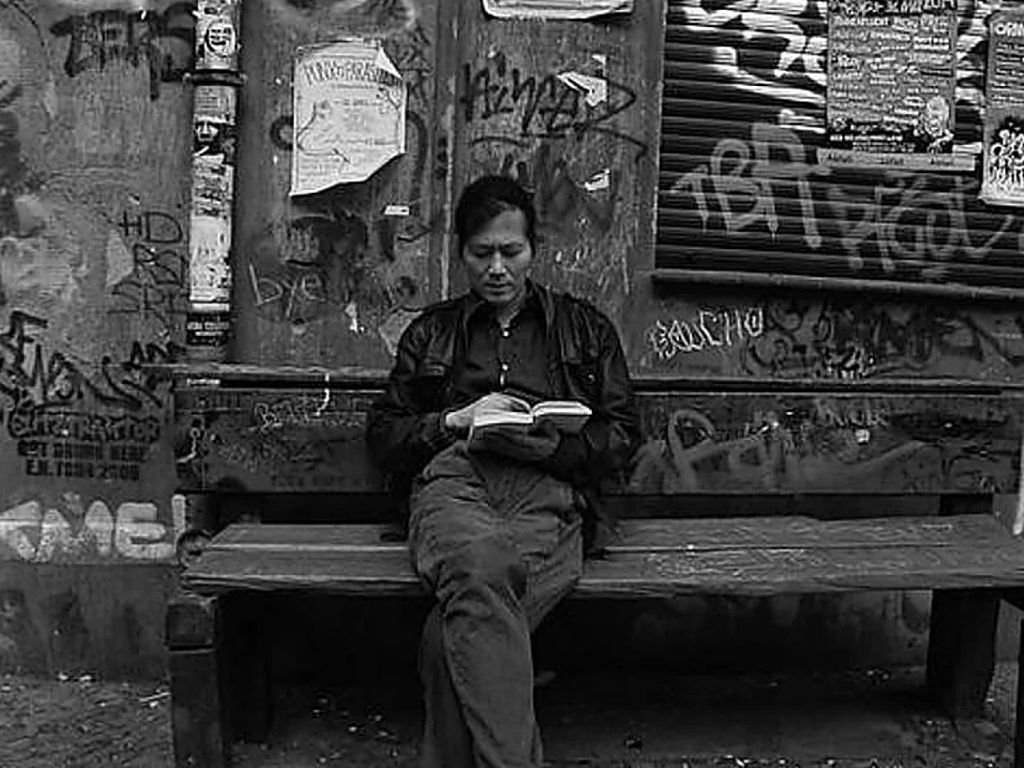
Byung-Chul Han (Seoul, 1959)
The philosopher distinguishes between two types of fatigue: performance fatigue, or solipsistic exhaustion, which isolates individuals and emerges when people burn themselves out through work or attempts at self-optimization until they can no longer see others. This is the exhaustion that produces depression, the fatigue of individuals who have become exhausted by themselves.
In contrast, Han proposes contemplative fatigue, or interruption, as a path toward healing. It involves stopping the machinery of productivity, allowing ourselves to celebrate, play, and “waste” time without guilt, and recovering shared rest within a community.
“The situation in the country has led contemporary adults to normalize exhaustion to fulfill their responsibilities, prioritizing productivity to meet economic needs and maintain their place in certain work environments,” Conquista explains.
Individuals believe they can handle everything until exhaustion takes over. They operate on autopilot, which eventually leads to collapse and isolation. They develop a syndrome of having no time for activities that do not generate economic value.
Thus, precarious living conditions, excessive productivity demands, and sustained burnout lead to hopelessness, a predictor of suicidal behavior. On top of this, stigma, lack of time, and limited financial resources discourage people from seeking professional help.
While 20th-century philosophers such as Michel Foucault and Gilles Deleuze analyzed the physical and biopolitical structures of control (prisons, hospitals, and digital surveillance networks), Han turns his scalpel inward: how 21st-century capitalism has penetrated the psyche, colonized desire, and transformed emotions into productive forces.
Drawing on Hegel’s master-slave dialectic, Han argues that the struggle no longer takes place between two people: the contemporary subject embodies both enslaver and enslaved person.
Exploitation no longer requires external violence (alienation); instead, it disguises itself as “freedom.” Individuals exploit themselves to the point of collapse (burnout), all while feeling fully accomplished.
In Bentham’s traditional panopticon, prisoners knew that someone was watching them, and they remained isolated in silence. In the digital panopticon (social media), prisoners communicate intensely, voluntarily expose themselves, and celebrate their own exhibition.
Suicide and mental health
Around 80–90% of people who die by suicide worldwide experience some form of mental health disorder. Major depression is the condition most frequently associated with suicide, followed by bipolar disorder, schizophrenia, borderline personality disorder, and anxiety or eating disorders.
Add to this the hopelessness of seeing no future, the death of a loved one, painful romantic breakups, a history of physical, emotional, or sexual abuse during childhood, severe debt, sudden job loss, or prolonged poverty.
The risk increases considerably among groups experiencing exclusion or stigmatization, including refugees, migrants, Indigenous populations, prisoners, and members of the LGBTQ+ community. It also affects the neurodivergent community, which includes autistic people, individuals with ADHD, gifted individuals, people with dyslexia, and those with other neurobiological variations.
“Belonging to a minority is an important suicide risk factor. From the perspective of suicidology, everything associated with exclusion contributes to suicidal behavior, while everything that promotes inclusion contributes to suicide prevention,” the psychiatrist explains.
Various international studies indicate that autistic people are three to seven times more likely to die by suicide than the general population. In contrast, people with ADHD face a risk up to four times higher.
For Conquista, autistic people face a higher suicide risk than the general population, but “this behavior does not stem from the diagnosis itself. It stems from the exclusion they experience, bullying, people treating them as strange, and late diagnosis — particularly among women — who have had to struggle to fit in with their peers since adolescence, leading to exhaustion, anxiety, and depression.”
In many countries, professionals have made diagnoses postmortem. Another obstacle to identifying risk arises when people assume that self-harm stems from an autism diagnosis and overlook a possible diagnosis of depression.
Masking refers to the effort autistic people — particularly those whom society considers high-functioning and women — make to fit into their social environments. It generally begins at home, when parents who do not know about the diagnosis force their children to behave like neurotypical individuals.
Addressing this requires helping individuals recognize situations in which they feel compelled to act neurotypically, offering them private spaces where they can rest after socially exhausting experiences, teaching them to say no to draining social situations, and providing teachers with information about neurodiversity.
Venezuela has no official statistics on suicide among autistic people.
Specialized research identifies prolonged masking (the conscious and unconscious effort to suppress neurodivergent traits) as one of the strongest direct predictors of suicidal ideation among autistic adults and adults with ADHD.
And yet, every September, we put on our little yellow ribbons to commemorate Suicide Prevention Month, call that friend who has been acting a little strange, and return to our exploitative work schedules.
We do not question why someone should have to choose between medical treatment and food. We do not challenge those who say that going to a psychologist is for crazy people or that it is better to go to church and ask God for help.
We do not question or call out those who have gutted the healthcare system, much less the companies that hire interns and make them work 12 hours for a miserable $30. We do not investigate why a child does not learn like everyone else; we simply tell them to try harder.
Dr. Conquista insists that a suicide prevention campaign must, at a minimum, normalize responsible discussions of suicide in the media; provide information about risk factors, warning signs, and triggers; address mental health stigma with the help of specialists; and educate the public about suicide myths.
But such a campaign must also train primary healthcare personnel in the early detection and management of suicidal behavior; require the state to control access to means of self-harm — pesticides, firearms, and drugs; ensure treatment for patients with mental health conditions; guarantee free mental healthcare facilities; and establish protocols for responding to suicidal thoughts or attempts, as well as supporting the families of those who have died.
All of this must take into account people’s socioeconomic circumstances, gender-based violence, and viable alternatives for those who need help.
Mental health is not about lighting a candle or getting up at five in the morning to exercise. It is about questioning why we have to put out fires every single day. It is about refusing to turn pain into an industry, precarious living conditions into resilience, and death into statistics. It is about demanding that life — and the possibility of continuing to live it — should not be a privilege reserved for those who can afford it.
And yet, we continue surrendering ourselves to the system that devours us.