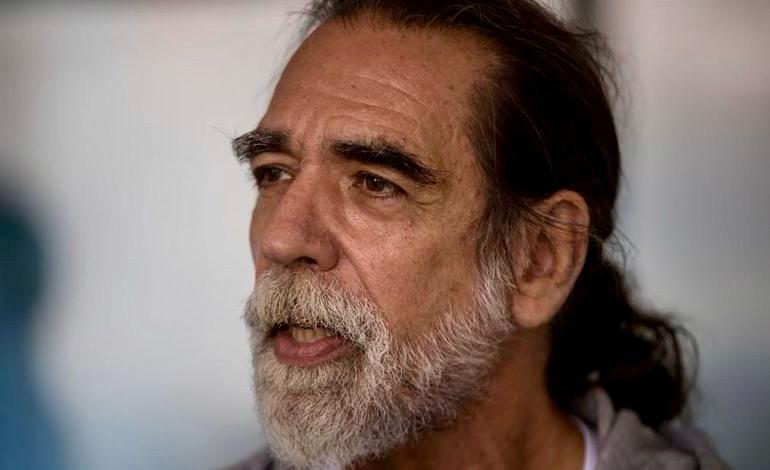
Sergio Curiel, vice president of the Venezuelan Academy of Motion Picture Arts and Sciences, argues that the sector faces a structural crisis marked by declining public funding, weakening mechanisms established under the Film Law, and the loss of autonomy of the National Autonomous Center for Cinematography (CNAC).
The Daily Journal.- For more than three decades, Sergio Curiel has worked behind the scenes on some of Venezuelan cinema’s most recognized films. As an editor, he has worked on more than 30 fiction feature films, including La oveja negra, directed by Román Chalbaud; Con el corazón en la mano, by Mauricio Wallerstein; and Amaneció de golpe, by Carlos Azpúrua. In 1996, he won the Best Feature Film Editing award at the Gramado Film Festival in Brazil for Azpúrua’s Disparen a matar.
Today, as vice president of the Venezuelan Academy of Motion Picture Arts and Sciences (ACACV) and president of the Venezuelan Society of Film Editors (SCEV), Curiel sees an industry that, in his view, has grown accustomed to working with increasingly limited resources.
His assessment begins with a problem he considers older than the current circumstances: the loss of funding mechanisms established under Venezuela’s National Cinematography Law.
Curiel specifically points to Articles 57 and 59 of the legislation. According to him, the first would allow companies to allocate part of the taxes they owe the government to film financing. In contrast, the second establishes a similar mechanism for businesses involved in theatrical exhibition, distribution, and subscription television.
The filmmaker says the industry even discussed implementing Article 57 with Venezuela’s National Integrated Customs and Tax Administration Service (Seniat), but authorities never put the mechanism in place.
“It required a minister’s signature. The will. Political will. That political will never existed,” he says.
Curiel also links the problem to Venezuela’s withdrawal from Ibermedia, an Ibero-American film cooperation program he sees as a potential source of funding for the sector.
“When you look at those two situations, you understand that there is no political will for us to have the resources to make films,” he says.
The editor connects this situation to a gradual decline in filmmaking activity, which the pandemic further aggravated. However, he also highlights one characteristic that, in his view, has allowed the industry to continue producing: its workers’ ability to organize.
“In the film industry, we are very resilient,” he says.
A network created after the earthquake
That capacity became evident after the earthquake that affected Venezuela. Curiel says that when the National Autonomous Center for Cinematography (CNAC) failed to provide the institutional response he expected, representatives from different industry groups organized on their own.
Their efforts resulted in an initiative called Conecta Venezuela, which brought together members from different areas of the film industry. According to Curiel, organizers conducted a census that gathered information on approximately 760 industry workers affected by the emergency.
The platform, he explains, made it possible to identify needs and connect people with health services, psychological assistance, and support mechanisms.
“We did it without spending a dollar,” he says.
The initiative also seeks to channel international resources. Curiel mentions the participation of the Ibero-American Federation of Film Academies (FIACINE) and the organization of a Venezuelan film showcase that will travel to several Latin American countries to raise funds for the sector.
He says the experience revealed both the film community’s capacity to respond and what he considers an institutional absence.
“What is worrying is the situation at the level of the film authorities,” he says. “Not even a phone call, not even a phone call.”
Curiel and other participants in the conversation, according to their account, particularly question the CNAC’s failure to coordinate an emergency response for industry workers.
The filmmaker attributes this situation to what he considers a mistaken interpretation of the institution’s autonomous status.
The debate over CNAC’s autonomy
For Curiel, one of the main problems facing Venezuelan cinema lies in the relationship between the CNAC and the Ministry of Culture.
He argues that the institution’s autonomous, collegial nature should allow it to make film policy decisions without depending directly on ministerial instructions.
“The CNAC has to regain its autonomy,” he says.
According to his interpretation, the institution should remain accountable to the ministry through administrative and budgetary mechanisms, while film policy decisions should remain within its own governing structure.
Curiel believes that this autonomy has weakened and that the institution has undergone a process of politicization in recent years.
He also questions the way authorities appoint its leadership. In his view, people with ties to film or culture and specific industry knowledge should lead the CNAC.
The problem, he argues, goes beyond any particular administration. “It is not the fault of those sitting on the executive committee,” he says. “It is something we have to change.”
Beyond producing films
The discussion about the CNAC leads Curiel to draw what he considers a fundamental distinction: the institution, he says, should promote film production, but it should not replace production companies, film schools or service providers.
In this context, he questions initiatives such as Aprender Haciendo (“Learning by Doing”), a program in which experienced filmmakers participate in productions alongside students.
Curiel believes the model can provide a valuable training experience, but cannot serve as a sufficient policy to guarantee sustained film production.
“What the CNAC has to do is promote,” he insists.
His proposal calls for a broader structure that includes financing, training, regional funds, tax incentives, and mechanisms designed to attract international productions.
One tool he considers necessary is a national film commission that could facilitate the arrival of foreign productions and establish conditions for filming in Venezuela.
He also proposes creating regional funds to support projects outside Caracas.
“There is an incredible need to make films outside Caracas,” says Laura, an industry member who participated in the conversation.
Curiel agrees and argues that talent exists, but lacks the economic structure necessary to turn that potential into a permanent activity.
An industry that lost its ecosystem
According to Curiel, the decline in film financing cannot be analyzed solely through the CNAC’s budget.
Venezuelan cinema, he explains, also relied on an ecosystem of production companies, television networks, advertising, telenovelas, and other audiovisual sectors.
The contraction of those areas, he argues, affected both the ability to finance films and opportunities to train and employ professionals.
Curiel recalls that in earlier periods, actors who came from television could become stars capable of attracting audiences to movie theaters. For him, that relationship among television, advertising and film formed part of a broader audiovisual industry.
“What matters about cinema is that, beyond box-office revenue and artists, it leaves a record behind,” he says.
That record, he adds, also carries cultural and social value. Films preserve ways of speaking, behaviors, and codes from different generations and ultimately serve as documents of an era.
The Villa del Cine case
Curiel uses Villa del Cine as one example to illustrate his criticism of the state investment model.
According to his account, authorities created the institution after the Film Law was approved and invested heavily in equipment, studios, and technology. He says the project eventually acquired cameras, sound equipment, editing suites, vehicles and other audiovisual production resources.
In his view, however, the investment lacked a long-term strategy.
“They had money, but they had no plan,” he says.
Curiel believes some of those resources could have had a greater impact if authorities had used them to strengthen the CNAC and create a decentralized infrastructure of companies capable of providing film production services.
He also questions what happened to Villa del Cine’s equipment. According to his account, much of that infrastructure is no longer available, with mainly wardrobe resources remaining today.
More than the fate of the equipment itself, however, Curiel believes the episode reveals a planning problem.
“Ignorance and improvisation,” in his view, are incompatible with building a sustainable film industry.
From a “plan” to a film economy
Curiel also questions the so-called National Cinematography Plan 2026-2031. According to him, authorities promoted the document before the change in leadership at the Ministry of Culture and, in his view, did not discuss it sufficiently within the CNAC itself.
His fundamental criticism is conceptual: he believes Venezuela needs fewer broad plans and more concrete mechanisms to build an economy around filmmaking.
His proposal includes several elements: tax incentives, regional funds, a film commission, private financing mechanisms, international cooperation and greater use of the tools already established under the law.
Curiel points to Colombia’s experience with the so-called Orange Economy and its mechanisms for encouraging audiovisual activity.
The idea, he explains, is for a film production to benefit not only the crew making the movie, but also the communities where filming takes place through employment, services, lodging, transportation, food and tourism.
“That is one of the values of cinema: cinema drives the economy, drives tourism and moves many other things around it,” he says.
For Curiel, building this ecosystem requires specialists and permanent policies rather than large gatherings aimed primarily at producing documents.
An industry sustained by passion
Despite his critical assessment, Curiel does not describe a paralyzed industry.
On the contrary, he considers Venezuelan cinema’s greatest strengths to be the willingness of its workers to continue producing even under adverse conditions.
“It is passion for what you do,” he says.
That passion, he explains, does not belong only to those who want to direct or act. It also exists among professionals working in technical fields such as editing, script supervision, assistant directing, sound, cinematography, and production.
These professionals work to complete a film even when economic conditions remain precarious.
For this reason, Curiel believes Venezuelan cinema has developed a particular ability to solve problems.
“That is the work of the magic of cinema,” he says.
However, Curiel warns that the industry should not use its workers’ resilience as a substitute for film policy.
Self-management can resolve an emergency, but it cannot build an industry on its own.
The challenge of a new stage
Curiel frames his assessment within what he sees as a period of political and economic transition in Venezuela. Without claiming to speak on behalf of any organization, he emphasizes that his position comes exclusively from his personal experience within the industry.
His central argument is that any new stage should create opportunities for discussion among the different sectors of the film industry.
He also calls for overcoming divisions among generations, groups and different currents that, according to him, have affected the industry over the past several decades.
“What we want is more opportunities to make films, more opportunities for young people to make films,” he says.
For Curiel, the discussion should move away from confrontation and focus on creating the conditions necessary to produce films.
He argues that Venezuelan cinema needs to restore an institutional framework that can promote the industry while also building an economic ecosystem that lets films avoid relying exclusively on public funding.
After years of reduced budgets, interrupted initiatives, and projects that never fully took shape, he identifies the challenge as turning the industry’s resilience into a permanent structure.
“What we have to do is change the ecosystem of relationships and debates,” he concludes.