By Julio A. López.
Audio: https://clyp.it/5g0yiw4b
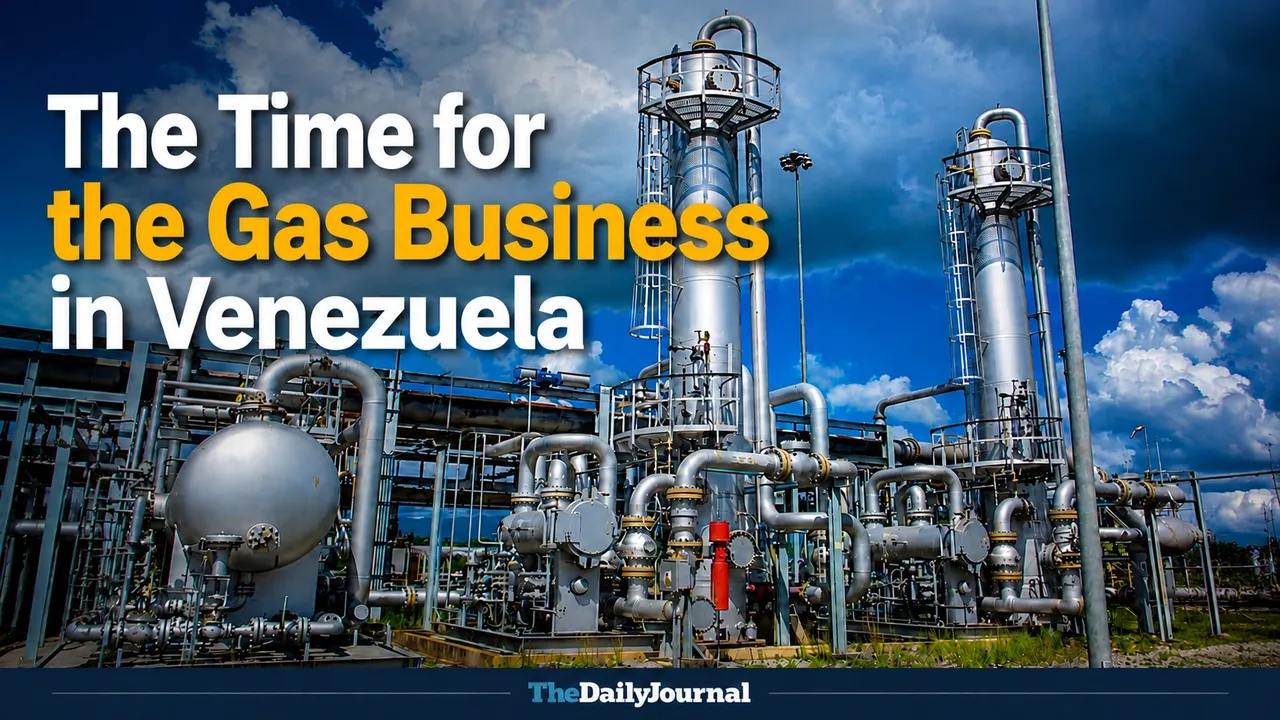
Caracas, June 3, 2026 — For more than a century, Venezuela built its energy identity around oil. However, as Europe desperately searches for new energy sources and major international companies accelerate their gas expansion plans, a new reality is emerging in the country: the time for the Gas Business in Venezuela has arrived.
Venezuela’s enormous natural gas reserves remained largely undeveloped while national attention focused almost exclusively on oil. Today, the landscape looks very different. Some of the world’s largest energy companies are taking strategic positions in the country as they pursue a resource that could redefine Venezuela’s energy future.
Spain’s Repsol and Italy’s Eni plan to expand their participation in Venezuelan gas projects, particularly in the Cardón IV block, where the giant Perla field operates. Industry experts rank Perla among the largest natural gas discoveries in Latin America in recent decades.
Yet the most significant movement now comes from two British giants: Shell and BP.
Shell has evolved from an interested observer into one of the most aggressive players in the race for Venezuelan gas. The company already holds a 30-year license to develop the Dragón field, which lies in Venezuelan waters near Trinidad and Tobago and contains an estimated 4.5 to 5 trillion cubic feet of natural gas. The project will transport Venezuelan gas to Trinidad’s processing and export infrastructure while leveraging the island’s existing LNG facilities.
Shell’s ambitions extend far beyond the Dragón field. The company continues advanced discussions to gain access to additional areas within the Mariscal Sucre project, which contains approximately 12 trillion cubic feet of natural gas. Shell also seeks participation in the development of the massive cross-border Loran-Manatee field, whose combined reserves may exceed 20 trillion cubic feet.
BP also seeks a major role in Venezuela’s gas future. The British company recently signed agreements to develop the Cocuina-Manakin field along the maritime border between Venezuela and Trinidad and Tobago. BP also evaluates participation, alongside other partners, in Loran-related projects. The company views these developments as critical sources of supply for Trinidad and Tobago’s LNG facilities, where BP holds a significant ownership stake.
The decline in Russian gas supplies forced European countries to seek alternative sources of natural gas and LNG from multiple regions worldwide. Governments and corporations now place energy security at the center of their strategic priorities. As a result, every country with large gas reserves near Atlantic markets gains greater geopolitical and economic importance.
Venezuela offers precisely that combination: enormous reserves, a privileged geographic position, and relatively short access routes to European and North American markets.
For Trinidad and Tobago, whose domestic gas production has declined in recent years, Venezuelan gas fields offer a vital opportunity to sustain LNG, ammonia, and methanol production. For Shell and BP, these projects secure new sources of supply for a global industry that depends increasingly on natural gas. For Europe, they offer an additional source of energy outside Russia’s sphere of influence.
The numbers are impressive. Dragón, Loran-Manatee, Cocuina-Manakin, Cardón IV, and other offshore areas could add tens of trillions of cubic feet of commercially viable reserves over the coming years.
The potential economic impact extends far beyond the energy sector. Gas development requires offshore platforms, subsea infrastructure, processing plants, ports, petrochemical facilities, power generation projects, and thousands of highly specialized jobs. Each project creates supply chains capable of attracting billions of dollars in investment.
For the first time in many years, international interest no longer focuses exclusively on Venezuelan oil. The major players in the global energy market have turned their attention toward natural gas.
Repsol, Eni, Shell, and BP appear to share the same conclusion: Venezuela possesses one of the largest undeveloped natural gas opportunities in the Western Hemisphere.
Perhaps the true historic transformation that we are beginning to witness does not involve the return of the traditional oil industry, but rather the birth of a new energy era for the country.
Because if the twentieth century belonged to Venezuelan oil, the twenty-first century may belong to the Venezuelan Gas Business.