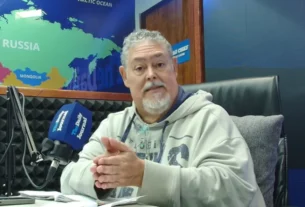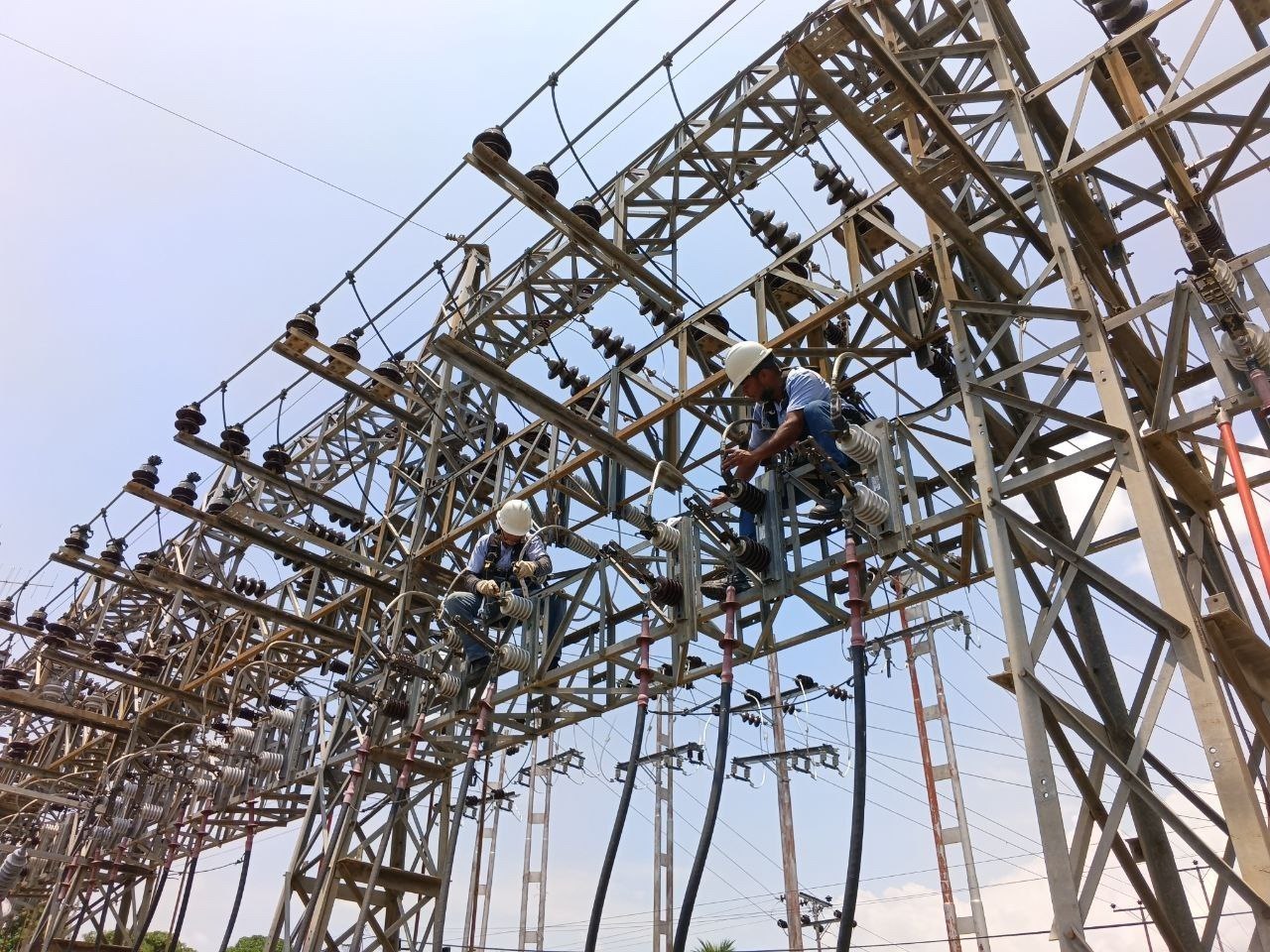
The Daily Journal. — The National Assembly approved the draft reform of the Organic Law of the Electricity System and Service in its first discussion. The proposal does not pursue privatization of the sector; instead, it introduces a model of temporary concessions in which the State keeps full ownership of the infrastructure. Electromechanical engineer Juan Carlos Rodríguez, a specialist in backup energy and energy transition, made this point during an interview with Fedecámaras Radio.
Rodríguez, who also leads the consulting firm JCR, explained that the legal proposal seeks to reverse the full state control established in the 2007 and 2010 laws. However, he stressed that the new framework falls far short of the full private participation model that existed in the past.
40-year concessions without property rights or compensation
According to preliminary details of the draft, the Executive plans to delegate generation, transmission, distribution, and commercialization to private operators. However, Rodríguez highlighted the strict limitations that the text imposes on private actors.
“This is not privatization; these are 25-year concessions that authorities may extend for another 15 years (…). At the end of the concession period, you must return to the State all assets you developed, without any compensation. Without ownership, you are simply managing an operating contract for a limited time,” Rodríguez explained.
Under this scheme, the consultant considers it feasible for some local companies to form mixed enterprises with the State, with the State holding 50% or less of the shares. However, he ruled out strong interest from major global energy corporations, which hold the capital and technology the country needs.
To attract companies of the scale of the U.S.-based AES Corporation — former owner of Electricidad de Caracas — Venezuela would need to offer legal guarantees that meet international standards.
“For example, the framework should include international arbitration, investment protection, the right to repatriate dividends, and limits on discretionary State intervention within the concession itself, even in operations and tariffs,” he argued.
A model that could prolong the electricity crisis
Rodríguez warned that this model will not provide a structural solution to the crisis affecting the National Electric System (SEN). Instead, he believes the bureaucratic process will delay real solutions for households and businesses.
“I do not see this as a structural solution to fix the electricity system. On the contrary, imagine how long it will take to structure everything, establish the legal framework, and then start seeing investments (…). This will significantly prolong the electricity crisis,” he stated.
Legal gaps, ambiguity, and centralization
When assessing participation models, the JCR president described the draft as “very confusing” and full of ambiguities regarding which technical areas will truly be open to private capital. The law refers to an “original state operator,” which does not necessarily refer only to Corpoelec. This wording could allow other state companies, such as Petróleos de Venezuela (Pdvsa), to operate independently with their own generation systems.
Uncertainty also remains about whether large segments of the National Interconnected System will enter concession schemes, or whether private participation will be limited to restoring local thermoelectric plants and regional distribution networks.
Finally, Rodríguez rejected the idea that the reform reduces centralized State control over the service.
“It does not reduce centralization; it reinforces it. Everything depends on the National Executive. The Executive creates concessions by decree through the Council of Ministers. It is not a national or international public bidding process; it is simply an assignment mechanism. That raises serious concerns, especially in a complex political environment. Any investor needs certainty that agreements will remain stable over time. That is why I remain very skeptical,” he concluded.