Américo Briceño, Political Scientist and University Professor — June 2026 begins. Five months have passed since foreign troops entered Venezuelan territory and abducted Nicolás Maduro Moros. Meanwhile, the long-awaited changes have materialized only partially.
In the political sphere, developments can be summarized as follows: the release of political prisoners and “politicians in prison” (although some remain behind bars); the appointment of figures associated with the opposition or known for maintaining technical, nonpartisan positions to ministerial posts; the designation of a new attorney general and a new ombudswoman linked to opposition sectors; and the reform of the judicial system, which requires the replacement of at least 18 justices and strengthens the Constitutional Chamber.
The reopening of the U.S. Embassy and visits by senior officials also stand out. These developments alternate with overflights by military aircraft carrying troops and senior officials from the Trump administration’s War Department.
In the economic sphere, the benefits of foreign tutelage remain uncertain. Salaries remain frozen, and authorities present increased bonuses through a confusing euphemism: “comprehensive income.” At the same time, while the labor minister speaks about “the myth of severance benefits,” officials promise an efficiency bonus that falls far short of efficient delivery, and the exchange-rate gap continues to widen unchecked. All of this unfolds amid rising prices that surprise both citizens and observers. Based on recent remarks by economist José Guerra after returning from exile, one might conclude that eating arepas costs less in Washington than in Venezuela.
Given the realities in these two spheres, we must ask: Will a strategic opportunity emerge that can reshape the national landscape, dispel doubts about the country’s immediate future, and restore popular sovereignty as a tool for rebuilding the Republic?
Let us examine how three countries managed their demands for regime change: Brazil, Chile, and Spain.
Brazil: Criticism and Dialogue
The process of regime change in military-ruled Brazil demonstrates that political transitions do not happen overnight. On the contrary, they result from a process of negotiation in which institutional confrontation reveals underlying disputes while simultaneously creating opportunities for dialogue and a return to democracy. This occurred even though the military regime that followed the 1964 coup dissolved all existing political parties and imposed a controlled democratic façade. Despite opposition fragmentation, leaders still reached consensus on fundamental issues.
The resistance movement also provided authority and representation to sectors that did not belong strictly to the political arena but nevertheless played key roles in restoring democracy. On one hand, the Catholic Church condemned state repression, sheltered striking workers, and promoted democratic participation at the grassroots level. On the other hand, the business community adopted an anti-statist position in 1974, warning that an interventionist state breeds authoritarianism and defending democracy as the means through which society can control its rulers rather than the reverse.
Another noteworthy aspect concerns how the opposition strengthened its negotiating position through citizen mobilization and public opinion surveys. These tools supplied information that empowered opposition leaders in their dealings with a military dictatorship accustomed to negotiating through force. The transition ultimately depended on the pragmatism of opposition leaders, who balanced popular demands for distributive justice and agrarian reform with the property-right guarantees demanded by economic elites, thereby preventing those elites from resisting democratic opening.
In the book Democratic Transitions: Lessons from Political Leaders, written by Sergio Bitar and Abraham Lowenthal, former President Fernando Henrique Cardoso, a key figure in Brazil’s transition, highlights “the importance of combining social pressure with participation in institutional spaces, even when those spaces are initially very limited.”
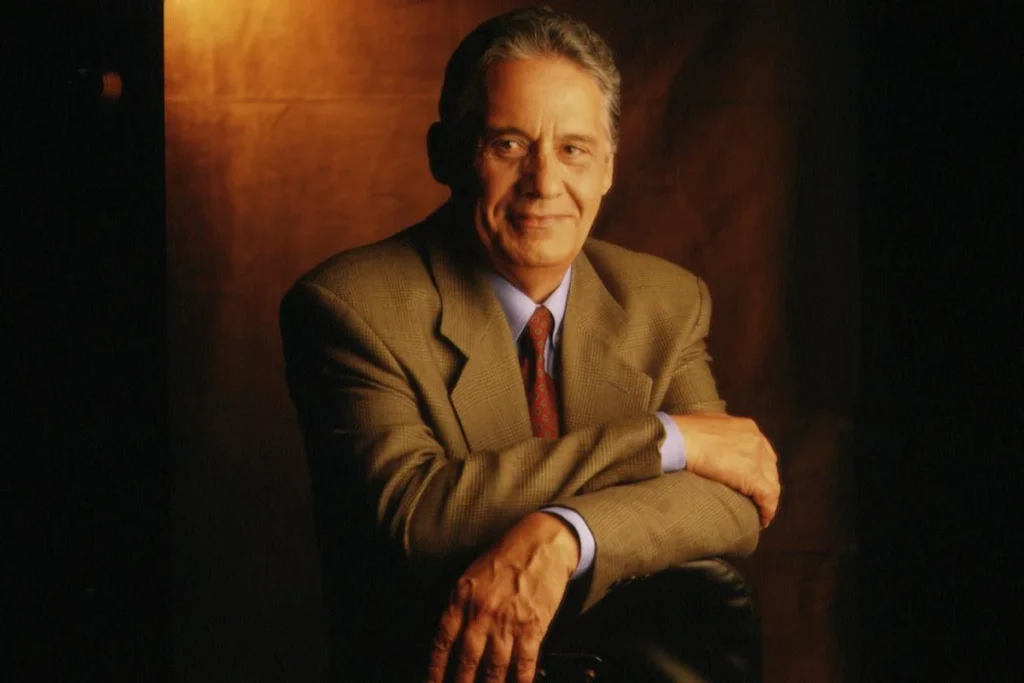
Cardoso also recalls that during that period, “economic grievances became demands for rights,” and he emphasizes the moment when business leaders began to “criticize the excessive gigantism of the state-owned sector.”
These observations underscore an indisputable reality: questioning authority must lead to criticism, and criticism serves as a fundamental tool for mobilizing society.
Finally, Cardoso leaves us with a reflection:
“The transition to democracy was slow, gradual, and uncertain (…). Transitions are extremely complicated; one must make countless calculations because nobody knows what may happen the next day.”
Chile: The Coalition Strategy
Chile offers another example—a case of political resilience in which regime change emerged from an event that affirmed popular sovereignty: elections called by the dictatorship itself. The process centered on a plebiscite in which the democratic coalition accepted the conditions established by the military regime. Opposition leaders made this choice because competitive elections would have made it difficult to select a single candidate and to organize a common platform. By prioritizing unity, they focused on rejecting the continuation of Augusto Pinochet’s rule.
This approach set aside the idea of revolution or polarized confrontation and instead embraced a peaceful transition to democracy.
The public discourse revolved around the promise of building a country for everyone, where all citizens would enjoy equal rights and respect for their dignity. In 1988, Pinochet lost at the ballot box. However, he still received 44 percent of the vote. The dictatorship retained the loyalty of the armed forces, and at least seven political organizations also attracted roughly the same level of support in the first legislative elections.
The victory of the “No to Pinochet” campaign occurred within an unfavorable institutional framework. Pinochet remained commander-in-chief of the Army for another eight years; a binomial electoral system forced parity in representation between the government and the opposition, while the appointment of eight life senators tilted the Senate in favor of the regime; the Constitution imposed special quorum requirements for major legislation, making reform impossible without opposition support; and the military regime had appointed 14 of the 17 members of the Supreme Court while granting itself amnesty for all human-rights violations.
Yet what lessons do Chile’s political strategies offer for achieving long-term objectives and enabling a sustainable transition?
Several stand out. Although the regime exercised complete control over universities, opposition study groups brought together much of the country’s intellectual community. Moderate sectors intensified their activism by creating two key platforms: the Democratic Alliance, a pact between socialists and Christian democrats, and the Assembly of Civility, a social agreement that united professional associations, labor unions, students, and advocates for small businesses. In addition, citizen political organizations encouraged the Catholic Church to promote a national agreement that included representatives of the political right who had previously collaborated with the dictatorship. All of these initiatives shared a moderate program that ultimately secured broad social support.
Another noteworthy factor involved the conduct of political leaders in pursuing the changes they considered necessary. Their decisions reflected a commitment to justice, tolerance, and consensus-building. They embraced what might be called an ethic of responsibility—focused on achieving results—rather than an ethic of conviction. For them, politics served as a tool for advancing freedom, security, and prosperity, not as a means of healing souls, mending hearts, or alleviating social exhaustion and discontent.
Once again, it is useful to return to Democratic Transitions: Lessons from Political Leaders. In that work, former President Ricardo Lagos, one of the principal leaders of Chile’s transition, identifies four aspects of the Chilean experience that are particularly relevant to contemporary transitions.
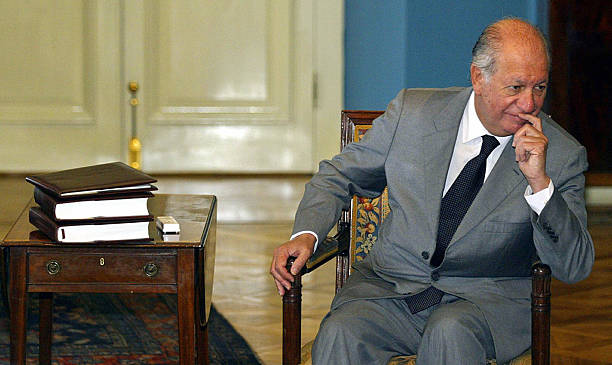
First, Lagos highlights “the capability of the social and political forces that succeeded in ending the dictatorship and building the longest-lasting coalition among Western democracies.”
Second, he points to “the negotiations that convinced the military to return to the barracks and assume responsibility for human-rights violations.”
Third, he emphasizes “the partial and gradual process of constitutional reform.”
And fourth, he underscores “the aspiration for economic development and greater equality, which generated substantial growth and reduced poverty.”
Ricardo Lagos occupies a particularly important place in this story. Despite enjoying the highest levels of acceptance, popularity, and leadership within the opposition, he set aside his own presidential ambitions to preserve the democratic opening. The Pinochet regime refused to accept him as a candidate, and opposition leaders feared that insisting on his candidacy could jeopardize the gains achieved through the plebiscite. As a result, Lagos stepped back and entrusted Patricio Aylwin with the opportunity to lead a government capable of expanding liberalization and guiding the country toward democratic transition.
Spain: Transactions and Pacts
Historian Charles Powell describes Spain’s transition process as a “transition through transaction.” Several defining characteristics shaped this process: reformers used the institutions and legal framework of the Franco regime itself to initiate change; moderate sectors within the regime conducted negotiations with opposition leaders; the principal political forces participated in the most important decisions; and key actors held discreet meetings during the most critical phases of political opening. These developments culminated in what Spanish historiography knows as the Moncloa Pacts.
This Spanish model reveals the forces that encouraged a favorable dynamic toward transition, the sense of responsibility displayed by the opposition, the exclusion of certain individuals who had collaborated with Francoism, and the provision of guarantees and incentives. Together, these elements made it possible to achieve a broad national agreement that could guide an orderly democratic transition while maintaining a degree of popular mobilization.
In his interview for the IDEA Group’s book Democratic Transitions, Felipe González states:
“The great asset of the Moncloa Pacts was the signal they sent: the opposition—from communists to socialists and Christian democrats—reached an agreement with reformers within the regime to define the area of consensus the country needed to move forward.”

The Moncloa Pacts represent a successful example of how political actors, despite their opposing positions, forged a broad national agreement to secure change within the system and bring an authoritarian regime to an end.
It is important to note that these were not merely political agreements; they also incorporated the conditions necessary to implement an economic pact that contained the labor-market crisis and stagflation. In doing so, they laid the foundations for a program that safeguarded the reform process, neutralized radical sectors at both ends of the political spectrum, and made it possible to institutionalize democracy even while the wounds in the social fabric remained fresh.
No Manual for Transition
This concludes our analysis of these three cases, examining how these political transition processes unfolded and what lessons can be drawn from them to confront regime change in a deliberate and informed manner. Transitions to democracy do not follow a blueprint, nor can they be mechanically replicated. However, the study of comparative experiences provides valuable insights for a comparative politics exercise that can help identify possible scenarios, assess strategies, and define the conditions that may foster the opening of spaces for freedom and institutional guarantees.
Modestly, we believe that the experiences of other countries undergoing political transitions can help guide our own efforts toward successful democratic outcomes.