Listen to the editorial here: https://clyp.it/cfefjw40
Julio A. López, Editor-in-Chief.– Every investor needs precise and detailed information before committing resources, and in an industry as capital-intensive as hydrocarbons, having reliable data proves even more decisive. The enormous expectations that the 916 business opportunities announced by Venezuela have generated in the energy market have led us to publish, in three consecutive installments beginning with this editorial, information that has until now remained confidential, to democratize access to relevant data and to offer potential investors additional elements for evaluating these opportunities.
The Light Crude Oil and Gas Reserve Base
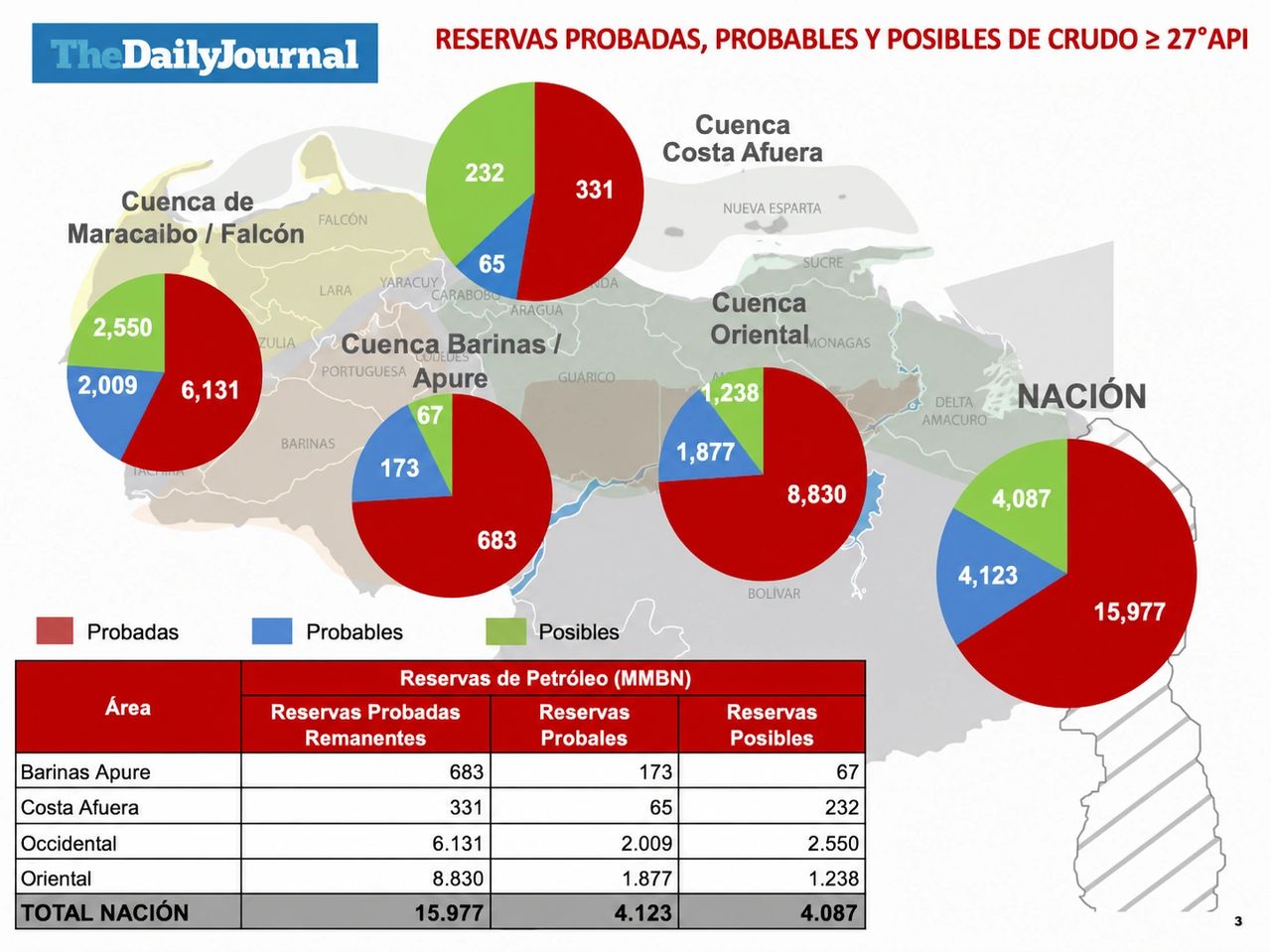
Venezuela has a light crude oil reserve base (≥27° API) that exceeds 15.9 billion barrels in the remaining proved category, plus more than 4.1 billion barrels of probable reserves and another 4.0 billion barrels of possible reserves, distributed across four major basins: Maracaibo-Falcón, Eastern, Barinas-Apure, and Offshore. The Eastern Basin contains the largest share of these reserves, closely followed by Maracaibo-Falcón, while Offshore represents the area with the lowest relative development but with growing exploration interest.
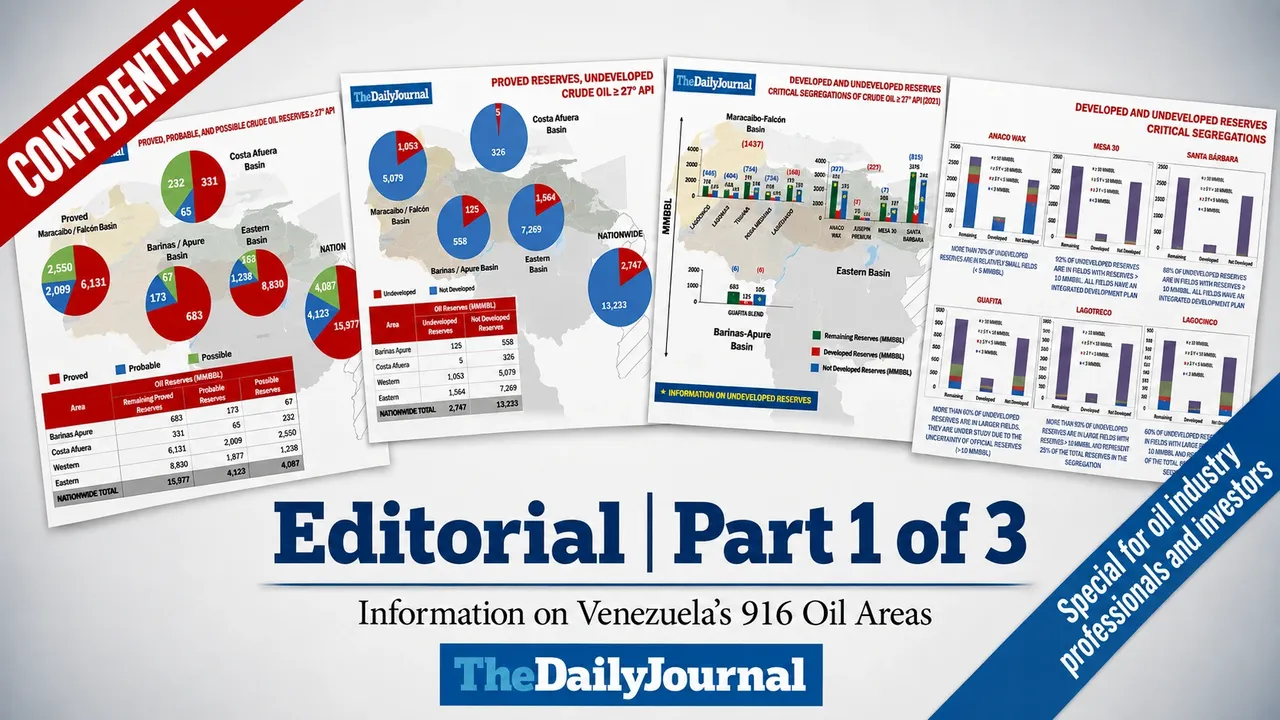
What reveals immediate production potential, however, is not only the total volume, but also its development status: of the more than 15.9 billion proved barrels, only 2.7 billion have actually reached development. The rest—more than 13.2 billion barrels, practically 83% of the proved reserves—remains undeveloped. This represents a reservoir of opportunities that geological work has already confirmed and that only requires investment and execution of development plans to enter production.
This gap between proved reserves and developed reserves concentrates in well-identified critical segregations —such as Mesa 30, Anaco Wax, Santa Bárbara, Lagocinco, Lagotreco, and Guafita—where between 60% and 93% of the undeveloped reserves lie in large-volume reservoirs (greater than 10 million barrels), many of them with comprehensive development plans already defined. In other words, this represents low-geological-risk potential awaiting capital.
The Potential We Already Know
For decades, the discussion about Venezuela’s oil future has revolved around a gigantic figure: its hydrocarbon reserves. However, focusing solely on the size of proved reserves may conceal a reality perhaps more important to understanding the industry’s recovery prospects: the country possesses an enormous amount of identified, evaluated, or prospected oil and gas that has not yet entered production.
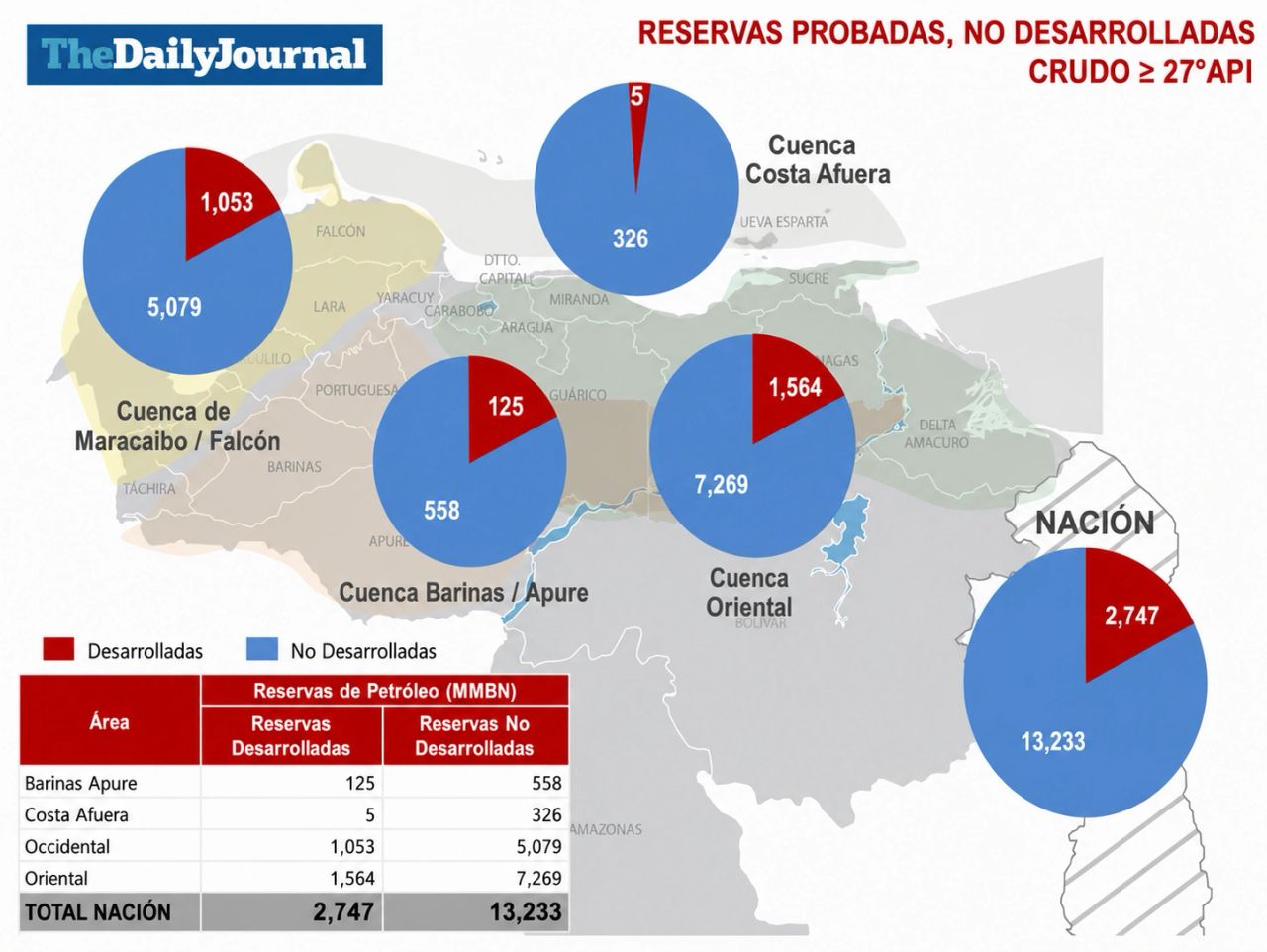
The technical document that serves as the basis for this editorial allows us to observe that reality from a different perspective. It does not focus on the immense volumes of extra-heavy crude oil that have made Venezuela one of the countries with the largest oil reserves on the planet, but rather on a particularly strategic resource: crude oil with 27° API or higher, as well as gas.
Therein lies one of the great challenges —and, simultaneously, one of the great opportunities— of the Venezuelan industry: a considerable proportion of the identified reserves remains undeveloped.
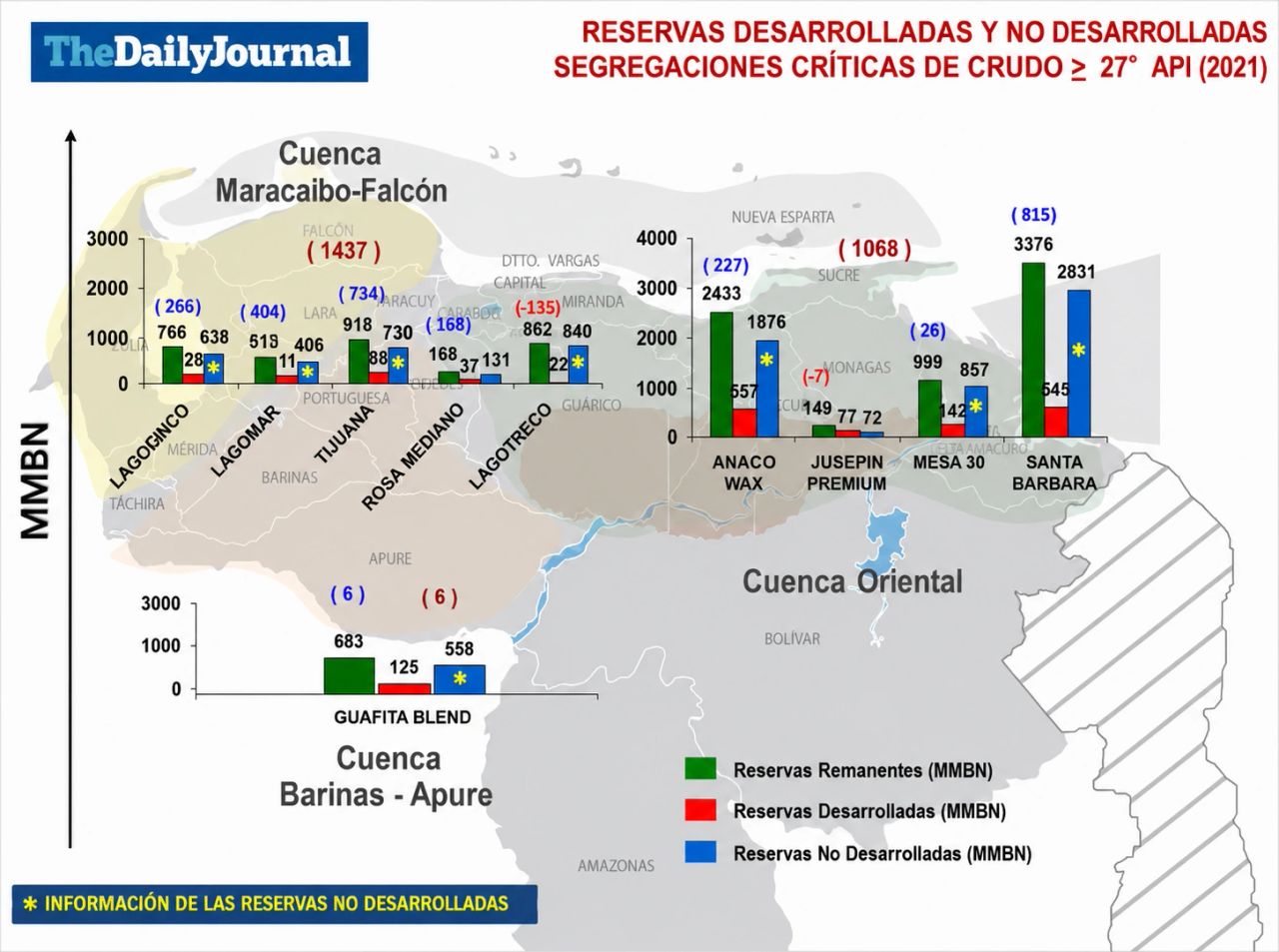
We are not talking only about searching for new reservoirs. Oil already forms part of the reserve base, and its development requires investment, drilling, infrastructure, technology, and operational capacity.
The data also reveal that a large portion of those undeveloped reserves is concentrated in reservoirs large enough to justify economic evaluation. In some of the segregations analyzed, more than 90% of the undeveloped reserves lie in reservoirs exceeding 10 million barrels.
This substantially changes the way we look at Venezuela’s oil problem.
Production recovery does not depend exclusively on discovering new oil. An important part of the challenge consists of converting known but undeveloped reserves into produced and marketed barrels.
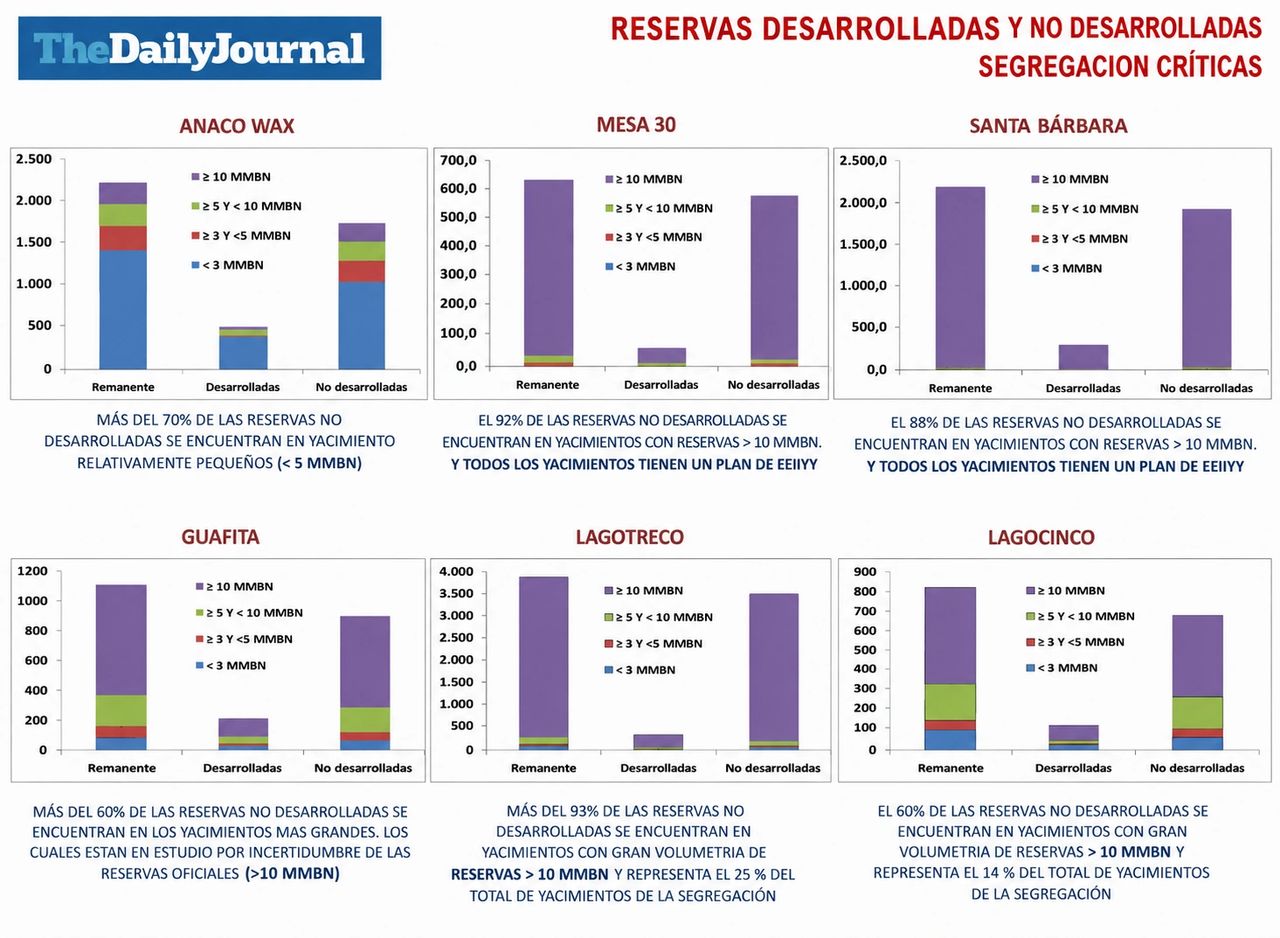
And there begins the real discussion: how much capital, technology, infrastructure, and execution capacity Venezuela needs to turn that geological wealth into production.
Tomorrow we will continue with the second installment of this series, in which we will reveal new confidential information of special interest to those evaluating investment or participation in Venezuela’s hydrocarbon industry. Relevant data remain to be learned and opportunities to be discovered.