Luis Vilchez
Venezuela’s men’s national soccer team spent much of its history in obscurity. Indifference and unfamiliarity were its constant companions throughout the 20th century. Until Richard Páez, the father of the “Vinotinto Boom,” arrived, the team inspired little passion. From that moment on, it became a social phenomenon and a symbol of unity in a country polarized by politics. What red and blue divided, burgundy brought together, all in pursuit of its own El Dorado: qualifying for a World Cup. That goal remains, but it has now been postponed until 2030. Everything must be rebuilt after the catastrophe in Maturín at the end of the qualifiers for the World Cup in the United States, Mexico and Canada.
On September 9, 2025, Venezuela needed only a home win over Colombia to reach the playoff, or for Bolivia to fail to beat Brazil in El Alto. The Bolivians won, while Venezuela fell 6-3 in what became the worst failure in the country’s sporting history. How do you recover from such a devastating blow? The Venezuelan Football Federation chose to look for solutions at home. It dismissed head coach Fernando Batista, who did not speak to the Venezuelan press after the defeat. “Bocha” now coaches Costa Rica, and during his most recent match against Curaçao, Costa Rican fans called for his dismissal from the stands after his team squandered a 3-0 lead in San José.
Who is now at the helm of the Vinotinto? Oswaldo Vizcarrondo. Yes, that same curly-haired center back who defended with authority and scored from Juan Arango’s crosses during César Farías’ tenure. He trained as a coach in France and worked his way through the federation, serving as interim head coach of the senior women’s national team, working with the U-15 squad and guiding the U-17 team to the World Cup. For those concerned about his lack of experience, the federation surrounded him with a high-caliber staff: Óscar Ortega, one of the world’s top fitness coaches — the Uruguayan who worked with Atlético de Madrid during two Champions League finals — and Brazilian Cléber Xavier, who will serve as his assistant coach. Xavier was Tite’s right-hand man with Brazil at the 2018 and 2022 World Cups.
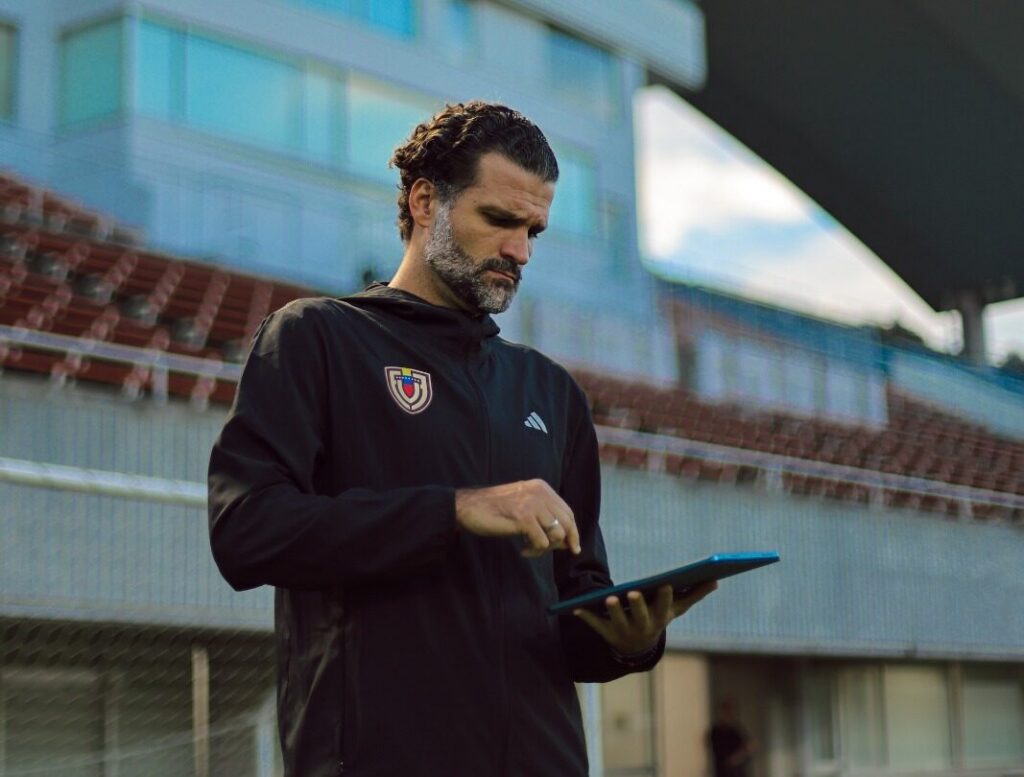
Venezuela’s playing philosophy calls for the team to take the initiative against any opponent through organization, high pressing and intelligent use of the ball — without resorting to aimless long balls, but also without overdoing possession. Suppose the team can reach the opponent’s half in just a few touches; even better. Once again, the midfielders will carry much of the responsibility.
“It’s not about playing beautifully just for the sake of playing beautifully. It’s about giving them the tools. Developing a mentality that allows you to dominate your opponent takes time,” Vizcarrondo said after defeating Iraq in June.
That commitment to homegrown talent also gives players from Liga FUTVE, Venezuela’s top division, a prominent role, while the Vinotinto coaching staff regularly attends domestic league matches.
The new names to watch
Fifteen years ago, Venezuela could boast a handful of elite players who took the field weekend after weekend in Spain, Italy and England. That presence has dwindled, but a new generation of idols is gradually emerging.
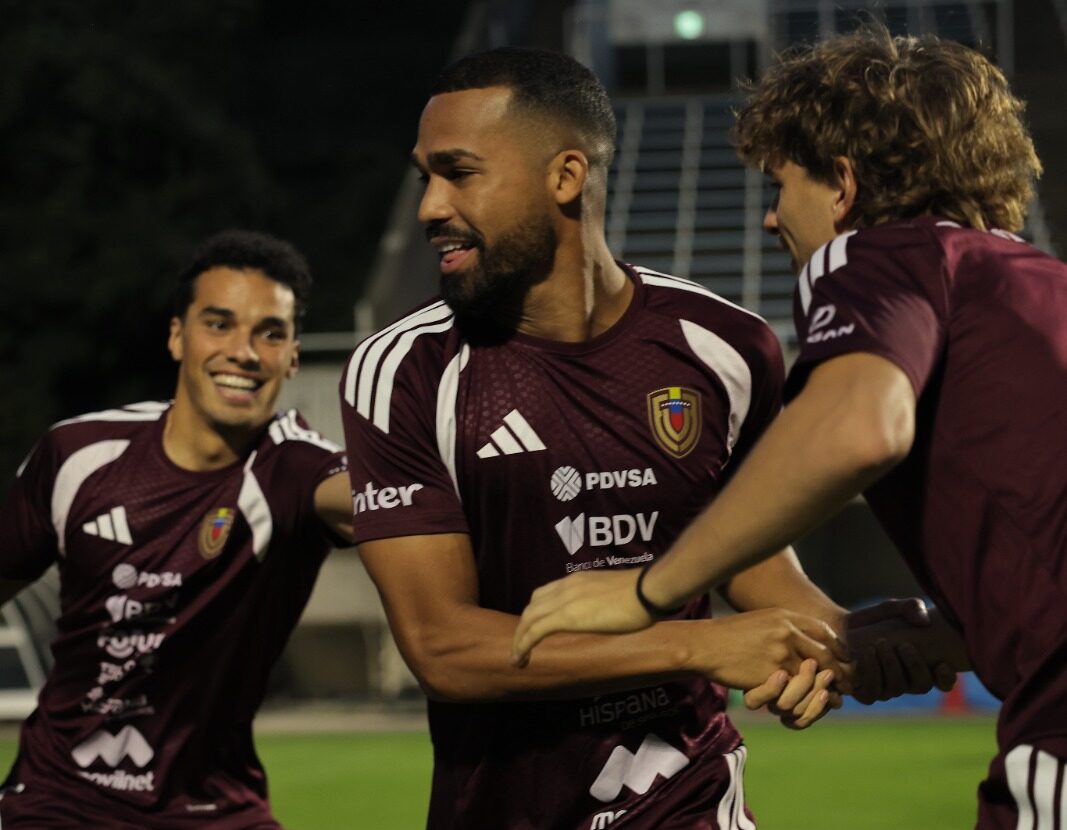
The most influential name in this squad is Cristián Cásseres Jr., who has become a key player for Toulouse in France’s Ligue 1. Next comes Jon Aramburu, now firmly established as Real Sociedad’s right back in Spain. The captain of this new cycle will likely emerge from between the midfielder and the defender — with the permission of Yangel Herrera, also at Real Sociedad, who, when injuries give him a break, shows why he helped Venezuela finish runner-up at the 2017 U-20 World Cup and earned the Bronze Ball at that tournament.
One name generating plenty of buzz is Gleiker Mendoza. The Zulia native signed for Ukrainian powerhouse Shakhtar Donetsk and has already found the net in this season’s UEFA Champions League. Kevin Kelsy is also enjoying a strong run after signing for one of Europe’s historic clubs, Rangers of Scotland. The Carabobo native scored against Celtic in the Old Firm, one of world soccer’s fiercest rivalries, in a cup match.
Meanwhile, Mérida-born Jesús Ramírez is the striker enjoying the hottest scoring streak. He carried his goalscoring form from Nacional da Madeira to Çorum FK in Turkey.
At this point, many will be wondering about Salomón Rondón, Jefferson Savarino and Yeferson Soteldo. The first two became embroiled in a social media controversy, prompting Vizcarrondo to keep them out of the squad. Rondón remains the leading scorer in Mexico’s top division with Pachuca, while Savarino plays for a Fluminense side that will compete in the Copa Libertadores semifinals.
Soteldo’s case has generated even more controversy because of his disciplinary history. He shines for Flu, but the weight of his off-field incidents has overshadowed his performances. Vizcarrondo’s mantra is clear: the Vinotinto must come first, and harmony must prevail within the squad.
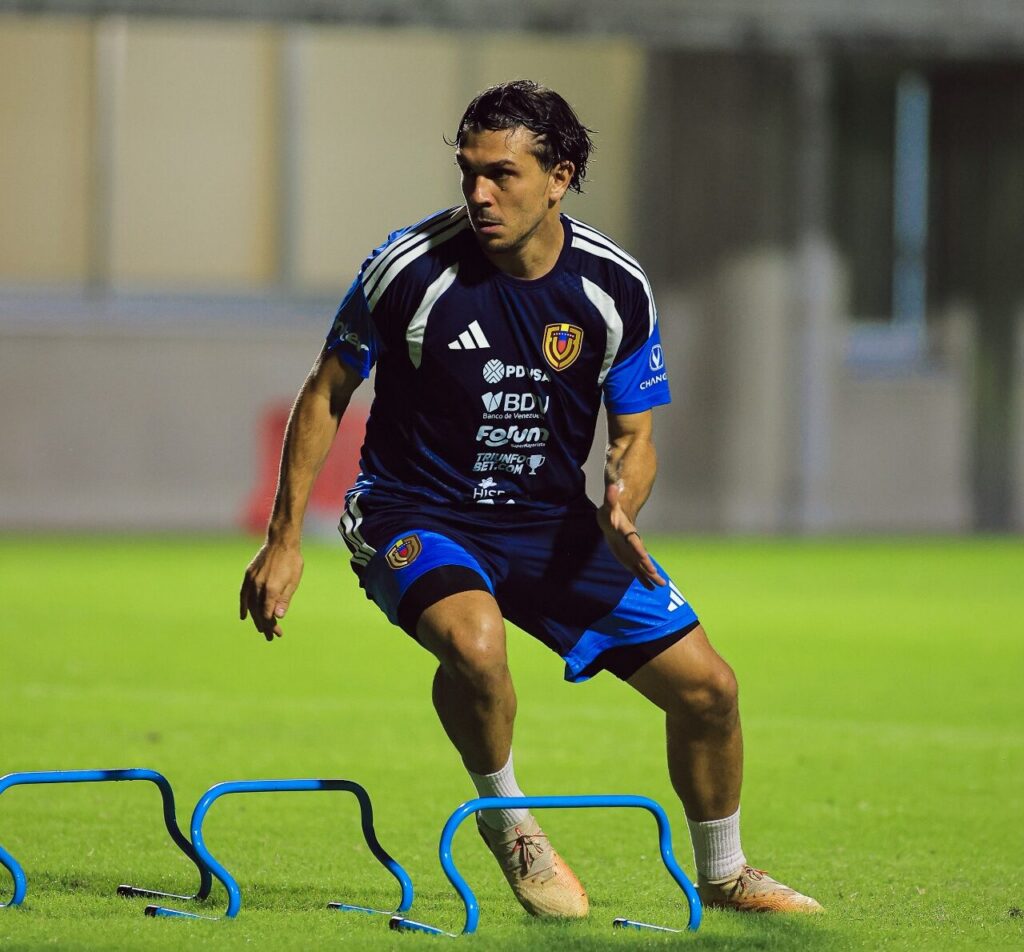
The next challenges will come during an Asian tour: Japan on September 28, South Korea on October 2, and Jordan on October 6 — three opponents that competed at the last World Cup.
The bad news comes with the injury absences of Telasco Segovia and David Martínez. Segovia plays every weekend alongside Lionel Messi at Inter Miami. At the same time, Martínez recently moved to Europe with Midtjylland of Denmark, one of the European clubs that makes the most effective use of Big Data.
But the tour will also offer an exciting opportunity for young prospects such as Luis Balbo (Sturm Graz, Austria), Marco Libra (Bologna, Italy) and Yerwil Sulbarán (Liefering, RB Salzburg’s feeder club in Austria).
The next official competition will be the 2028 Copa América, which still has no confirmed host country. However, economic considerations could bring the tournament back to the United States, as in 2024, with Concacaf teams also taking part.
It also remains unclear whether the World Cup in Spain, Portugal and Morocco will feature 48 nations or expand to 64.
In the meantime, the Vinotinto will seek to become relevant again to ordinary Venezuelans after the crushing disappointment of the last qualifying campaign, while building a foundation that can turn reaching the World Cup from a dream into a realistic and consistent ambition.