Óscar Reyes Matute — An axiom my political theory professors always drilled into me is that if you find yourself analyzing a conflict in full swing, you must never trust the statements of heads of state, diplomats, or the warring parties. On the cold chessboard of power, you have to look at what they do, not what they say.
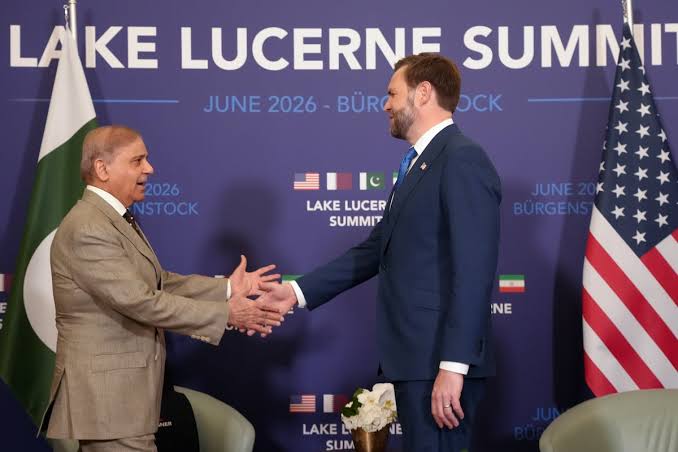
The recent diplomatic affair this weekend in Switzerland is the perfect case in point: a stage set for utter confusion and, above all, profound ignorance of exactly what is being discussed. To begin with, the document in question suffers from a semantic identity crisis. Washington has pompously christened it a “Peace Accord,” while Tehran, with clerical caution, refers to it simply as a “Memorandum of Understanding.”
The actual text is not a matter of public record. What we know comes from leaks published by The New York Times and Bloomberg. And let’s be clear: in high politics, if something gets leaked, it’s because they wanted it leaked. No one with privileged access risks a twenty-year prison sentence purely for the love of investigative journalism. In the absence of an official document open to public scrutiny, Donald Trump treats himself to the luxury of dropping daily pills of wisdom about its scope, changing his tune depending on the morning mood of the “Orange President.”
The Versailles Theater and Raisi’s Ghost
It suits Trump to sell it as an “accord.” By signing it with the Palace of Versailles as a backdrop, he sends a direct, devastating message to Congress: there is peace, there is no war, and therefore, I have no reason to appear before both chambers to report on military actions. Under U.S. law, a president can decree military operations by executive order, but if the actions hit the two-month mark, he must account to Congress. With this piece of paper in hand, Trump seems to whisper to the opposition: “I’m sorry, Ilhan Omar: I’m not going to give you the satisfaction of grilling me. And I still insist we should strip you of your citizenship…”
For its part, the Iranian regime cannot afford the word “agreement.” To its most radical factions—the Revolutionary Guard—signing an agreement is tantamount to striking a deal with the Great Satan, an audacity that in Tehran is paid for with one’s life. Rumor had it back in 2024 that President Ebrahim Raisi was a pragmatist capable of negotiating with the West, right before his helicopter, conveniently, crashed in the fog.
Hence, the hall of mirrors is infinite. Since the war began, Iran has been sending weekly lists of the conditions it “demands” just to sit down and talk. Trump rejects them, the Ayatollahs claim they will review them, and the following week, they send the same document with the same “demands.” Trump rejects it again, and so go the days, weeks, and months in an eternal loop.
The Myth of the Strait of Hormuz and the Venezuelan Mirror
Is the Strait of Hormuz truly closed? According to Iranian propaganda, yes. But the reality is that cargo ships escorted by U.S. naval vessels are actively transiting that route; at least 50 of them crossed it last week. Can Iran stop them? Yes and no. It can harass them with surface-to-surface missiles, but it cannot enforce a naval blockade because U.S. and Israeli forces utterly obliterated its navy and air force.
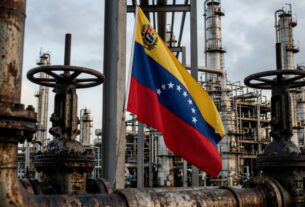
In truth, the Strait of Hormuz is partially closed primarily for Iran itself, which cannot get its crude out to sell to China, its main buyer. Today, Tehran is staring into the same mirror Venezuela faced until January 3rd, when our tankers were blockaded, and we couldn’t export a single drop—a paralysis that only ended with military intervention and the extraction of Nicolás Maduro. Maritime insurance houses like Lloyd’s have jacked up their premiums, true, but the ships are passing. As Galileo would say: “Eppur si muove…”
Iran throws media tantrums and swears it will never converse with the empire, but it ends up doing exactly what Trump demands. There’s a reason they are cooped up in a Swiss hotel and not in Islamabad. They storm away from the negotiating table in a fury, stamp their feet, and declare they are “abandoning the talks” because Israel keeps smashing Hezbollah in southern Lebanon. Still, they don’t actually leave the hotel. They stay in the lobby, waiting to see if Trump changes his mind.
The Netanyahu Factor and Sun Tzu’s Business Model
Meanwhile, Trump warns the world with his signature nonchalance: “You know Netanyahu; that guy won’t hesitate for a second to blow up an Ayatollah or a Beirut apartment where a couple of Hezbollah commanders innocently gathered to play tawlat al-zahr (backgammon). You know that man is crazy…”
Iran gets confused, thinks it’s winning the game, and out of pure ideological instinct, orders more attacks against the IDF. Israel responds by demolishing their positions, and the Iranians storm off the table once more: “Until you stop Israel in Lebanon, we aren’t negotiating,” they say, as they relocate to the other wing of the hotel.
The benefit for Washington is seamless: Trump has already signed his “accord,” bypassed Congress, and, technically, can launch another wave of attacks for 60 consecutive days by arguing it’s “a different war.” That’s why he shifts his discourse and threatens: “If you don’t fully open the strait, we’re going to blow you apart.” Iran promises to resist, but returns to the table. Hezbollah attacks again, Israel pulverizes them again, and Trump delivers the punchline on Sunday: “If you keep funding and ordering attacks in Lebanon and don’t surrender, we’re going to wipe you off the map.”
They won’t wipe them off the map, of course; that would be bad business. As Sun Tzu advised in The Art of War, the perfect victory is that achieved without fighting, capturing the territory intact, with all its productive capabilities whole. What we are witnessing is a propaganda war. The military war has already been fought, and Iran lost it catastrophically; it turned out not to be the superpower we were sold, and its supposed allies, Russia and China, washed their hands of it. Nobody wants to pick a fight with Trump.
The 60-Day Farce
And so, for the next sixty days, the comedy will continue, whether in Switzerland or Islamabad. The Times leaks indicated that sixty days is the maximum deadline for a definitive agreement, extendable by mutual consent. Can the United States and Israel hold out that long without their economies collapsing? Of course. In the event of a genuine oil emergency in the Persian Gulf, that’s exactly what Venezuela was left handy for—with a little investment, clear financial rules of the game, fiscal security, and reliability in contracts, naturally.
Can Iran survive another sixty days without selling oil? It can try, but with an economy in tatters; and if the militias don’t eat, the domestic front is going to rise in arms against them.
We will keep watching this festival of back-and-forth between Washington, Tehran, and the insatiable social media networks. But don’t be fooled: as they say in Maracaibo, this is all bark and no bite—much ado about nothing. Don’t look at what they say; analyze what they actually do. That old lesson from my professors has served me for my entire life.