Dialogues with Luis Bonilla-Molina, Gustavo Sefereian, and Israel Dutra
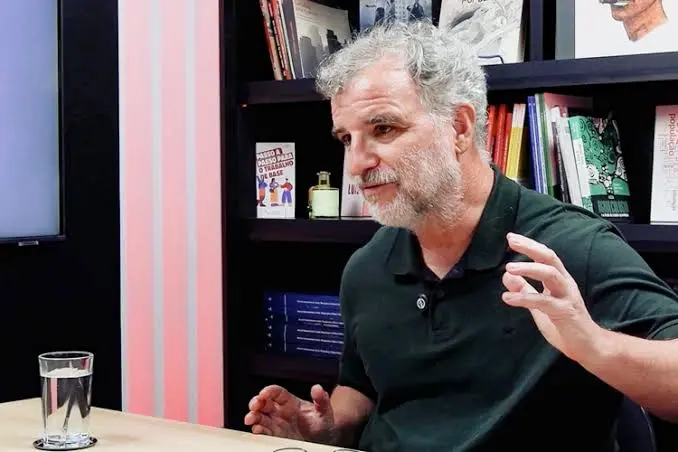
Valter Pomar (São Paulo, 1966) is a historian, university professor, and leader of Brazil’s Workers’ Party (PT), with an extensive career in the Brazilian and Latin American left. The son of political activists who lived underground during Brazil’s military dictatorship, Pomar experienced political repression firsthand: in 1976, security forces killed his grandfather during an operation targeting a meeting of the Central Committee of the Communist Party of Brazil (PCdoB) and arrested his father.
He began his political activism as a teenager, initially within circles associated with the PCdoB and later in the PT, which he joined in 1982. In 1997, he joined the party’s National Directorate and was elected third national vice president. He ran for the party presidency on several occasions and headed its International Relations Secretariat between 2005 and 2010. He also served as executive secretary of the São Paulo Forum from 2005 to 2013, a period during which he strengthened his ties with left-wing political parties and movements throughout Latin America.
He currently serves as director of International Cooperation at the Perseu Abramo Foundation, which maintains ties with the PT.
—Between 2013 and 2026, major changes occurred in the international balance of forces, highlighting the PT’s position. This includes its assessment of the situation in Cuba and Venezuela in recent years. In Venezuela’s case, there were expectations regarding Lula’s government’s position within BRICS, but there was also a kind of paralysis concerning developments in Cuba, particularly amid the imperialist offensive. What is your opinion on this?
Formally, the PT’s position has not changed. What has changed is the government’s position. Formally, the PT recognized President Nicolás Maduro’s election and supported Venezuela’s admission to BRICS. Furthermore, the PT continues to issue resolutions calling on the government to expand material solidarity with Cuba.
But the government’s position is different. It is a backward position, or rather, one of formal solidarity with Cuba, but solidarity that does not include sending fuel. At the same time, regarding Venezuela, the government refused to recognize the election results and blocked Venezuela’s entry into BRICS. Therefore, a profound difference exists between the PT’s formal position and the government’s de facto position.
Another major change occurred on January 3, 2026, amid a series of unusual events. For the first time, the United States formally intervened in South America. Previously, it had participated in military coups through Operation Condor, but it had never intervened directly with military troops in any South American country. One might have expected progressive and left-wing governments, including democratic ones, to create an international movement to prevent the expansion of such actions and denounce imperialist activity. However, their response was far too weak, to put it kindly.
—Regarding January 3 itself, Lula’s government and the PT, although with different tones, condemned the kidnapping of Nicolás Maduro and Cilia Flores, as well as the U.S. military operation and Washington’s justifications for it. From a practical standpoint, however, as you said, a rhetorical complaint is not an adequate response to military action.
And the reality is that, both in Venezuela and throughout the region, what happened became “normalized.” That is the truth. In other words, if we look at the greatest victims of this process—the Venezuelan people, the Venezuelan government, and Venezuelan sovereignty—and consider the Venezuelan government’s de facto position following the kidnapping, what happened, in practice, was the normalization of those events. So much so that the Venezuelan government authorized U.S. troops to conduct military maneuvers and exercises in Caracas; obviously, this was entirely unnecessary. It was simply a demonstration of force, of hegemony.
This case is very different from Cuba’s. The Cuban government and the Cuban people demonstrate a willingness to fight that differs from what we saw in Venezuela. Perhaps for this reason, most countries in the region, including those under progressive and left-wing governments, have responded differently to these two cases.
This is part of a broader context in which the U.S. military presence in South America is expanding on a massive scale. The United States has signed agreements with countries in the region that allow U.S. troops to maintain a permanent presence and establish military bases—traditional bases—as well as less visible facilities: small operational bases that certainly exist in large numbers. At least 19 agreements permit different types of bases.
Therefore, today’s map of Latin America—or rather, the map of South America—shows Brazil surrounded by U.S. bases, not merely by governments allied with the United States. Consequently, the region has normalized U.S. military presence, and the only real response is to organize the country’s effective defense. And we remain very far from achieving that in countries where progressive and left-wing sectors still govern.
So this is a very bad picture, a very dangerous one that, depending on the outcome of Brazil’s elections, could turn into a tragedy.
—As a citizen, a PT activist, and a political leader, what would you expect from a new Lula government? Especially given that this represents a critical intersection of regional and national geopolitics.
I hope it will be a left-wing government, not merely a progressive government. The Brazilian left has developed a habit of abandoning the word “left” and replacing it with “progressive.” This degrades the political program. We do not need a progressive government. We need a left-wing government.
This means a government willing to change, first and foremost, Brazil’s economic and social structure. Today, Brazil is a primary commodity-exporting country, dependent and subordinate to financial and transnational capital. We have to break with this. We need a government willing to take measures to overcome this dependence on primary commodity exports, break the dictatorship of financial capital, and end our dependence on transnational capital.
Ah, but what about the balance of forces? Those who fear radicalism within the PT ask this question. Yes, indeed, the balance of forces is unfavorable. But saying so does not solve the problem. The problem is that unless we change this structure, unless we overcome it, the country’s fundamental problems will persist. And the political impact of this will, sooner or later, lead to defeat for the left.
From 2002 to 2022, we won most presidential elections. We lost the 2018 election because there was a coup d’état; otherwise, we would have won that election as well. In other words, we know how to win elections. However, our share of the vote has declined. The number of valid votes has been decreasing. And this results not only from mistaken political decisions but also from mistaken strategic decisions.
In other words, we have failed to break the dominance of agribusiness and mining, which constitute the right wing’s social base in the country. We have failed to break the dictatorship of financial capital, which constitutes the right wing’s social and political base in the country. We have failed to eliminate dependency, which forms the foundation of the right wing’s political and social influence in the country. And the next administration must confront these problems.
And that means addressing them through economic policy, strictly speaking, as well as through political action. Breaking the media monopoly, building a major national technology company so that we have social networks under effective national control; changing how the Armed Forces and Military Police operate; carrying out political reform and reforming the judiciary.
In other words, we face an enormous challenge. If we do not take these steps, we will reach the end of 2030 in a worse situation than we face today.
If we do this, could we lose? We could lose. But our chances of reaching 2030 in a position to elect Lula’s successor will increase if we make this U-turn, this substantive change.
So, in my opinion, we need to do more. We need to make a qualitative leap. We need a left-wing government. However, this is not the prevailing opinion within the PT today. Unfortunately, it is not the prevailing opinion among most of the Brazilian left either, including parties that emerged claiming they wanted to go beyond the PT.
Today, they accept this logic, in quotation marks, that progressivism represents the maximum possible limit. This is destructive.
I am not at all concerned about the issue of “leadership.” Lula is irreplaceable because he is an individual, shaped by more than 50 years of accumulated experience. No one will ever be like him because those 50 years produced his leadership, and we live under different circumstances. So there is no way to replace him. Therefore, this is an impossible problem to solve and, consequently, no longer a real problem.
My concern is reaching 2030—or any other moment—under conditions in which our party and the left can win, regardless of which candidate we put forward. We have already done it: Dilma won two elections. It is possible to win elections with candidates other than Lula.
When? When you have a government, a political and social force, and a social environment that makes victory possible.
What happens is that if you have a government that fails to inspire enthusiasm in more than half the population, if you have a program that does not mobilize or motivate a large portion of the people who could support us, how are you going to win?
You can have any leader you want, and you still will not win. So that is my point of view.
In short, what do I want from the government? I want a left-wing government, that is, a government willing to confront the country’s structural problems.