Audio: https://clyp.it/p2koe0pw
Julio A. López, Editor-in-Chief .— Chevron is set to sign preliminary agreements to invest in two Iraqi oil fields and join a consortium of investors studying the construction of a pipeline linking Iraq’s oil-producing basin to Syria’s Mediterranean coast, specifically the port of Baniyas.
The Context: Iraq, the Most Exposed
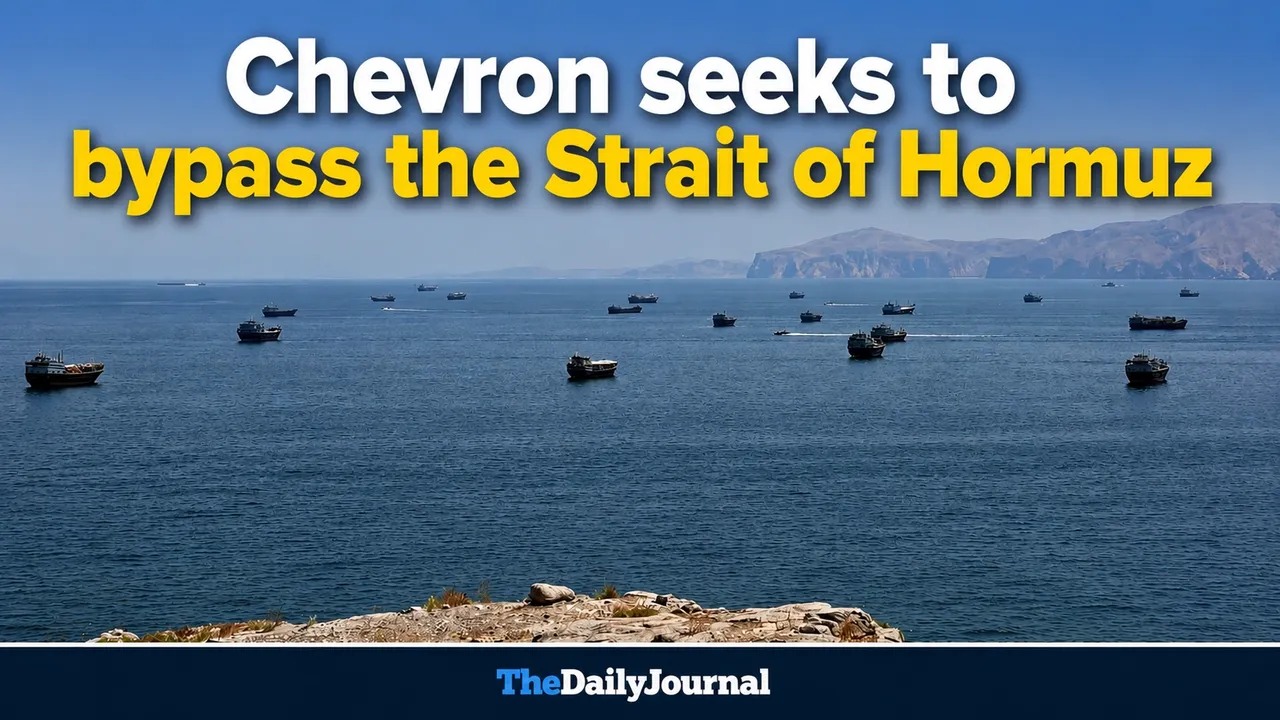
Iraq — the second-largest crude producer in the Middle East after Saudi Arabia, accounting for nearly 5% of global production — relies almost entirely on the Strait of Hormuz to export oil from its major southern fields.
Since the war with Iran began, its maritime exports have collapsed. Energy analytics firm Vortexa reported that in May they fell to just 8% of the previous year’s average, a severe blow for a country where crude sales account for 90% of the state budget.
The Project: Reviving the Kirkuk-Baniyas Pipeline
The plan involves reviving the roughly 800-kilometer Kirkuk-Baniyas pipeline, which has been largely out of service since the 2003 U.S.-led invasion of Iraq.
The Iraqi government has already approved a preliminary agreement with Chevron, U.S.-based Capital TI, and a Qatari company to explore routes connecting Kirkuk and Haditha to Baniyas.
TotalEnergies is also participating in the talks. Its CEO, Patrick Pouyanné, said Syria is becoming a key route for transporting Iraqi crude without relying on the Strait of Hormuz.
Political Backing from Washington
The U.S. State Department confirmed its support for the initiative, while President Trump met Tuesday with Iraqi Prime Minister Ali Al Zaidi at the White House and announced that “many agreements” involving the oil sector would be unveiled over the next two weeks.
Tom Barrack, the U.S. special envoy for Syria and Iraq, has held talks with both governments and the oil companies involved.
A Buffer, Not a Replacement
Analysts at Rystad Energy warn that pipelines of this kind function more as “geopolitical shock absorbers” against the risk of disruption in Hormuz than as complete replacements, since they remain vulnerable to low-cost asymmetric attacks.
Given the scale of the Strait of Hormuz — through which up to 20 million barrels per day move — neither this project nor other existing alternatives, such as Saudi Arabia’s East-West Pipeline or the UAE’s Habshan-Fujairah pipeline, can fully replace its capacity.