By Natalia Jaua
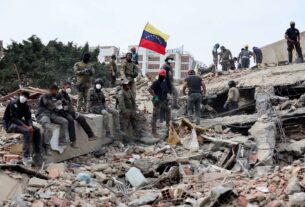
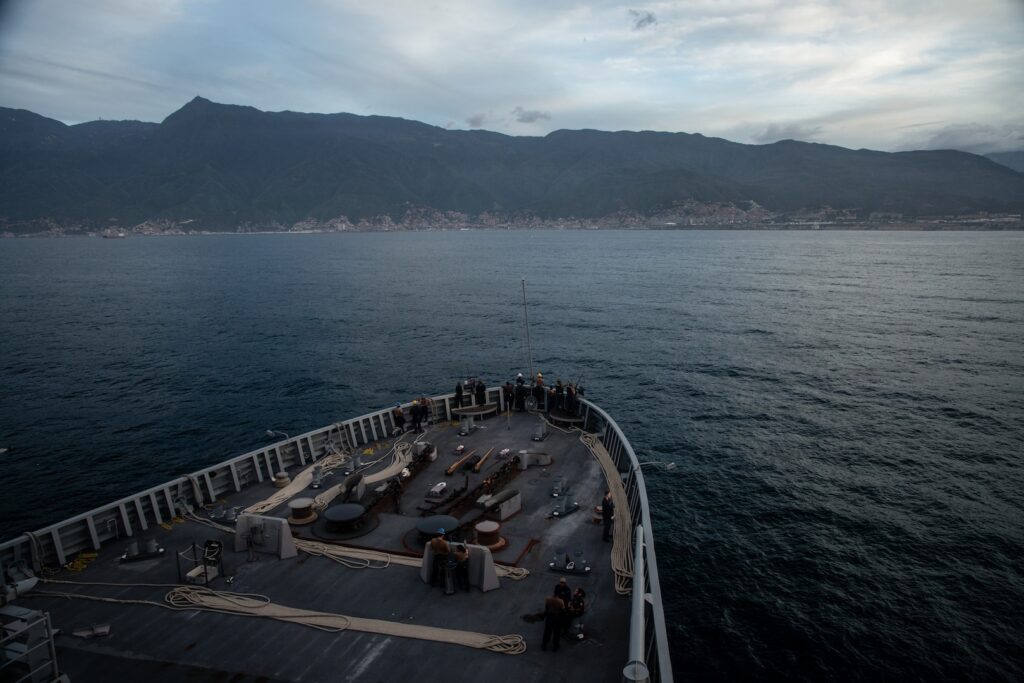
The magnitude 7.2 and 7.5 earthquakes, which struck just 39 seconds apart, rocked north-central Venezuela and unleashed a catastrophe that, according to the latest official figures, has claimed more than 5,000 lives. What began as an emergency humanitarian response has, in less than a month, evolved into the largest U.S. military operation in the region in decades.
On the day of the disaster, President Donald Trump addressed the tragedy on his Truth Social platform: “We will be there for our new and great friends. The early reports are not good!” He also instructed federal agencies to “act quickly.”
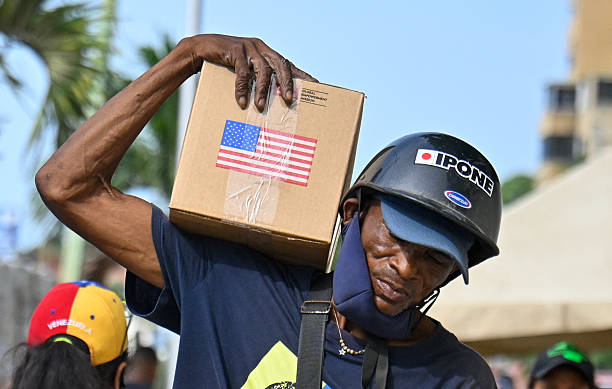
The following day, the U.S. Department of State announced a $150 million humanitarian assistance package. Of that amount, $100 million went to the United Nations Office for the Coordination of Humanitarian Affairs (OCHA) in Venezuela, while $50 million supported organizations operating on the ground, including World Vision, Samaritan’s Purse, Catholic Relief Services, International Medical Corps, the International Organization for Migration (IOM), and the World Food Program (WFP).
Secretary of State Marco Rubio expressed his condolences and confirmed that the United States stood “ready, willing, and able to help,” immediately deploying search-and-rescue teams from Fairfax County, Virginia, and Los Angeles County, California.
On June 27, the U.S. Treasury Department issued a license temporarily suspending economic sanctions on Venezuela to facilitate earthquake relief operations through October 23, 2026. The measure authorized “all transactions related to earthquake relief efforts.”
Two days later, the State Department announced that direct U.S. assistance had reached $300 million. By July 7, Chargé d’Affaires John Barrett confirmed that total U.S. spending had surpassed $310 million, while other sources placed the overall American financial commitment at more than $386 million.
For comparison, the United States donated only $9 million after the 2025 earthquake in Myanmar.
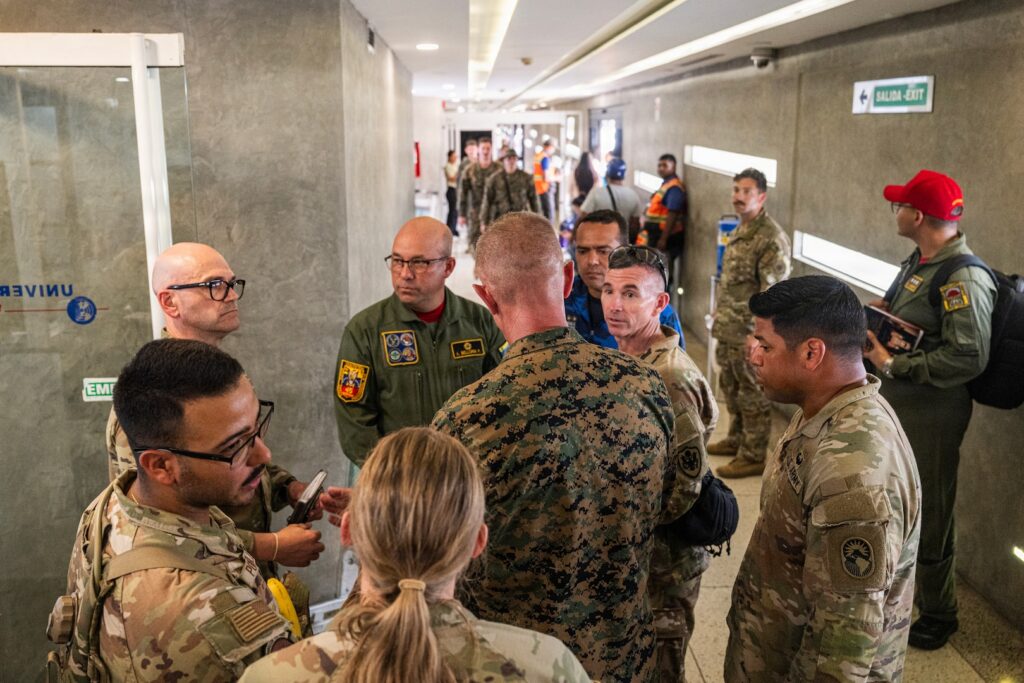
On June 30, authorities established the Humanitarian Assistance Coordination Center (HACC) at Simón Bolívar International Airport in Maiquetía under the leadership of Major General Kevin Jarrard and in coordination with the U.S. Department of State. Officials also established an intelligence center in Miami to process information collected by drones.
One of the operation’s most controversial aspects involves the deployment of at least four or five MQ-9 Reaper drones over Venezuelan territory. U.S. Southern Command chief Gen. Francis Donovan confirmed that the aircraft, together with a specialized intelligence unit in Miami, are “enhancing the intelligence picture for the Venezuelan authorities.”
The MQ-9 Reaper is an armed uncrewed aerial vehicle originally designed for long-range reconnaissance and strike missions. Donovan defended its use, saying the drones help “make sure roads are clear and determine where damaged buildings are located,” providing a perspective that Venezuelan authorities could not obtain “from ground level.”
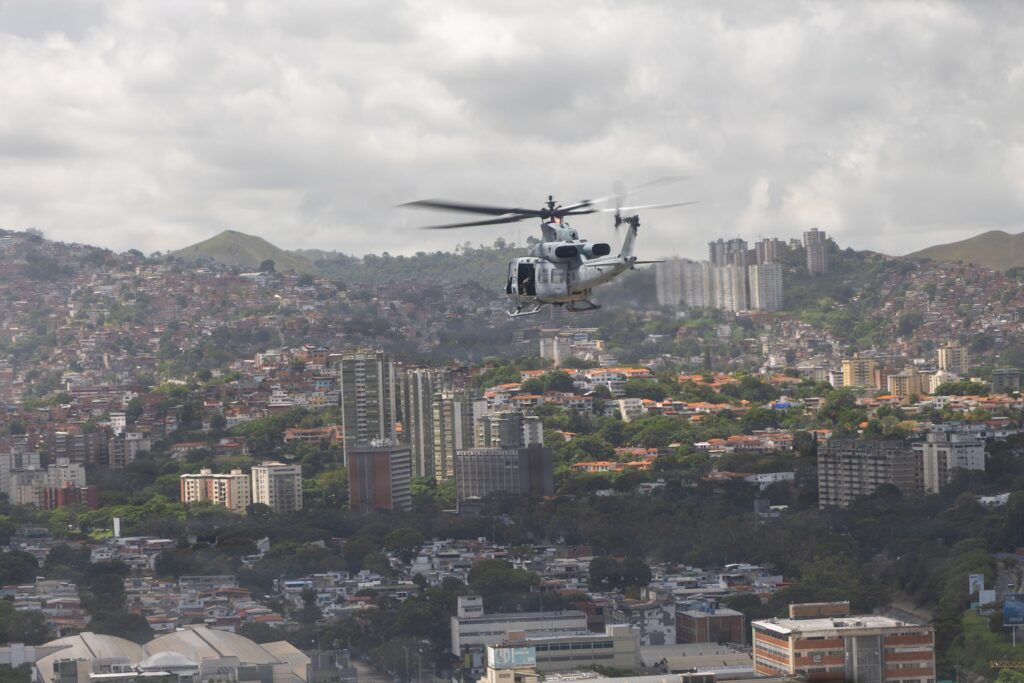
However, the presence of these combat aircraft over civilian areas devastated by the earthquake has raised concerns among humanitarian, social, and political organizations, as well as international observers, who believe the surveillance component extends beyond the scope of conventional humanitarian assistance.
“Heavy patrols, limited rescue”
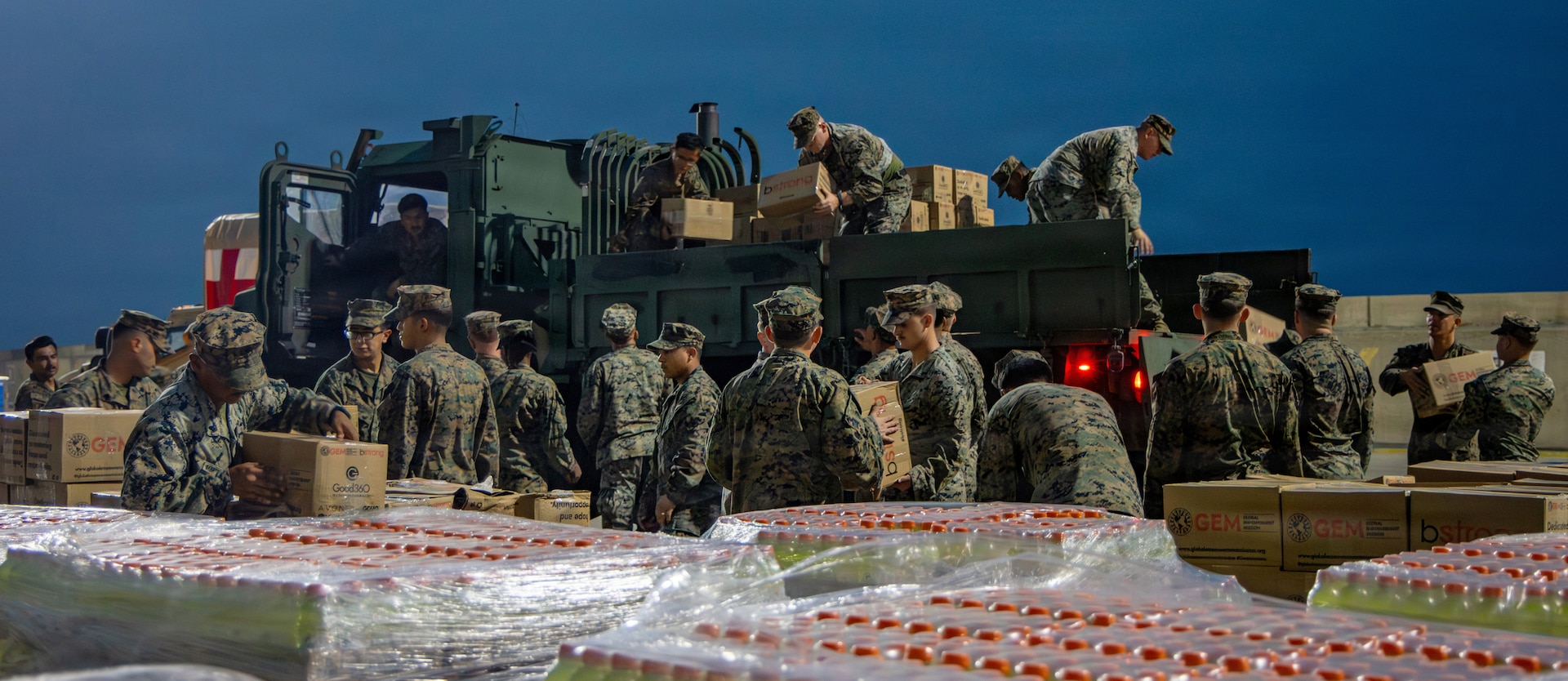
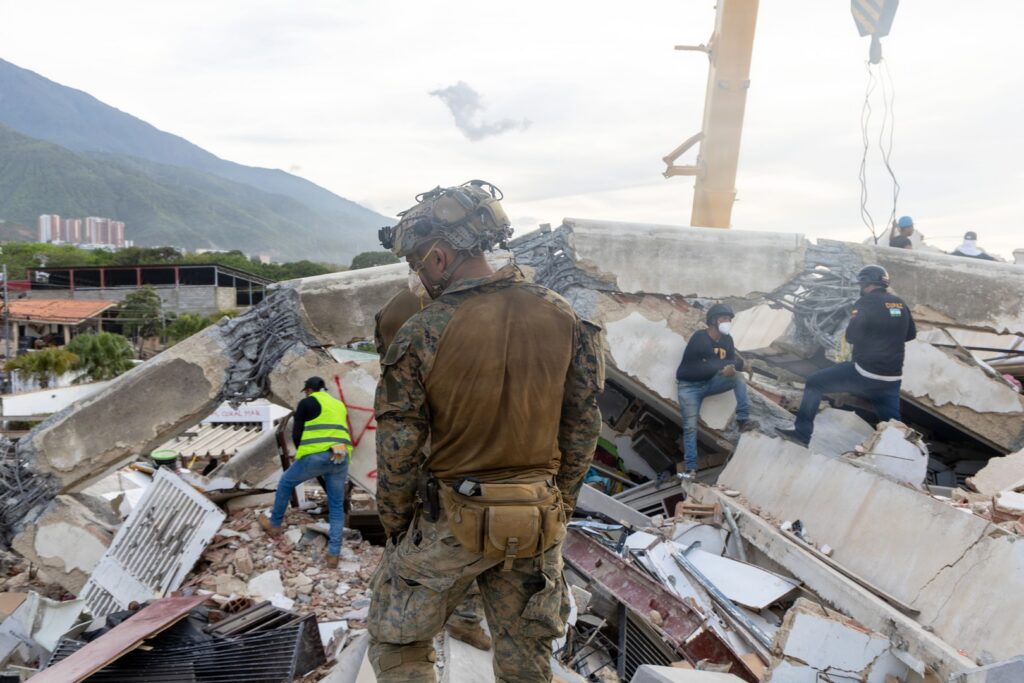
Community radio spokesperson José Félix Valera, from Voces 101.5 FM in the Caraballeda parish, told The Daily Journal that, according to the information he has obtained, only 300 of the 2,000 U.S. personnel currently in Venezuela serve as rescue workers.
Valera also said these units move in convoys of roughly 30 uniformed and armed personnel, always escorted by two patrol vehicles from Venezuela’s General Directorate of Military Counterintelligence (DGCIM).
He further stated that U.S. personnel consistently attempt to take the lead during rescue operations.
“The military presence serves to secure the areas undergoing demolition and debris removal, to guard the sites where rubble is being deposited, to protect locations that appear to be of particular interest to them, and to control traffic in areas where demolition work is taking place,” the community activist said.
“There’s a lot of patrolling, very little rescue work, although we have also seen them distributing supplies,” he added.
Valera explained that, although U.S. personnel helped restore operations at La Guaira Port and Simón Bolívar International Airport in Maiquetía, most humanitarian aid actually entered the country through Valencia Airport.
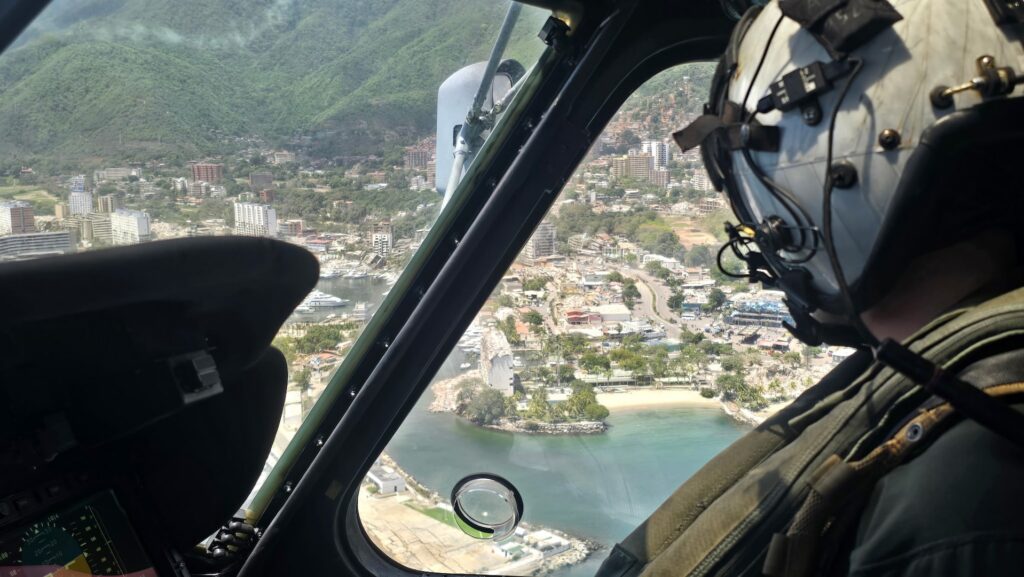
Chargé d’Affaires John Barrett stated that Delcy Rodríguez’s interim government “has fully complied with every request needed to move forward with this enormous humanitarian response” and that “local authorities have fully honored our requests and requirements.”
Barrett also insisted that the three-phase plan—the roadmap designed by the Trump administration in coordination with Secretary of State Marco Rubio to guide Venezuela’s post-Maduro transition—remains unchanged. However, he acknowledged that “reconstruction looks a little different now after the devastating earthquake.”
When reporters asked how long the military mission would remain in Venezuela, Gen. Francis Donovan declined to speculate and referred the question to the State Department. Although he emphasized that “there is no discussion about staying,” he also stated that U.S. forces would remain “until the job is finished” and that “once we finish, we will leave Venezuela.”
However, the humanitarian organization Global Empowerment Mission (GEM) has already announced its intention to remain in Venezuela for five years, raising questions about the true time horizon of the U.S. presence.
On July 6, Gen. Donovan, John Barrett, and Kevin Jarrard traveled to Caracas to coordinate future cooperation. During the visit, they met with Acting President Delcy Rodríguez, Interior Minister Diosdado Cabello, and Defense Minister Gustavo González.
The following day, during an interview with Telemundo, Barrett and Donovan said international aid had reached those in need quickly and reliably. Barrett reiterated that Rodríguez’s government had “met every requirement needed to mobilize this major humanitarian response” from the United States.
What international law says
International law establishes that military assets should support humanitarian operations only as a measure of last resort. The participation of foreign armed forces in humanitarian assistance is subject to strict regulations established by the United Nations through frameworks such as the Oslo Guidelines for natural disasters and the Military and Civil Defense Assets (MCDA) Guidelines for complex emergencies and armed conflicts.
Military resources—including personnel, trucks, aircraft, helicopters, and cargo ships—should only come into play when no comparable civilian alternative exists to meet an urgent and critical humanitarian need.
Professor Carlos Lazo, a philosopher and former diplomat, explained that international law provides a specific legal framework for natural disasters. This framework derives from international human rights treaties and from the guidelines of the International Federation of Red Cross and Red Crescent Societies (IFRC).
Known as International Disaster Response Law (IDRL), this framework rests on the principles of state sovereignty and the primary responsibility of the affected government. When a disaster overwhelms a country’s response capacity and authorities declare a state of emergency, the affected State must consent before receiving international assistance.
Lazo emphasized that every humanitarian operation must strictly uphold the principles of neutrality, humanity, and impartiality.
The Haiti precedent
Venezuela’s humanitarian response follows a pattern similar to the one that unfolded in Haiti after the 2010 earthquake, when the United States deployed more than 22,000 troops, took control of Port-au-Prince International Airport, and faced accusations of “occupation” from France, Brazil, and then-President Hugo Chávez.
Although Operation Unified Response officially ended on June 1, 2010, a contingent of 500 Louisiana National Guard troops remained in Haiti until September to carry out humanitarian assistance projects in rural communities.
On June 6, 2010, the last 314 U.S. soldiers assigned to the emergency mission left the country. Even so, U.S. military personnel have continued to operate in Haiti intermittently under different missions and arrangements.
Hundreds of non-governmental organizations (NGOs) also remained in Haiti, delivering essential services independently of the local government. Over time, that dynamic weakened state institutions and increased the country’s dependence on foreign assistance.
Most NGOs never made the results of their projects public. Poorly planned initiatives, weak oversight, and allegations of mismanagement also prevented the country from achieving long-term development.
Haiti later suffered a cholera epidemic that claimed at least 10,000 lives. Investigations linked the outbreak to troops from the United Nations Stabilization Mission in Haiti (MINUSTAH) after they contaminated local water sources.
The absence of a central coordinating authority created a fragmented environment in which organizations largely followed their own agendas.
Humanitarian efforts focused primarily on immediate relief rather than long-term development planning. Six years later, Hurricane Matthew struck a country that remained just as vulnerable as it had been in 2010.
Military presence under scrutiny
José Félix Valera noted that while part of La Guaira’s population has welcomed the assistance provided by U.S. forces, others have rejected the military presence and question the need for such a large deployment.
“I think the rejection reflects a strong sense of national identity. People from La Guaira have deep roots in their community and a strong patriotic spirit. But the disproportion also raises concerns. Out of 2,000 personnel, only 300 are rescue workers while 1,700 are soldiers. People struggle to understand why so many troops are needed in a disaster zone that requires rescuers above all else,” he said.
Valera also stressed that many residents worry about their land. According to him, military personnel have pressed aggressively to move forward with demolition work, creating friction with families who continue searching for loved ones beneath the rubble.
The presence of U.S. and Israeli troops in La Guaira has fueled growing concern among residents. Beyond humanitarian assistance, many believe the military deployment may also serve real estate and commercial interests seeking to capitalize on the tragedy to reshape the region.
The business of reconstruction
La Guaira’s coastline occupies a strategic location. Its flat terrain, oceanfront setting, and development potential make it attractive for tourism and high-end infrastructure projects. In the public imagination, those characteristics have fueled fears that foreign forces are surveying the land to determine what can be built there as part of future investment plans.
Many residents feel the tragedy has created an opportunity to take control of the area’s most valuable land, particularly coastal properties with strong appeal for real estate development and international tourism. That perception has deepened public skepticism about the true purpose of the foreign military presence.
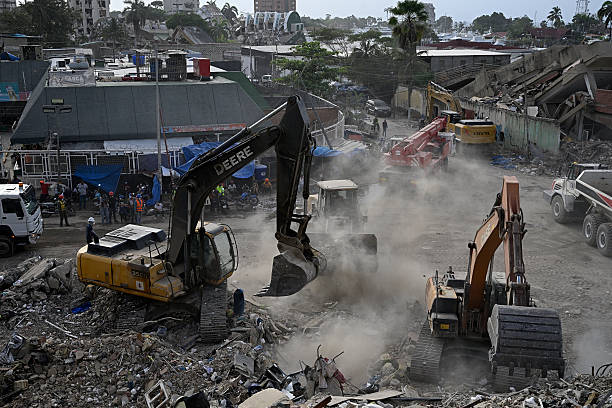
The United Nations Office for Disaster Risk Reduction (UNDRR) estimates total nationwide damage at $37 billion, including $24 billion in damage to buildings—homes, businesses, hospitals, and other structures—and $13 billion in infrastructure such as roads, power systems, and telecommunications.
For comparison, the United Nations’ latest estimate places the cost of rebuilding the Gaza Strip at $71.4 billion over the next decade. Of that amount, $26.3 billion would be needed during the first 18 months to restore essential services.
Those figures leave more questions than answers.
On July 8, Brig. Gen. Elad Edri, Chief of Staff of the Israel Defense Forces (IDF) Home Front Command, met with Delcy Rodríguez and presented a reconstruction proposal for La Guaira.
Why begin discussing reconstruction while rescue operations were still underway? Why would Israel lead such a plan when other countries—such as Mexico, Japan, Chile, and Türkiye—have extensive experience rebuilding after major earthquakes?
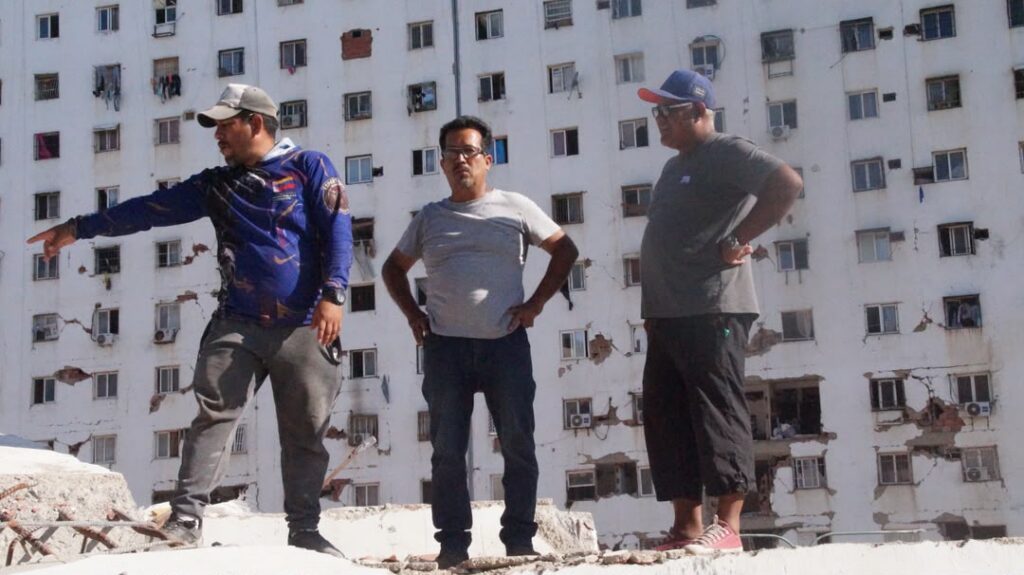
“People do not want to leave La Guaira. They are willing to fight for their land and for their right to housing. Above all, they want a voice in the reconstruction process,” Valera said.
There is an old saying: “Never look a gift horse in the mouth.” The expression traces its roots to Odysseus—the man of many wiles and King of Ithaca—whose plan to build a wooden horse allowed the Greeks to enter the seemingly impregnable walls of the sacred city of Troy after ten years of war.
What might have happened if the Trojans had looked inside the horse before accepting it as a peace offering? Through whose complicity did it gain entry? And, like the Achaeans before them, could Washington and Tel Aviv have been waiting for an opportunity such as this?