By Héctor Sánchez
The Constitution of the Bolivarian Republic of Venezuela leaves no room for doubt: sovereignty belongs exclusively and permanently to the people. That principle, which in 1999 promised a transition from representative democracy to a participatory and leading democracy, now appears to have surrendered.
As sociologist and Central University of Venezuela (UCV) professor Javier Biardeau has repeatedly argued, those in power have betrayed the promise of democratizing authority. They have left the people at the mercy of a new elite that embraced privilege, distanced itself from everyday suffering, and devoted itself not only to personal interests but also to imperial interests.
The clearest and most recent example comes from Donald Trump’s remarks about elections in Venezuela: “As for elections in Venezuela, they’re not ready for that yet. But there has been a lot of progress.” The most troubling sign of this loss of autonomy lies in those statements. From Washington, he claims the authority to decide when Venezuelans will be “ready” to vote.
He could have said the middle of next week, the end of next week, the beginning of next week, 2027, or even 2030. That is not the real issue. The real question is: Who is Donald Trump to decide when Venezuelans elect the president of their own country? And why do national officials of every political stripe accept his directives as though they were binding orders?
The country’s political factions appear to have abandoned any independent national project. Instead, they compete for the favor of the White House in hopes of becoming the ones entrusted with managing the country’s subordination.
This interference goes beyond politics; it reflects a proprietary form of control over the nation’s territory. Trump claims that the United States owns Venezuela’s oil reserves and that the wealth generated from them has financed conflicts unrelated to Venezuela’s national interests.
During that same press conference, he again described Venezuela as an extraordinary business opportunity. He even suggested that the country has reduced U.S. dependence on the Strait of Hormuz for oil. “Together with Venezuela, we own 60% of the world’s oil reserves,” he said. “The oil extracted in Venezuela has paid for the war against Iran over several periods.”
Several questions naturally follow. At what point did Venezuela’s national wealth—including its oil—become an asset of the United States? How can a country that desperately needs resources for its recovery, especially after the earthquakes, not manage its own wealth or even access the profits it generates, when, according to Trump himself, the United States keeps much of that revenue to finance its war against Iran?
Meanwhile, Venezuela’s political leadership presents two opposing but equally troubling realities. On one side, the government of the “kidnapped president” now serves the very power that, according to this view, holds him captive. On the other, the opposition seems frustrated only because it is not the one serving that same power more efficiently. The U.S. intervention itself—which the author also describes as destructive—defines much of the country’s current tragedy.
The question, then, is not when presidential elections will take place. The real question is who decides in Venezuela—from elections to the administration of the country’s wealth and access to the resources needed for recovery.
For now, the answer appears brutally simple: the Venezuelan people do not decide. A man in the White House decides. He speaks about Venezuela as though it were another asset in his real estate empire. His envoys reinforce that authority as they travel through Caracas, giving instructions and receiving displays of deference.
Ultimately, the same actors continue making the decisions: those who governed the country poorly and those who aspired to govern it even worse. Both have become supporting players for a foreign power that does not know Venezuela’s streets, its people, its history, or its national identity.
While they debate whether elections should take place in December, July 2027, or 2030, the country continues to bleed.
Even before the June 24 earthquakes, Venezuela already faced an enormous national recovery challenge. The electrical infrastructure lay in ruins, the healthcare system had collapsed, foreign companies controlled much of the oil industry, and years of sterile political polarization and violence had torn apart the social fabric. The task already seemed monumental.
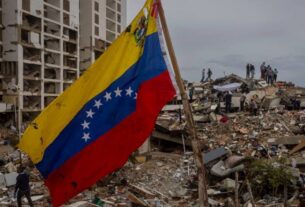
After the earthquakes, however, the scale of reconstruction became overwhelming. Hundreds of buildings collapsed, highways split apart, thousands of people died or suffered injuries, families lost their homes, unemployment increased, and countless citizens lost everything. A country struggling to rise from the ground must now rise from the rubble.
Yet those who should lead that reconstruction remain consumed by their own struggle for power, measured by who can show greater loyalty to Washington. They offer no comprehensive recovery plans and no public policies designed by and for the Venezuelan people. Instead, they offer submission, propaganda, and an endless debate over election dates that many Venezuelans no longer believe truly belong to them.
As long as the country allows major decisions to emerge from Washington rather than Caracas, as long as sovereignty remains an empty word that politicians invoke to disguise submission, and as long as reconstruction serves outside interests before national ones, Venezuela will not achieve a genuine recovery.
No amount of money arriving through agreements—if it arrives at all—will change that reality. Unless Venezuela controls its own future, those resources will disappear into corruption and speculation, serving someone else’s interests rather than the nation’s.
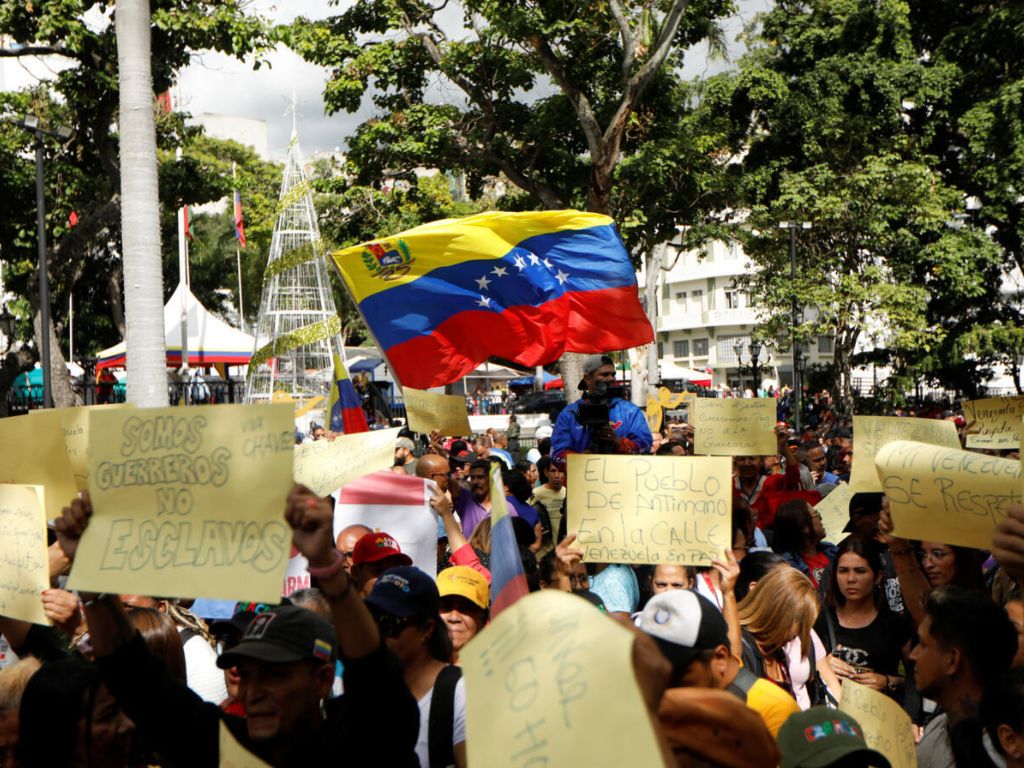
This is where the most important point emerges: breaking this destructive cycle depends on ordinary Venezuelans—those who refuse to kneel, those who understand that national unity, organization, and dignity offer the only path forward.
The earthquakes revealed something many politicians prefer to ignore: when people organize themselves, help one another, and recognize themselves in each other, they accomplish things that powerful interests cannot control.
The challenge is immense, but it is not impossible. Rebuilding the country’s physical infrastructure will be difficult, but it can be done. What truly remains impossible—or at least will remain so until Venezuelans decide otherwise—is rebuilding the nation under the same people who drove it into crisis while remaining on their knees before those whom the author believes invaded it.