The political leader questioned the lack of transparency surrounding transactions under the Anti-Blockade Law and warned of the risk of repeating corruption schemes involving public resources.
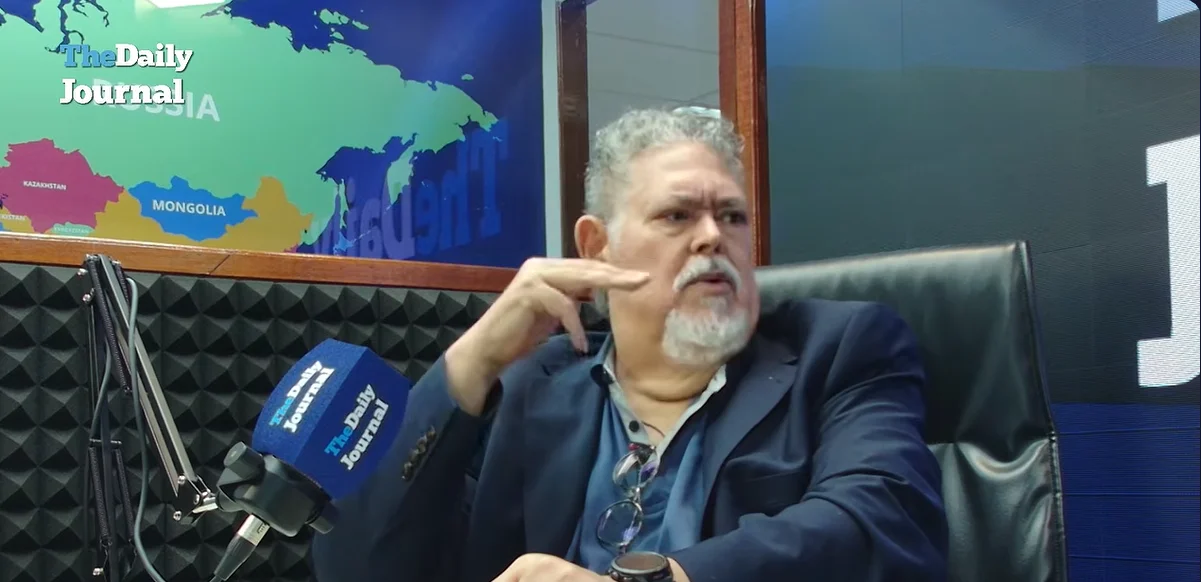
The Daily Journal.- Political leader Juan Barreto raised the question of who might become “the new RECADI Chinito,” referring to the growing number of business deals and transactions that, he argues, take place under the secrecy afforded by Venezuela’s Anti-Blockade Law.
“Who will be the new RECADI Chinito when the floodgates of secrecy surrounding the Anti-Blockade Law open, exposing all those businesses, transactions, and companies?” Barreto asked during his weekly podcast with journalist Vladimir Villegas.
Barreto invoked the well-known foreign exchange corruption scandal of the late 1980s to question transparency and accountability in the country’s economic transactions.
“I think there are quite a few Chinitos, not just one,” journalist Vladimir Villegas replied.
Related video: BARRETO y VILLEGAS: ¿PETRO VS. TANIA DÍAZ EN MÉXICO? | No es Podcast Cosa
Barreto also referred to the transfer of Colombian businessman Álvaro Pulido Vargas to the United States. Pulido, a business associate of former Industries Minister Alex Saab, recently pleaded guilty to money laundering in a Florida court.
Venezuelan authorities arrested Pulido, 62, in 2023 during an investigation into alleged corruption at state-owned Petróleos de Venezuela (PDVSA). The circumstances surrounding his transfer to the United States remain unclear.
U.S. Attorney General Todd Blanche announced Pulido’s detention in a post on X, claiming that Pulido’s alleged activities involved diverting resources from public programs intended to provide food, medicine, and housing, as well as using the U.S. financial system to conceal illicit funds.
The RECADI precedent
Venezuela established the Office of the Differential Exchange Rate Regime (RECADI) in February 1983, following the economic crisis known as “Black Friday,” to manage its multiple exchange rate system and allocate preferential foreign currency. The mechanism allowed businesses to obtain U.S. dollars at subsidized exchange rates for certain imports and authorized transactions. Its operations eventually became synonymous with one of the largest corruption scandals in Venezuela’s modern history.
The scandal involved allegations of fictitious import companies, inflated invoices, and fraudulent use of public foreign currency allocations. In 1992, a court convicted Ho Fuk Wing, a Chinese-born naturalized Venezuelan businessman popularly known as “el chinito de RECADI” (“the little Chinese man of RECADI”), of fraudulently exploiting state resources.
Although authorities investigated and arrested other individuals, his case became firmly entrenched in public memory as a symbol of a judicial response that many considered inadequate given the scale of the alleged irregularities.