By Dr. Juan Barreto, Venezuela and Latin America Bureau Chief
This week brings an important meeting that may—or may not—become a historic event. History remembers events that leave a lasting impact and transform reality. Some events generate plenty of noise only to fade away, while others permanently shape the course of a nation. For example, July 5, 1811 became a historic milestone because it formally marked the beginning of Venezuela’s independence process.
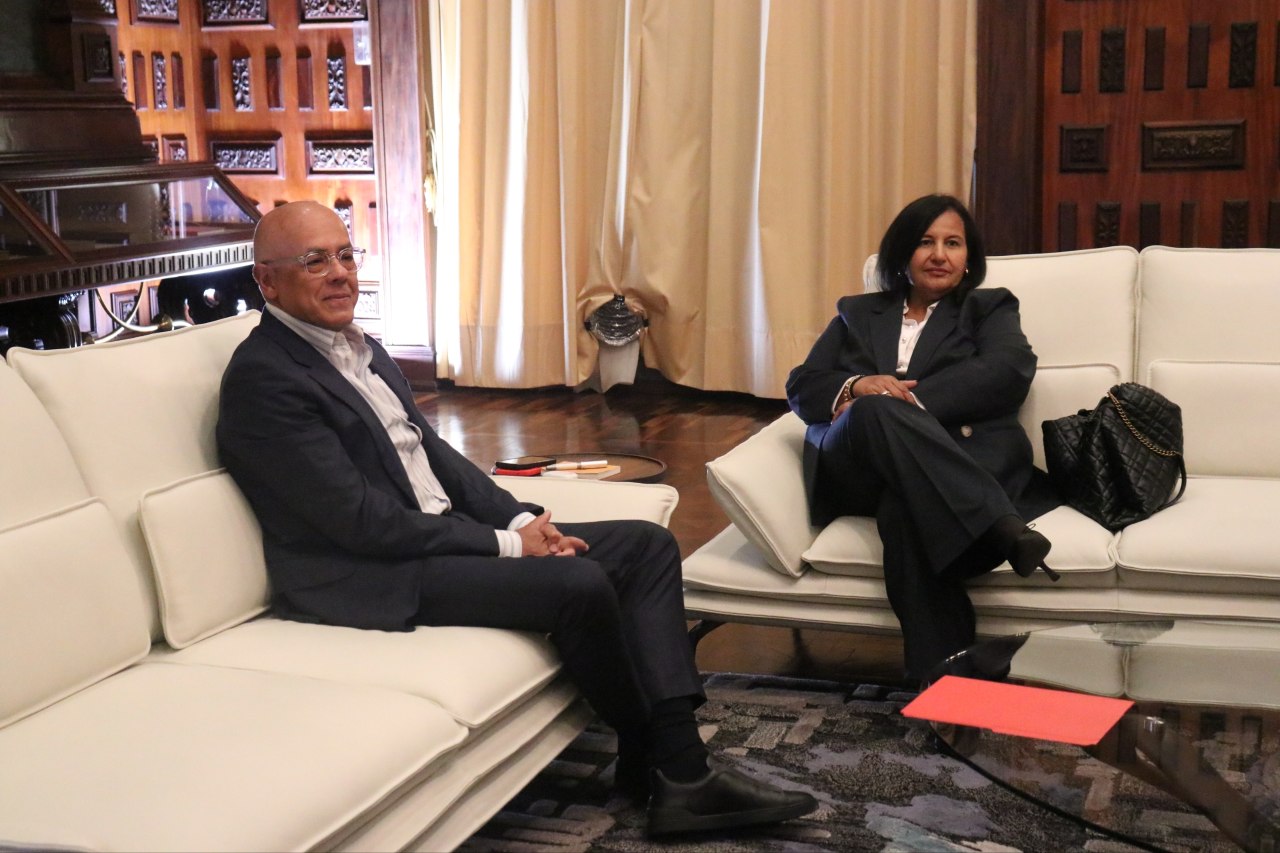
Will the August 1 meeting become another historic moment when the 2015 National Assembly and the 2025 National Assembly meet? Some observers describe it as a meeting between two interim authorities. The 2015 National Assembly reached its defining moment when it proclaimed Juan Guaidó interim president and rejected Nicolás Maduro’s presidency. Donald Trump recognized that interim government during his first term.
Today, Marco Rubio and other senior U.S. officials continue to recognize the 2015 National Assembly as the country’s only legitimate institution. Under that view, the government led by Delcy Rodríguez and Jorge Rodríguez functions as an interim authority that exercises control over the government but lacks official recognition from the United States. At the same time, Trump has taken what many consider a contradictory position by granting immunity to Delcy Rodríguez and referring to her as president. The upcoming meeting may seek to resolve those contradictions.
The meeting creates a suprainstitutional framework that could allow both interim structures to acknowledge and legitimize one another. At this point, however, its nature remains unclear. It is uncertain whether it represents a transitional council, a governing board, or the formal beginning of a political transition and democratization process.
What is clear is that both sides of Venezuela’s polarized political conflict have their own agendas. The Government-Party-State structure says it wants to end the economic blockade, lift sanctions, and achieve what it defines as peace.
Peace, however, requires a clear definition. Does peace mean social order? Does it mean police control? Does it mean returning to the situation that existed before January 3? Or does peace require dialogue and agreement among political forces capable of rebuilding institutions through consensus?
Dinorah Figuera, who represents one faction of the Democratic Unitary Platform, has focused on an agenda that includes appointing a new Supreme Court and a new National Electoral Council in order to advance the country’s reinstitutionalization.
Meanwhile, María Corina Machado has acknowledged that she remains outside the current process. According to her remarks, U.S. officials have sidelined her for now. The reasons remain open to interpretation. Some believe they seek to keep her under control, while others argue they want to weaken her political influence.
Even so, María Corina Machado continues to serve as a leading voice for one of the opposition’s most influential factions, particularly the one that receives the greatest media attention.
With María Corina Machado temporarily sidelined, the opposition divided into competing factions, and the PSUV facing internal tensions after only recently insisting that “to doubt is betrayal,” this week’s political landscape has become increasingly dynamic.