“We had to evacuate the apartments for safety reasons,” explained Indira Yánez. “I don’t want to leave my little home,” confessed Oliva Carrero.
Vanessa Davies
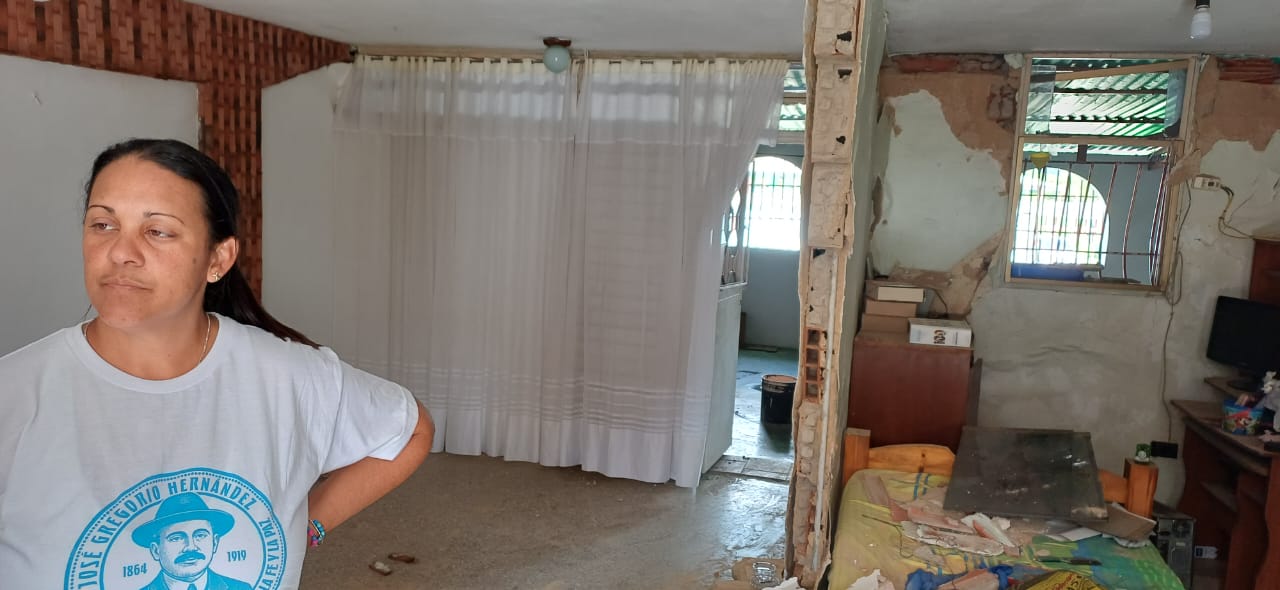
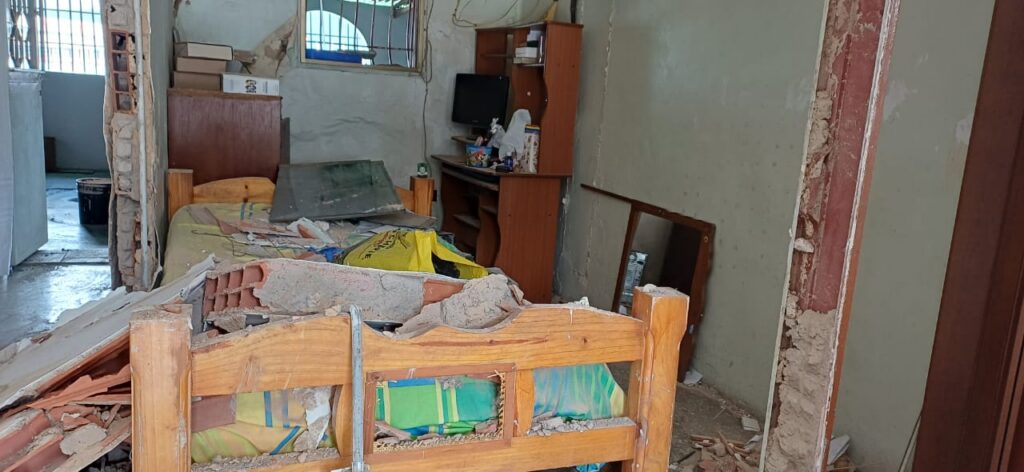
When Indira Yánez opened the door to one of the ground-floor apartments in Building 6 of the Oropeza Castillo housing complex in Guarenas, her first reaction was to shout, “Run for your life.” But when architect María Isabel García stepped forward and walked inside, the neighbors followed.
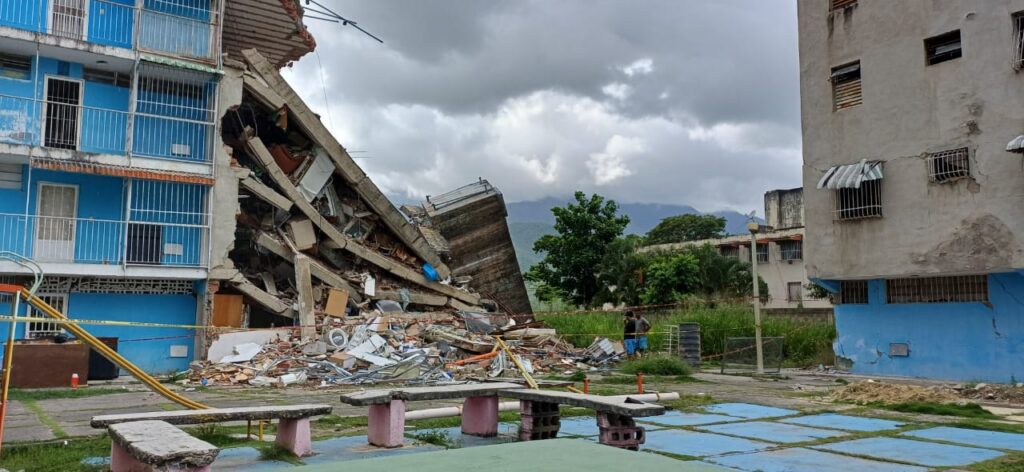
Broken windows and collapsed walls were everywhere. Yet the columns and beams had withstood the June 24 earthquakes. García, who volunteers to inspect damaged buildings, focused on the structural elements. The residents looked instead at the most visible destruction—the damage that frightens them. They believed the apartment was uninhabitable. García reached a different conclusion: the building will not collapse because its columns and beams remain sound.
“We have another apartment that looks as if a bomb had exploded inside,” another neighbor remarked.
The scene repeated itself. The apartments may not be livable today, the architect stressed, but they can be made livable again.
Protecting what they built
Beyond the emergency measures adopted after the earthquakes, hundreds of families in Oropeza Castillo now face a difficult choice: fight to restore their homes or organize a move somewhere else.
“I don’t want to leave my little home,” Oliva Carrero repeated.
Her apartment, in Building 8, still stands, although it sits next to the partially collapsed structure, which residents believe the elevated water tank may have pushed beyond its limits. Every day, the skeletal remains of that building stand before her like a constant threat.
Several neighbors rejected the idea of returning to their apartments.
“Sure, you’re going to fix the one that collapsed too,” they replied to the architect with unmistakable irony, pointing toward the destroyed building as they voiced their frustration.
“We had to evacuate the apartments for safety reasons,” Indira explained. “Many people are staying in community shelters. Others are with relatives, like I am.”
Other families have moved into temporary camps.
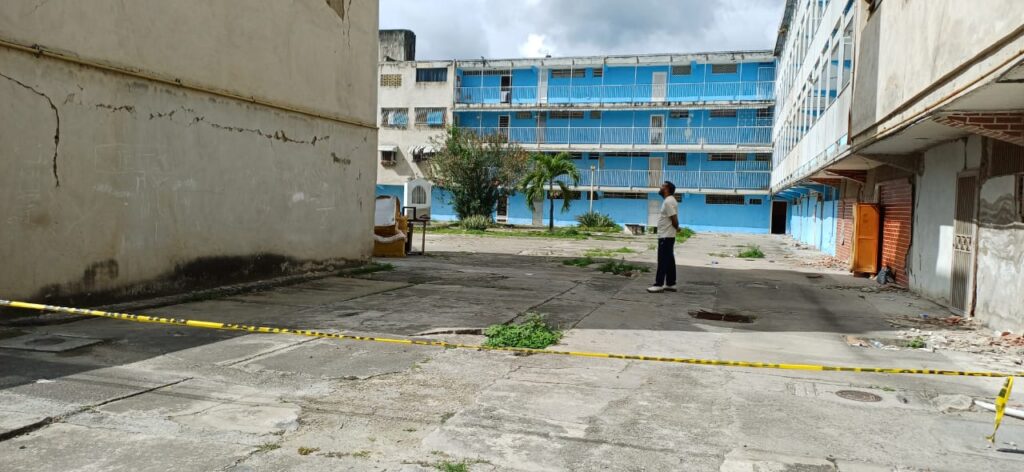
The residents also organized overnight shifts in the central courtyard “to protect our property” and maintain the green areas.
“We’re spending the nights here and watching over every apartment, with the support of the police, who remain with us 24 hours a day, seven days a week.”
Waiting for answers
In the parking area of Building 8, Dorina Veraza, Jairo Jesús Mirabal, and Alexandra Guaramato shared their experiences. Each carries a different story—and the consequences of the earthquakes.
“Mother Nature is hitting us hard,” Jairo Jesús lamented.
Dorina said the community is waiting for a solution.
“The engineers will determine whether they’ll build houses or apartment buildings, but they say any new buildings would have only two stories.”
Alexandra argued that one of the first steps should be to remove the elevated water tanks.
Another resident added two simple words:
“Townhouses.”
Mayor Antonio Galíndez has already announced plans to remove the water tanks from 14 buildings in the complex. According to a July 2 press release from the Miranda State Government, authorities have already completed the three inspection phases.
“I love my building”
Since June 24, one word has echoed across Venezuela more than almost any other:
Inspection.
The same has happened in Oropeza Castillo.
“We’re still going through inspections. We’ve already had several,” Indira explained, although “no one has told us exactly what is going to happen.”
The yellow safety sticker placed on her building actually brought her some relief.
“It isn’t the best result, but it isn’t the worst either.”
So far, inspectors have identified “masonry damage,” but uncertainty remains.
“We’re afraid,” she admitted, especially because residents have continued to feel some of the aftershocks.
“The first thing I’d like to know,” she emphasized, “is whether this building’s foundation is truly safe. They’ve told us the columns are in good condition. The engineers have explained everything very well, but I still have that uncertainty: Is it really safe for us to move back in, or isn’t it?”
—Would you like to return?
“I love my building.
I’ve lived here since I was 12 years old. I love living here. This is my home. It’s the place where my parents gave us a better future.
My neighbors are here. We’re united.
Leaving this place without knowing where we’d end up or who our new neighbors would be…
That’s not what I want.”